We just returned from a two week trip to New Mexico to celebrate Jocelyn’s birthday and for her to attend a day-long workshop with a friend featuring author Robin Wall Kimmerer. We drove over 3500 miles round-trip through Oregon, Utah, Nevada and Colorado to get there and back. We’ve spent time in all of those states before, but this trip revealed new corners, mostly in the higher elevations, as we attempted to stay out of the summertime heat that’s still hanging on lower down. It was a quick trip and we definitely felt the longing to stay in some places longer, but we have added more to our growing list of places to go back to and explore further.
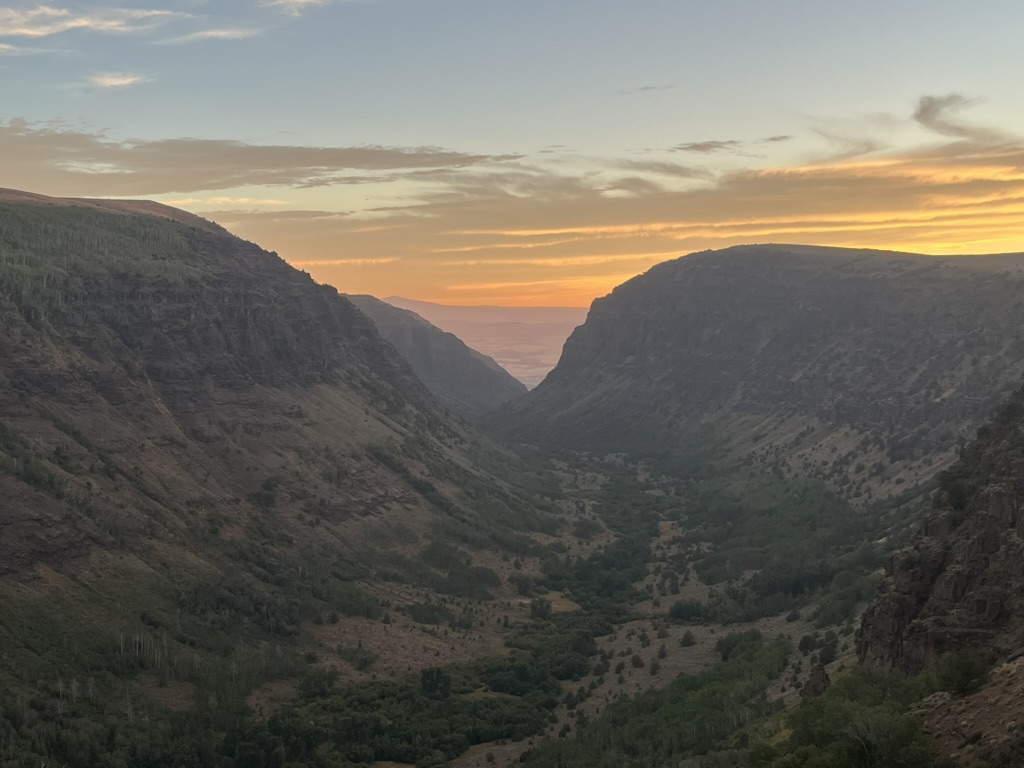
We started out in the Eastern high desert of our home state of Oregon. Steens mountain is the epitome of the landscape diversity we saw everywhere on this trip. An oasis in the sagebrush sea, the mountain rises 7,500 feet out of the steppe. We camped at a place we’ve been before — an Aspen grove on the edge of one of the canyons that cleave the mountain. We arrived in time for a hike down the steep canyon walls into the lush bottom where the lifegiving waters of Little Blitzen creek supported stands of Mountain Mahogany, Willow, and Cottonwood. On our climb back up, we were treated to a desert sunset, oranges and pinks framed against the canyon walls and the verdant valley below.
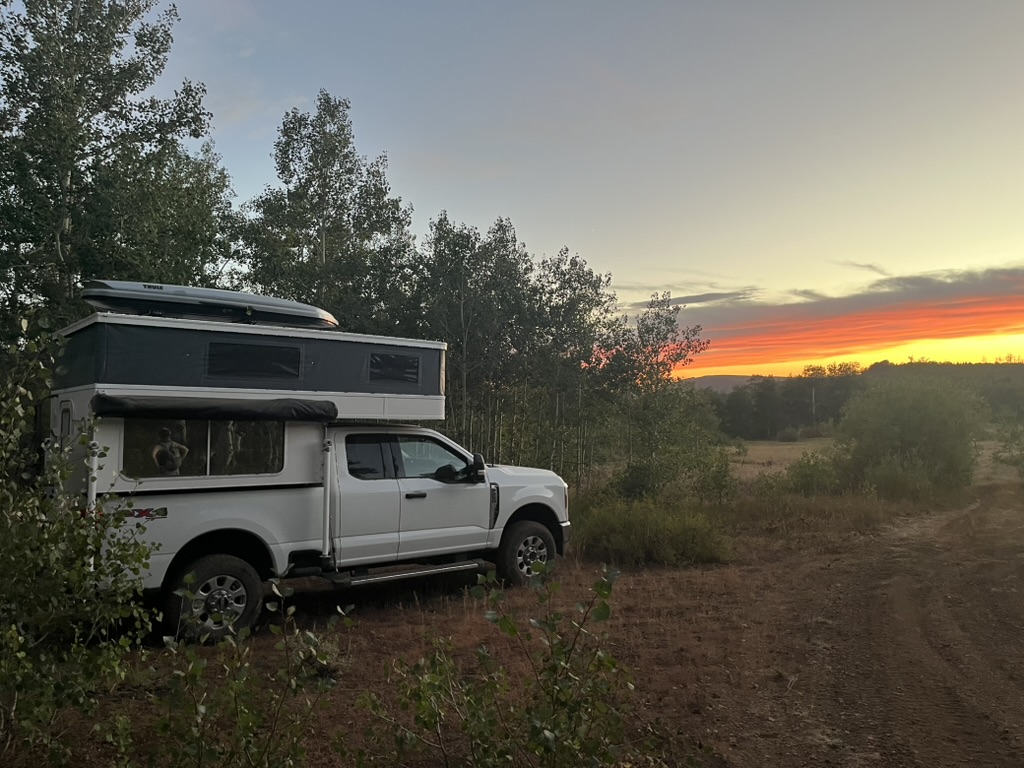
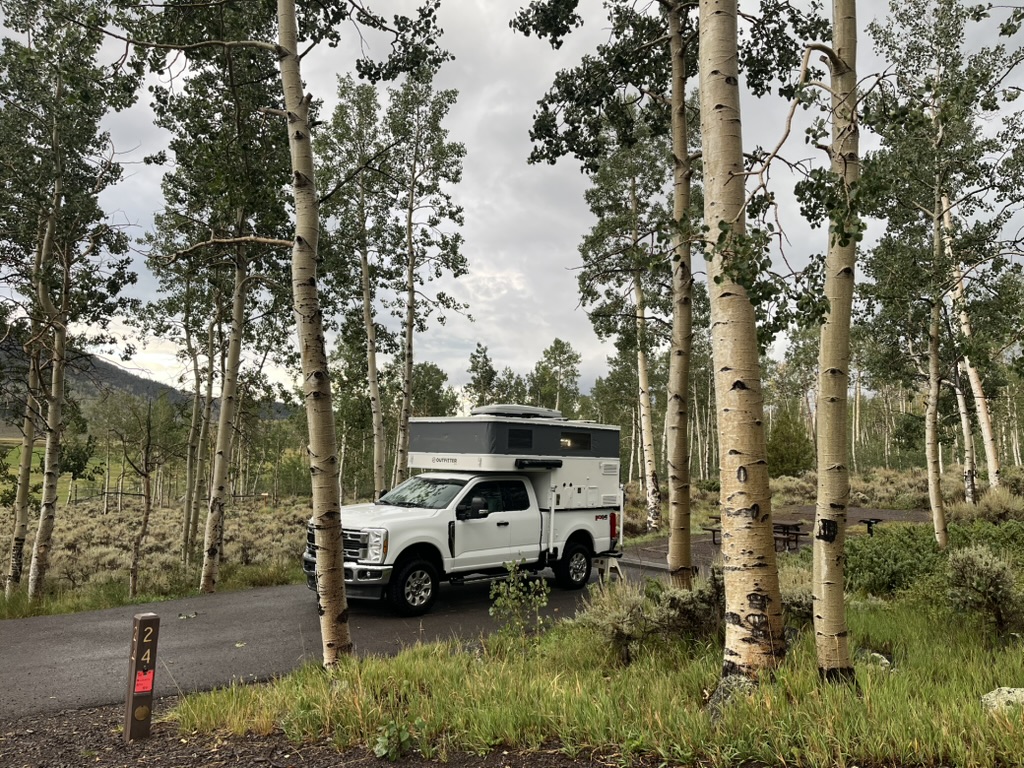
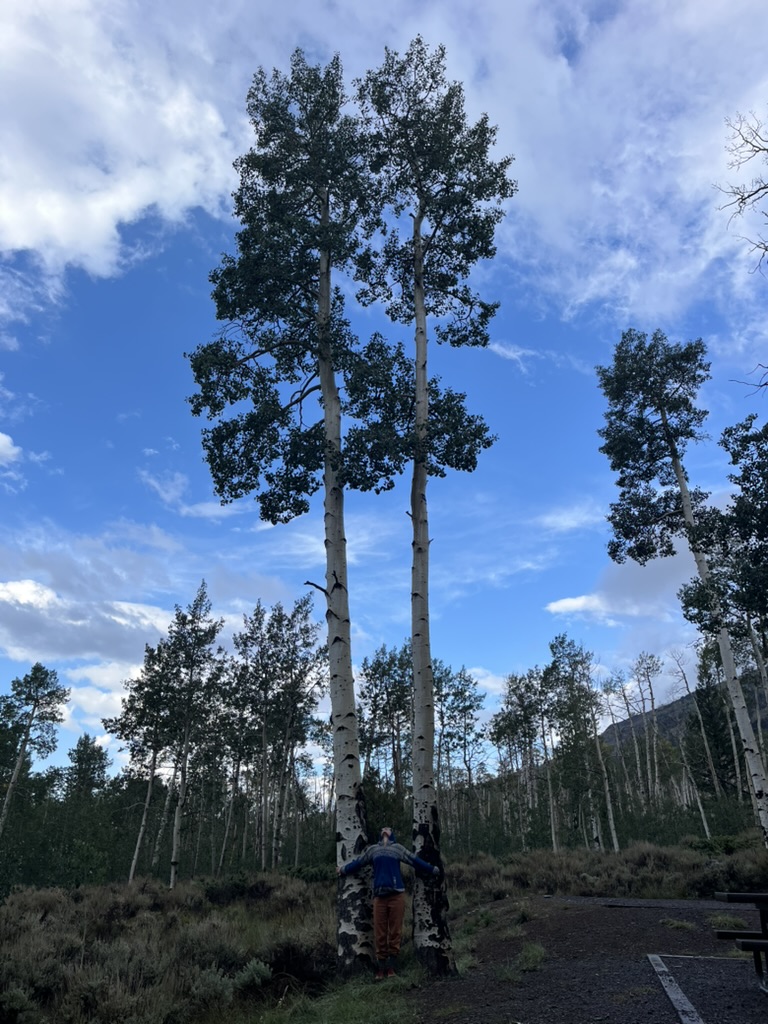
After a night at Steens, we made the long drive across Nevada and into Central Utah. We made the requisite stop at Fields Station for one of their breakfast sandwiches. Egg, cheese, a thick slice of ham in a home made English muffin. Just one was enough for the two of us. Northern Nevada gave us thunder and torrential rain followed by glowing rainbows straddling the road in front of us. After 10 hours of driving, we arrived on the shores of Fish Lake as the sun was dropping behind surrounding peaks. There we camped among the trunks of Pando — one of the largest organisms on earth, the largest tree by weight and landmass, and the world’s largest Aspen tree. The tree consists of an estimated 47,000 trunks, each genetically identical, covering 106 acres. Jocelyn has a particular affinity for Aspen trees, so as part of her birthday celebration, I tried to find campsites among Aspens as much as I could on this trip. Seeing this natural wonder has been on each of our lists for a while and camping in its woody embrace was a great way to continue what we had started to call our “Aspen Tour 2026”.
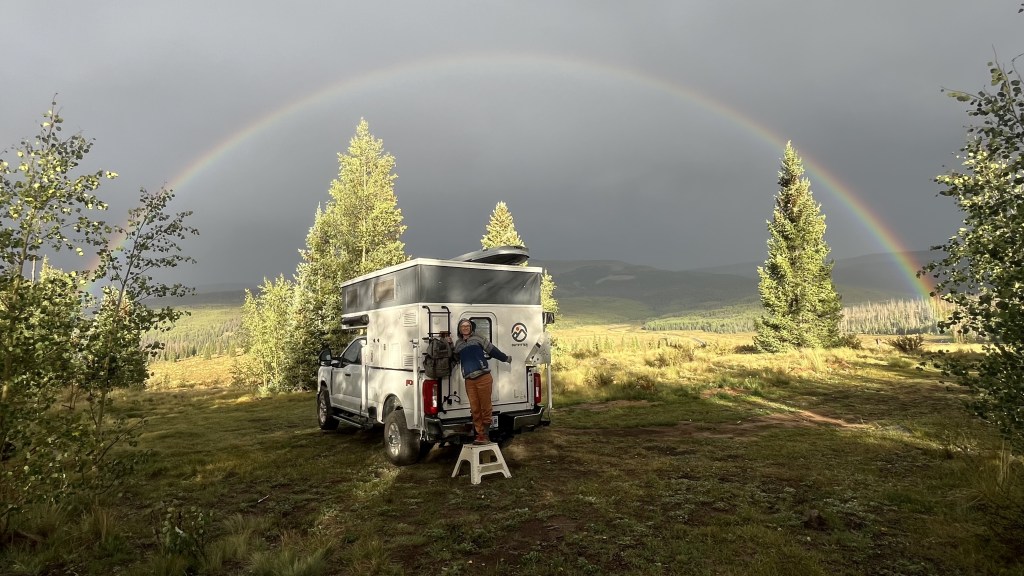
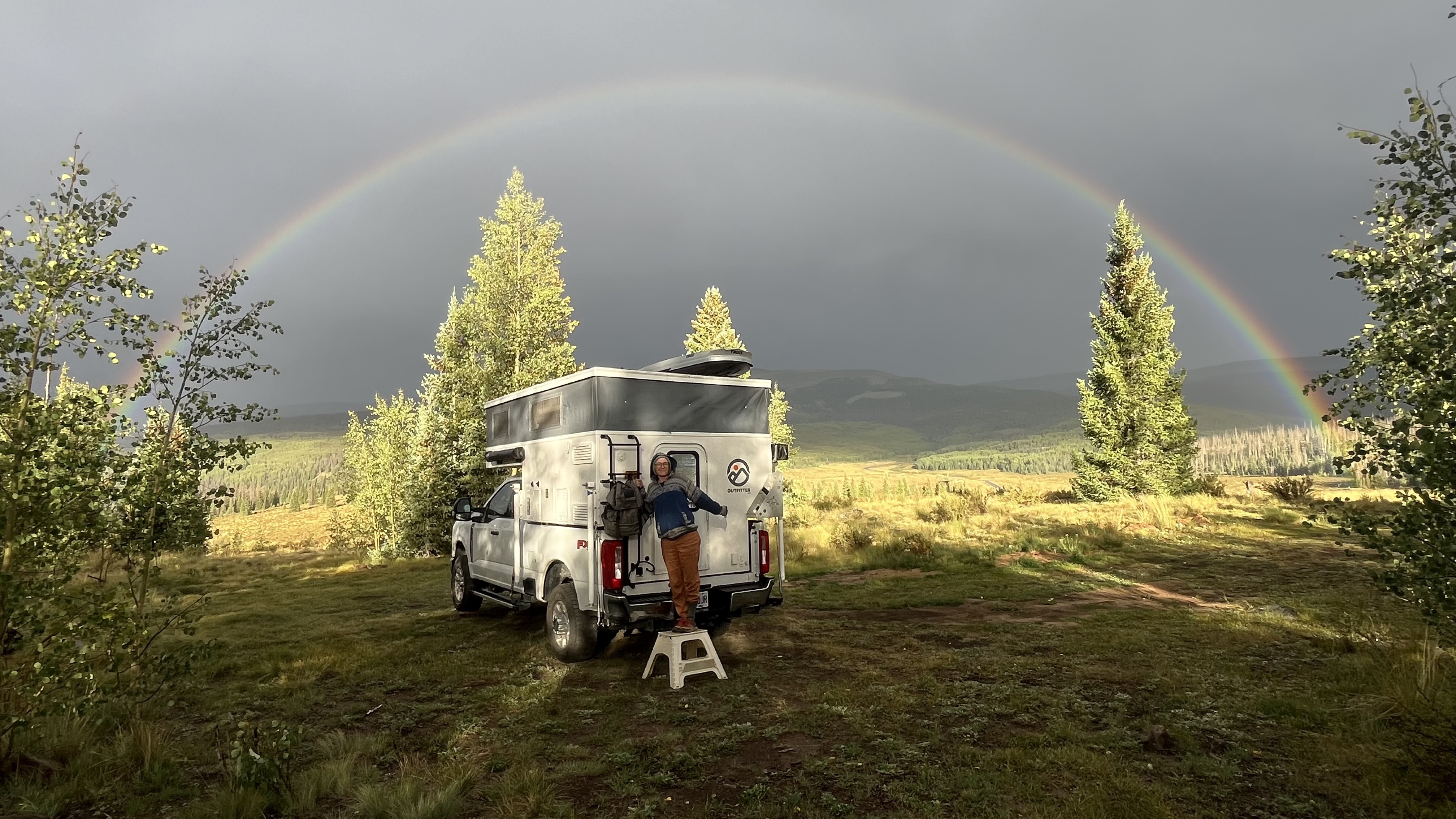
The next day we drove across the rest of Utah and into Colorado. Our route took us on backroads through the alpine meadows bordering Fish Lake, along the Fremont river, and then down into the communities of Loa and Bicknell. Being a Sunday, the LDS churches were hopping, people in their Sunday best out talking under the dappled light of trees along tidy streets. As we made our way South, the farmland gave way to the canyon country of Capitol Reef National Park. Golden cathedrals of rock rising vertically from the road. The waters of the Fremont river nurturing giant Cottonwoods and the old orchards of the historic settlement of Fruita, the bright green of their leaves contrasting against the rippling yellows and oranges of the cliffs towering above. From there we headed up to I-70 to Grand Junction and then back South to Lake City, Coloroado on the Silver Thread Scenic Byway. We camped at over 10,000 feet in the mountains above Lake City, you guessed it, in an Aspen grove. Just as we arrived, the sky opened up with a monsoon season downpour followed by a full rainbow framing the camper.
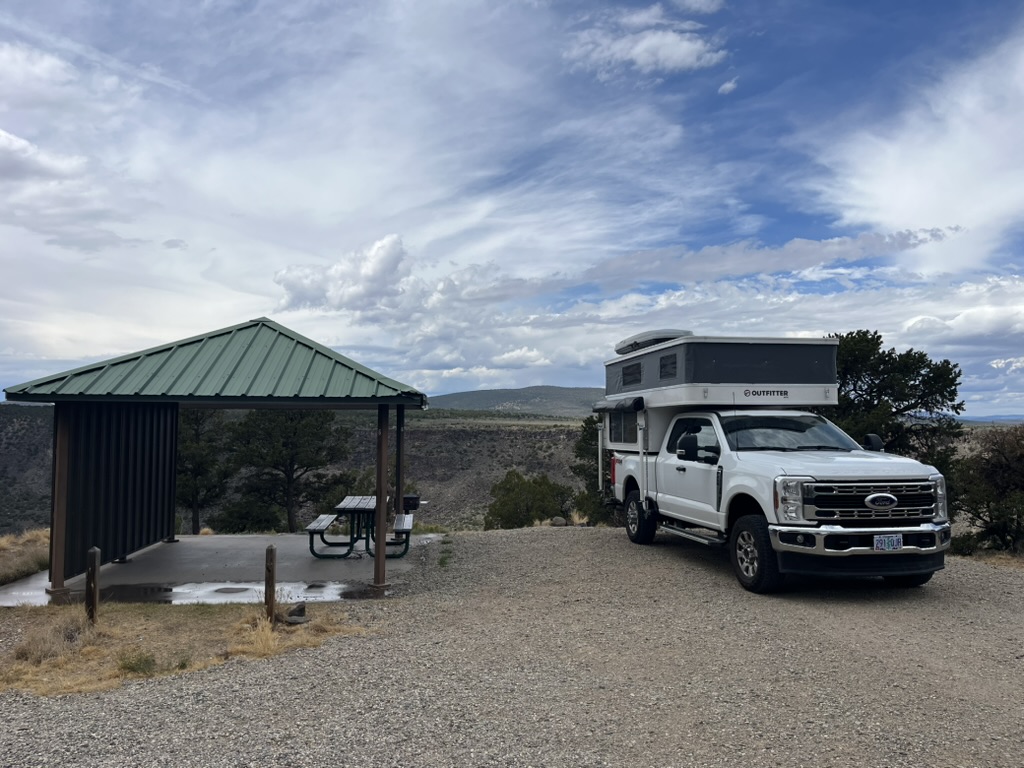
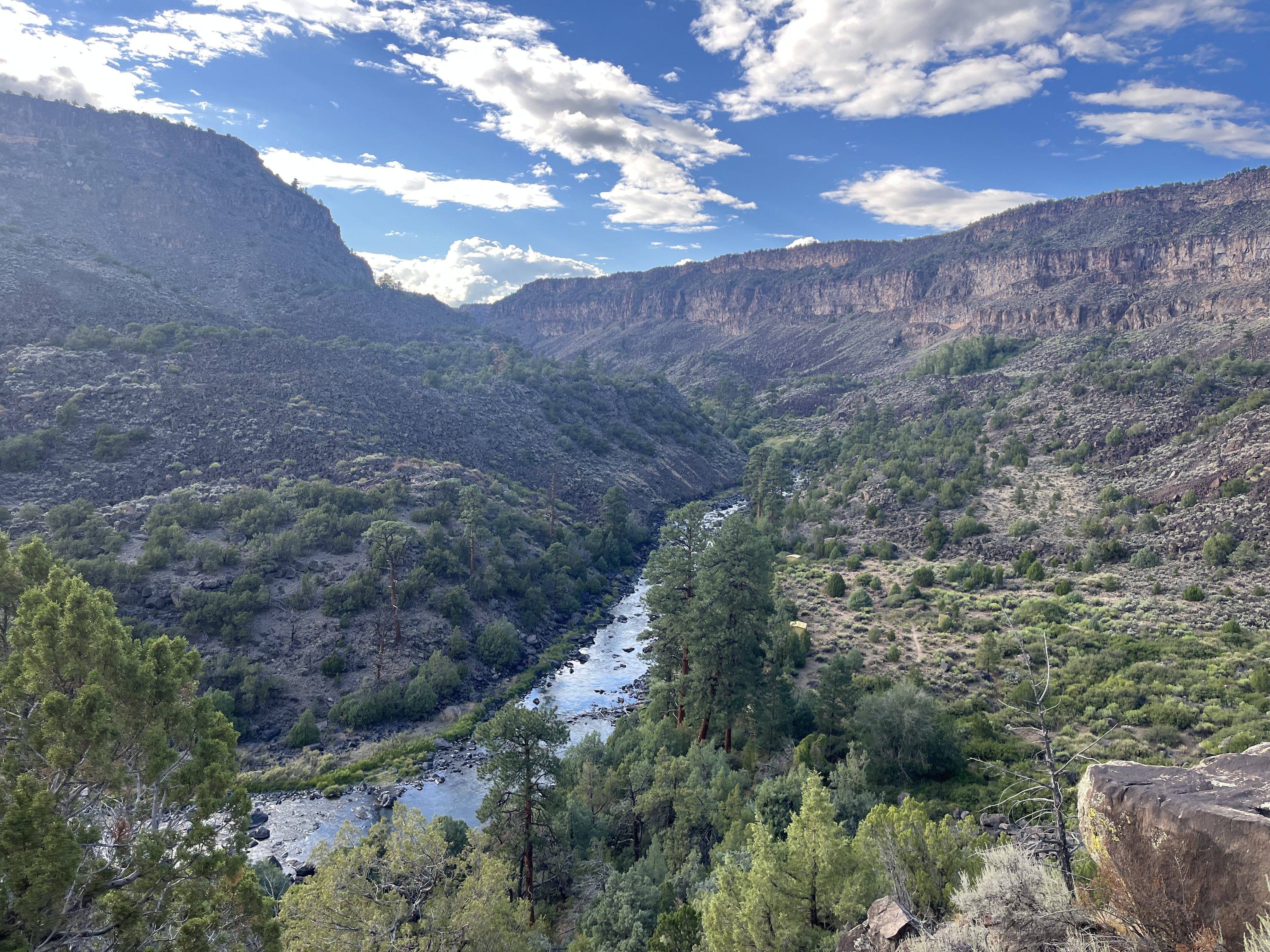
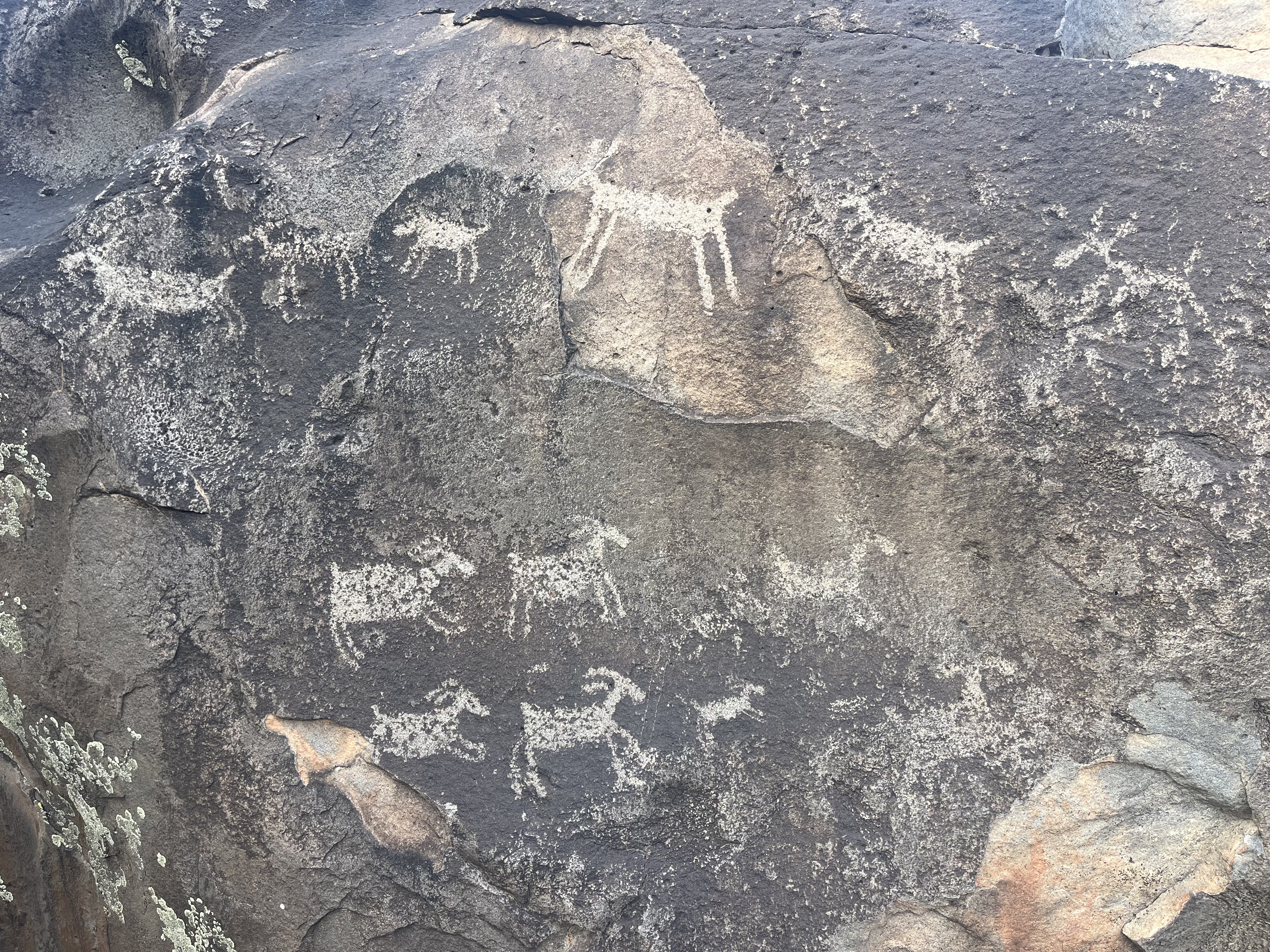
After three fairly long days of driving, we arrived in Northern New Mexico where we would spend the next week. We dropped down from the highest elevations in Colorado and into the Rio Grande del Norte region of Northern New Mexico. We spent Jocelyn’s work week, 5 nights and 4 days, camped on the rim of the canyon, the mighty Rio Grande rushing below and forming the rhythm of the soundtrack for our stay there, birdsong the melody. I spent the week as I often do, tending our camp, cooking, and hiking. Our second day, we hiked to the bottom of the canyon together, marveling at the trail engineering and the rapid change in landscape as we descended. The Juniper and Pinyon Pine at the rim giving way to Ponderosa Pine and Willow along the lush banks. We found ancient pictographs depicting herds of sheep and lizards, a connection to people who traversed and lived in this canyon long before our visit. On one of my hikes later in the week I came across a Bighorn ram, who notably would not cede the trail regardless of my hollering, and whose ancestors may have been the inspiration for those pictographs. The one bad experience here was a few run-ins with harvester ants. Known for their excruciating sting, I was introduced to them the first night we were here when I left my shoes outside and felt the tell-tale burning pain in my foot when I put them on again. They are just trying to defend their caches of nuts and seeds, but if you’re in this area, keep an eye out for ants with unusually large heads (that contain powerful jaws that they latch on with and then sting repeatedly!), and whatever you do, don’t leave your shoes unattended.
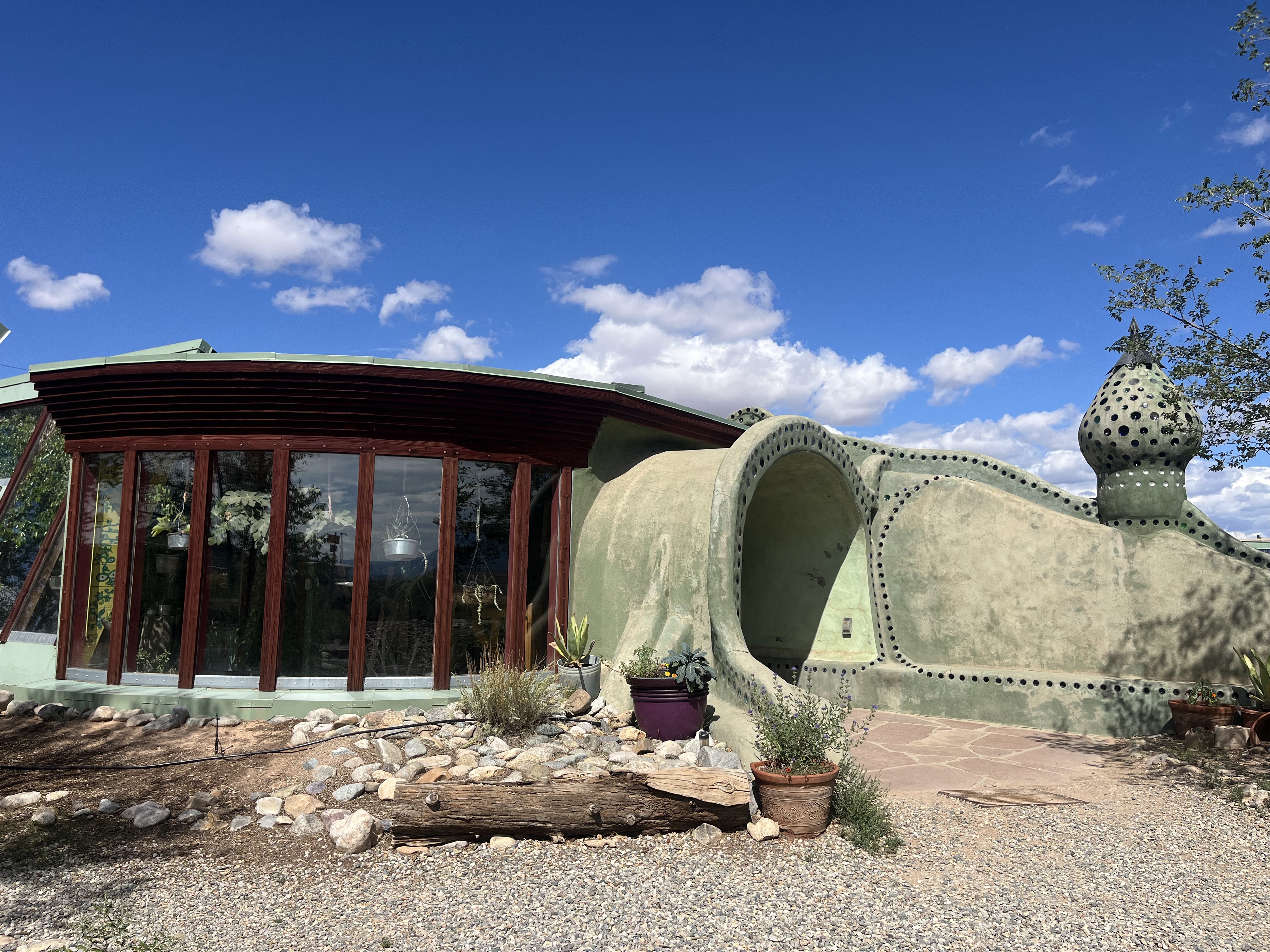
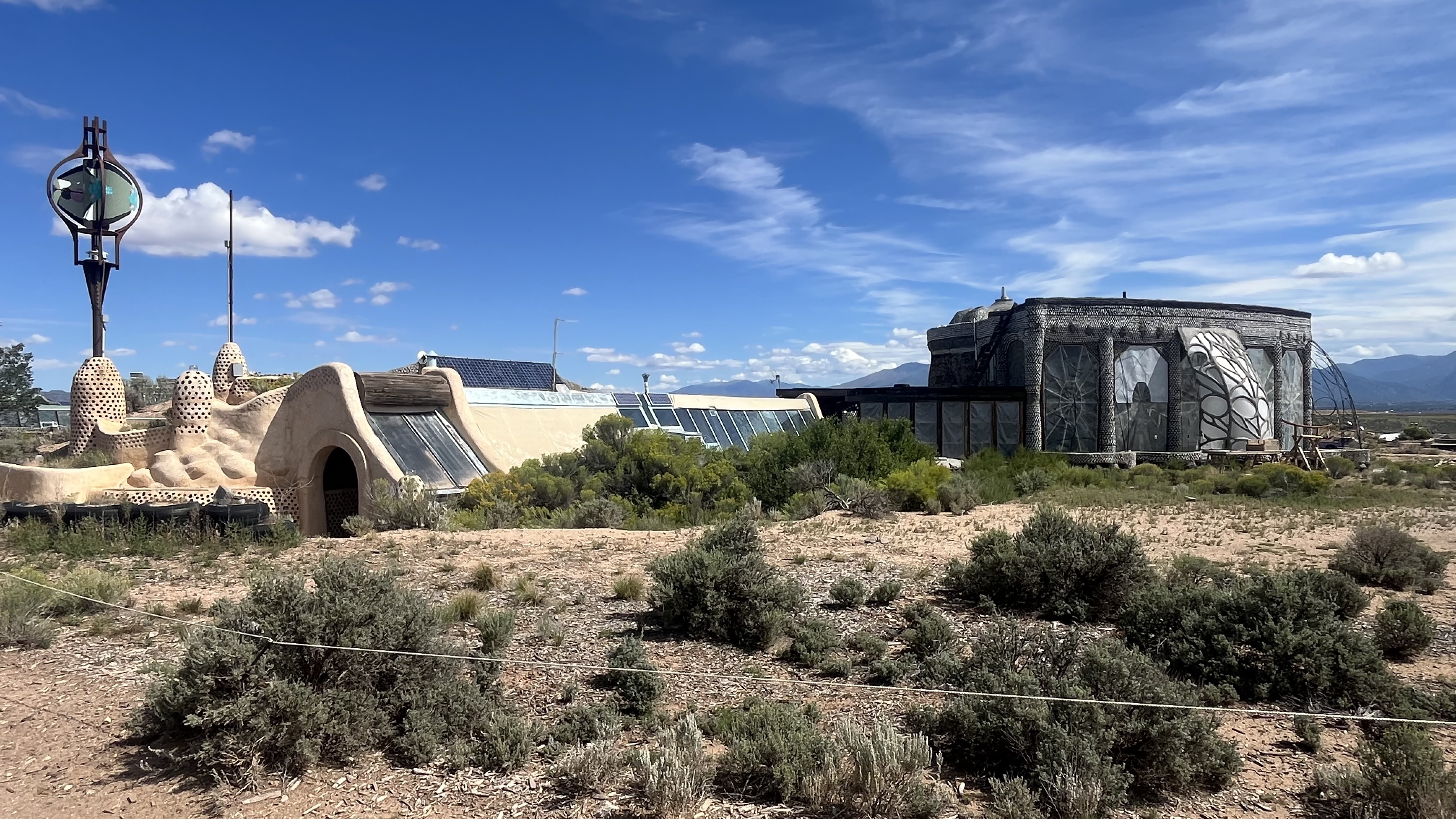
After wrapping up the work week on Thursday, we drove to Taos on Friday morning, which was also Jocelyn’s birthday. On our way, we stopped in at the Earthship Visitors Center. Earthships are a sustainable building style that attempts to be as self-contained as possible producing their own energy, harvesting and recycling rain water, and growing food. They are also quite pleasant to look at and it was fun and inspiring to see multiple examples onsite. When we reached Taos, we parked the truck in a friend’s driveway and spent the rest of the day exploring the town with its art galleries, cozy adobe architecture, and culinary delights all surrounded by picturesque rocky mountain peaks. Jocelyn made birthday stops at a tea shop, book store, and chocolate shop. We finished off the evening with a delicious dinner at Love Apple, which features New Mexico style home cooking with local and organic ingredients. My interests primarily lie in the mountains and forests when traveling, but Taos was a good reminder that cities can be more than just a re-supply stop and shouldn’t be skipped. After all, that’s where the chocolate is.
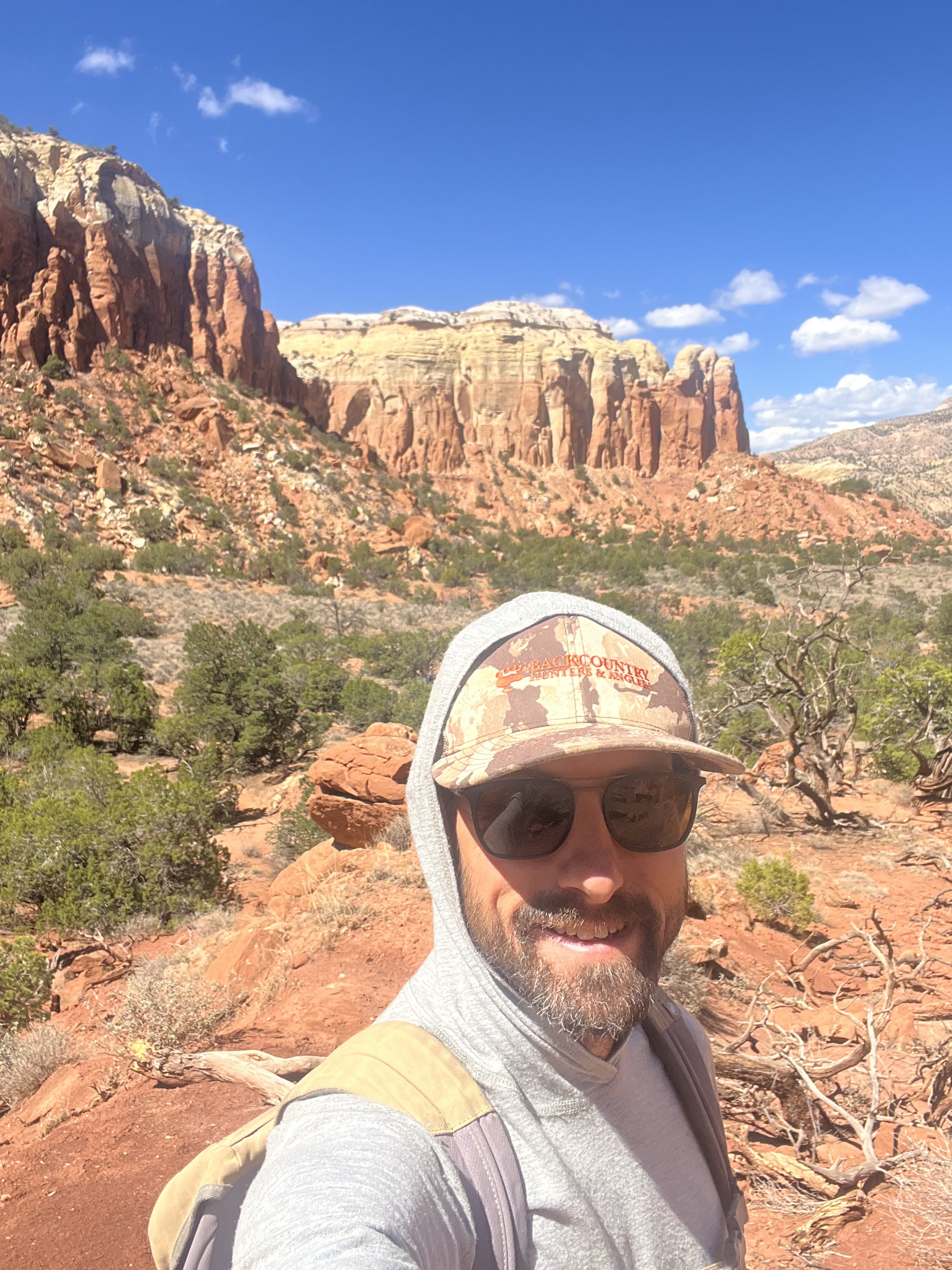
From Taos, we went to Ghost Ranch about 80 miles to the West. Ghost Ranch is famous for being the home of painter Georgia O’Keeffe and also as a rich Triassic paleontology site. It’s easy to see why artists have been inspired by the area with its towering mesas, colorful cliffs that are constantly morphing with the changing light, and lush Oak and Cottonwood bosques. We met up with a friend there who lives in Taos and works at Ghost Ranch. While her and Jocelyn attended a workshop with Robin Wall Kimmerer, I spent the day exploring and hiking in the area, summiting Kitchen Mesa that looks down over the ranch and out into the surround valley. After a delicious meal prepared by the Ghost Ranch kitchen, I watched the sunset and then spent the evening with friends stargazing and talking. About as close to a perfect day as I can imagine.
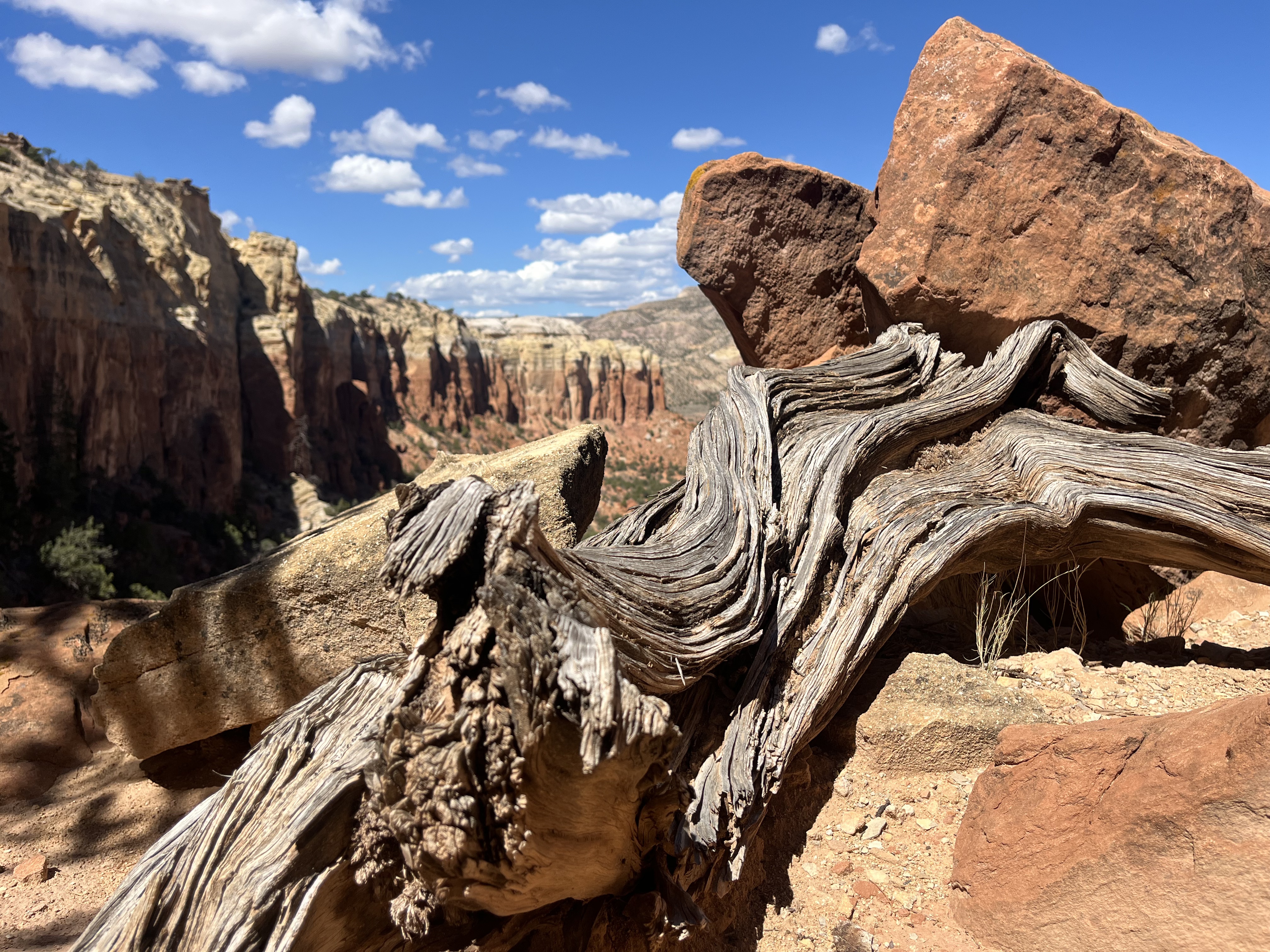
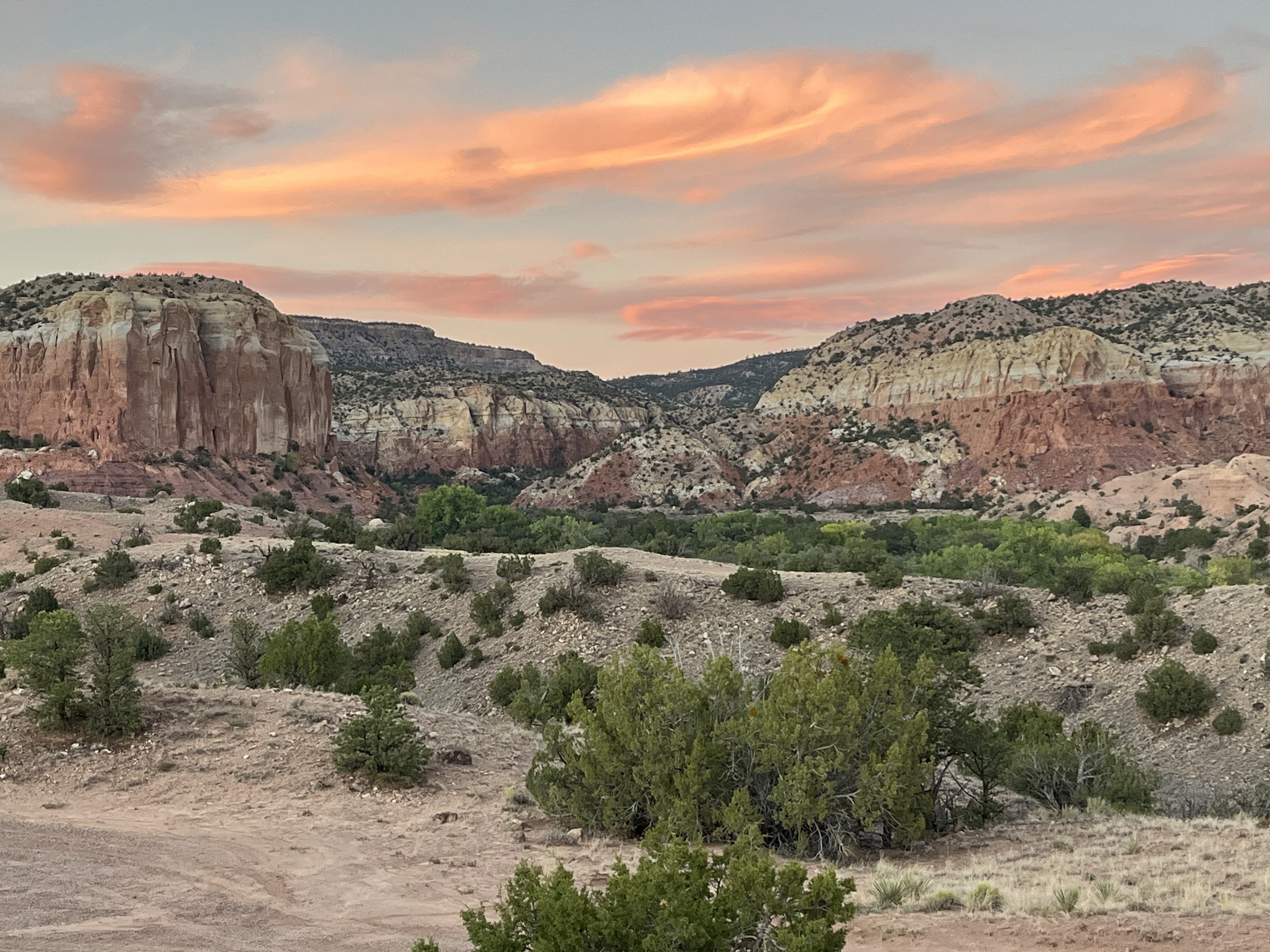
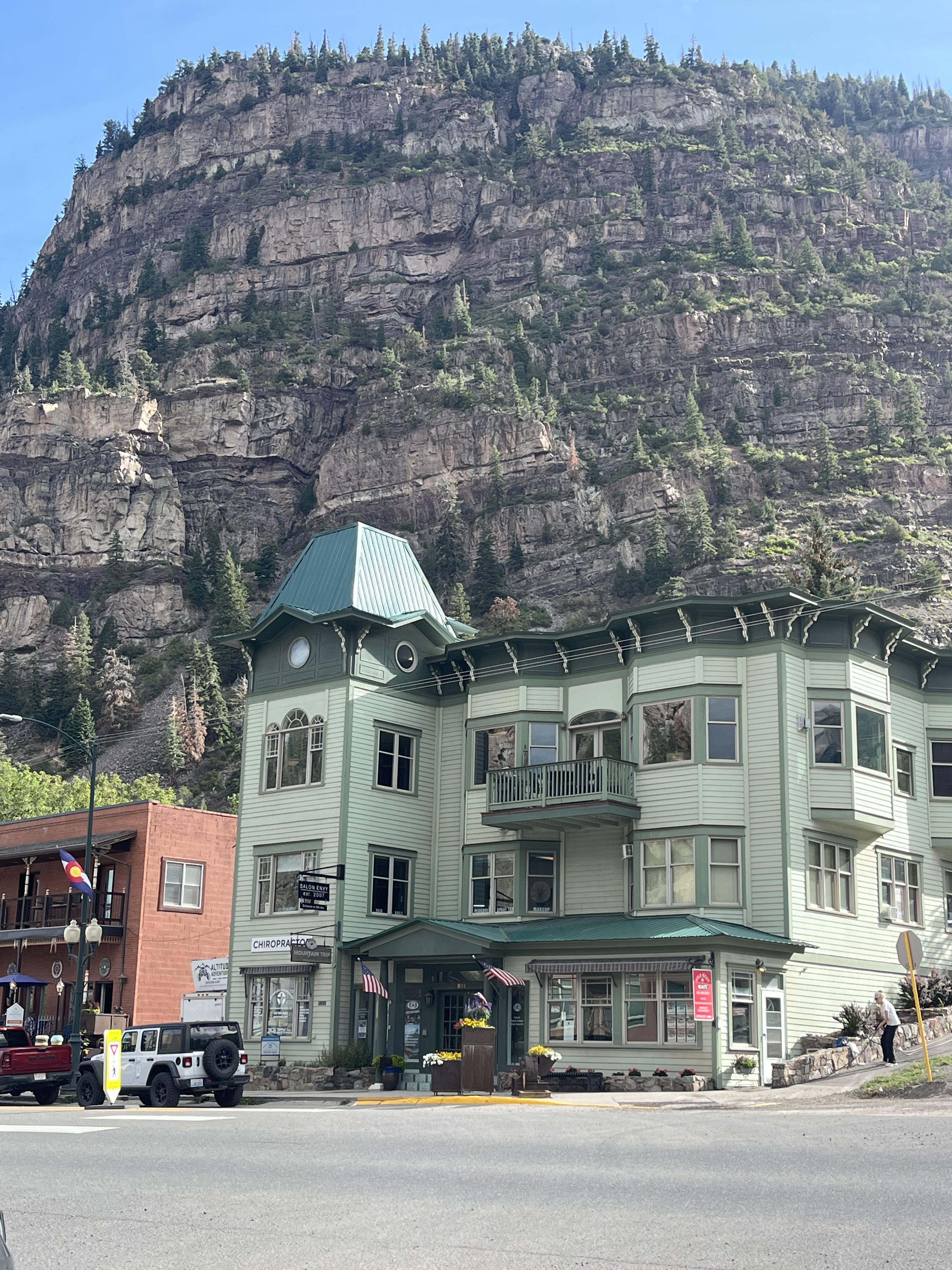
Ghost Ranch marked the turning point in this trip and we headed back North and West. Our next destination was a return to one of our favorite areas, Southern Utah. Our route took us back through the high country of Colorado, this time through the historic and picturesque mining turned tourist towns of Silverton and Ouray. We hiked in the Ice Lakes basin West of Silverton, which took us over 11,000 feet, testing our lungs and our legs. I grew up in the mountains of Montana and live in the shadow of the Cascade range with its towering volcanoes now. However, there’s something about the Colorado Rockies that is just on a different scale. The elevations, the Aspens, the 14,000 foot peaks, the quaint towns nestled within. I know people fall in love with Colorado, and now I understand why. Having gotten a taste of it, I’m eager to go back.
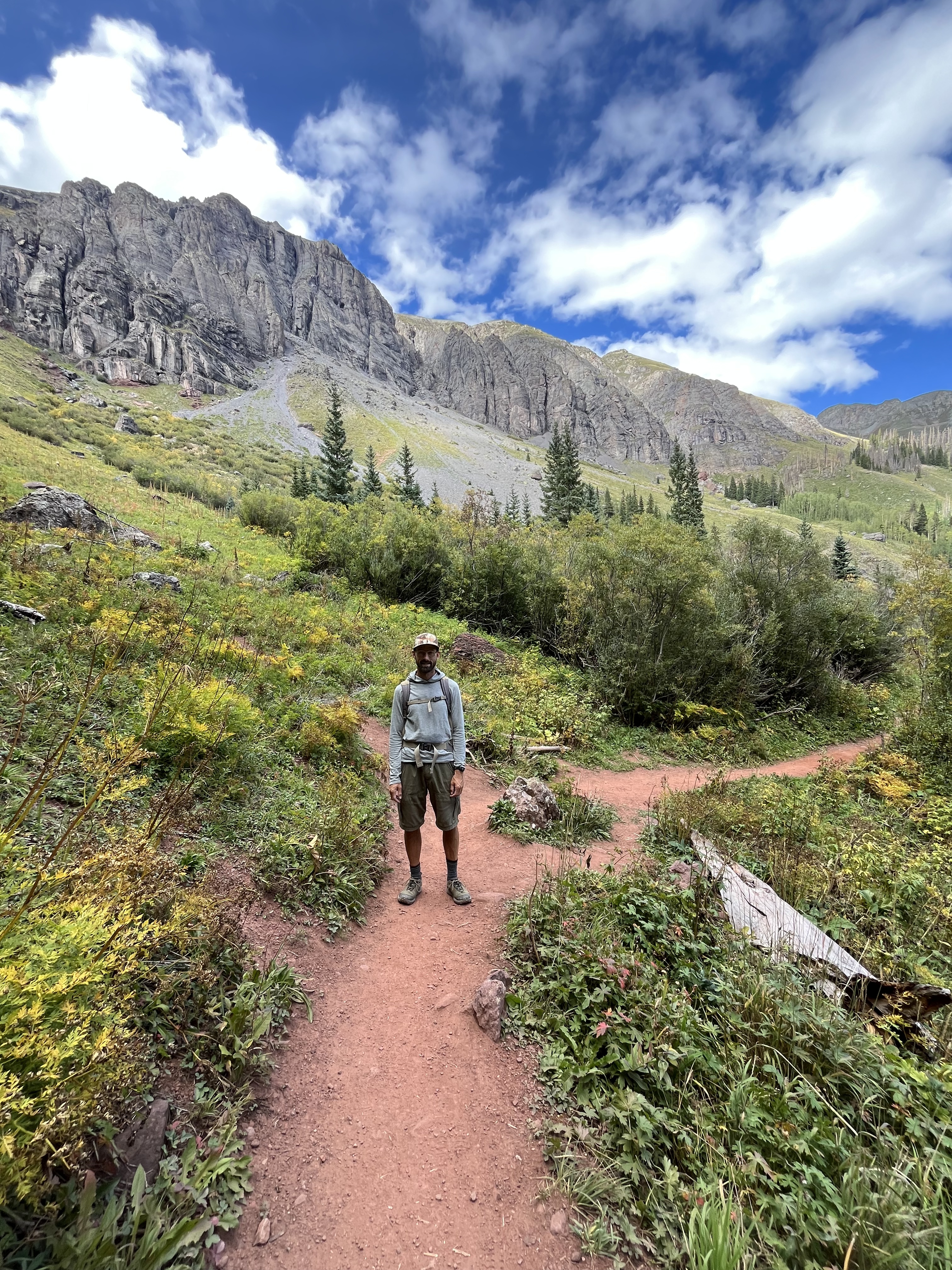
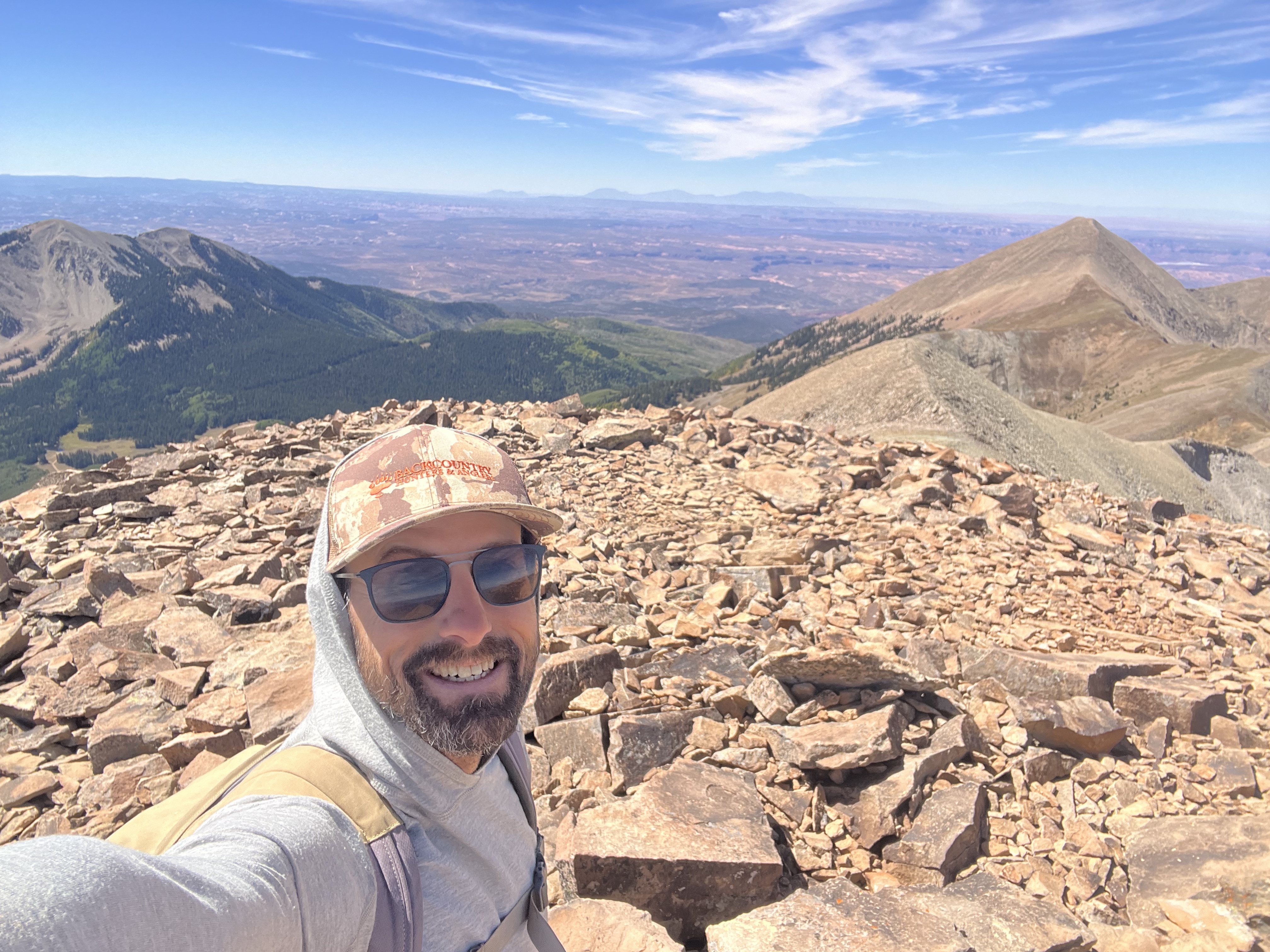
While we wanted to return to a spot that we like within the Bears Ears Monument bordering Canyonlands National Park, the temperatures were looking a little too warm for our liking. As a result, we turned to the La Sal Mountains East of Moab for higher elevations and cooler temperatures. As luck would have it, we found a perfect camp spot to spend the week at next to a babbling creek in the shadow of Mount Peale, the range’s highest peak. Set in a large meadow ringed by towering Spruce, we watched a doe and her twin fawns each evening and were greeted with chipper birdsong each morning emanating from the Elderberries that dotted the meadow. One of our days there I summited Mt. Peale, which at 12,720 feet is now the highest peak I’ve climbed, edging out Mt. Adams in Washington at 12,276. This was a magical place among the peaks and the Spruce and the water, and one we’ll definitely be coming back to I think. It’s nice to now have some favorite places in the canyons and in the mountains in this area so we have somewhere to go no matter the temperature.
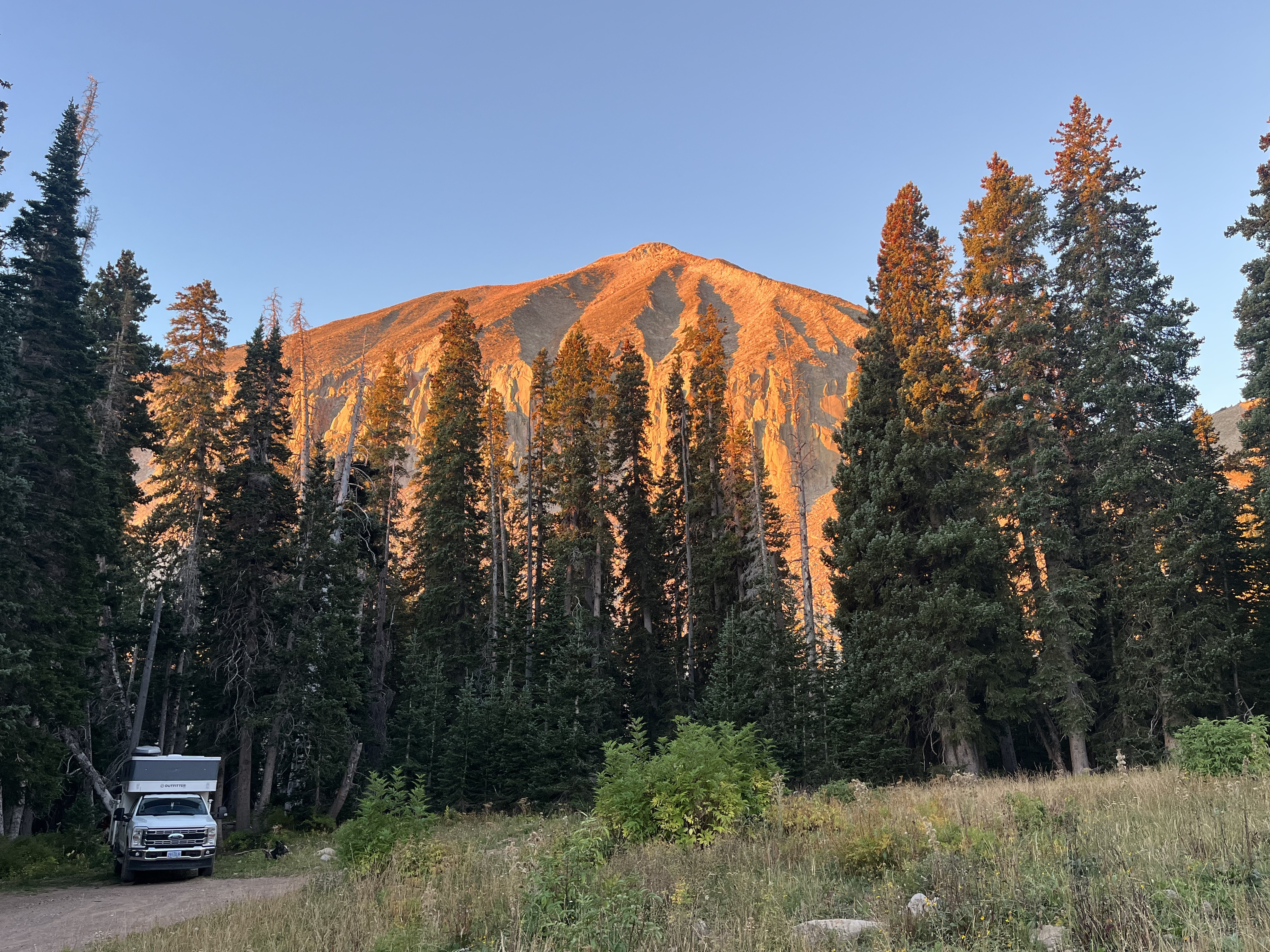
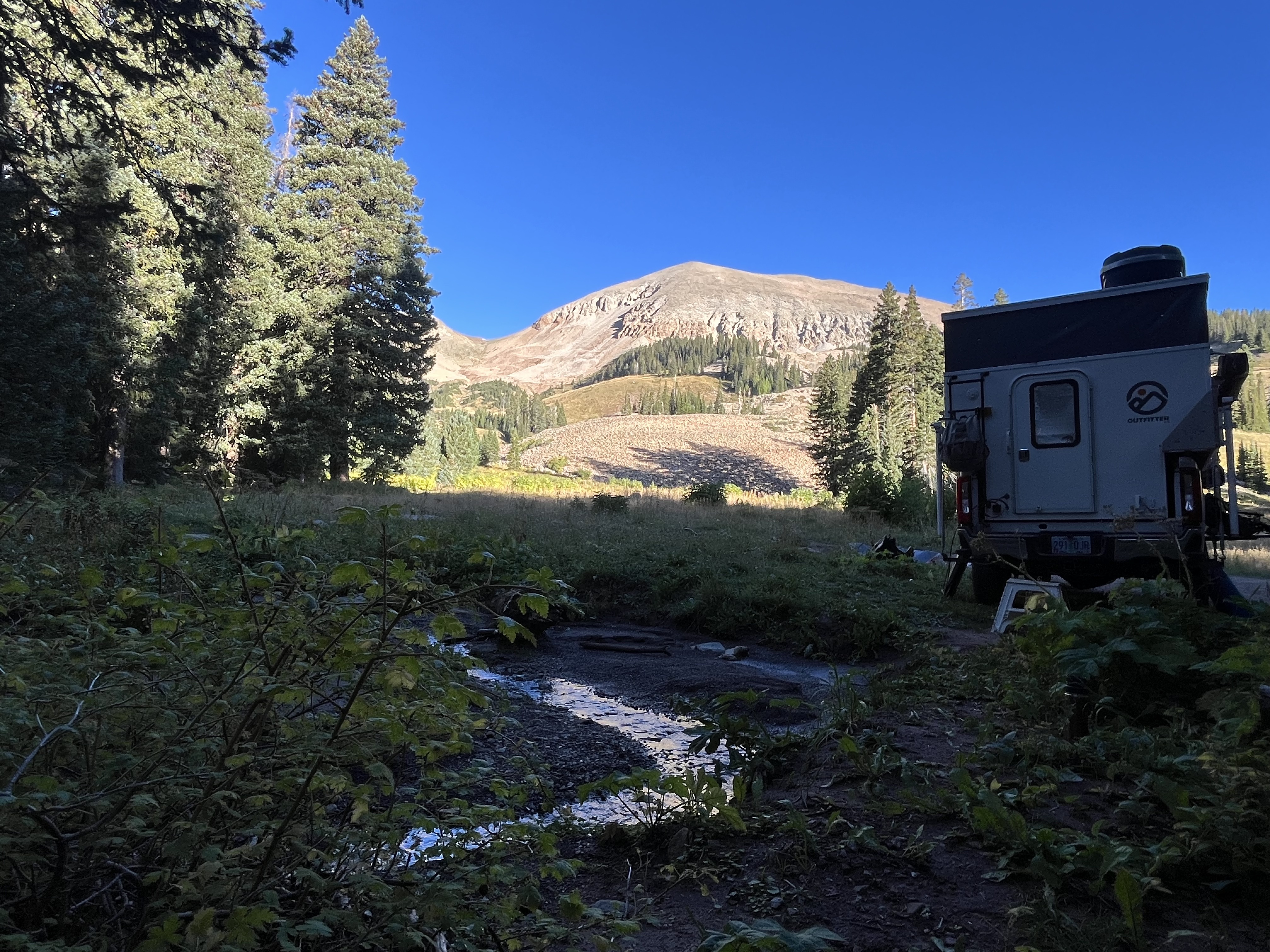
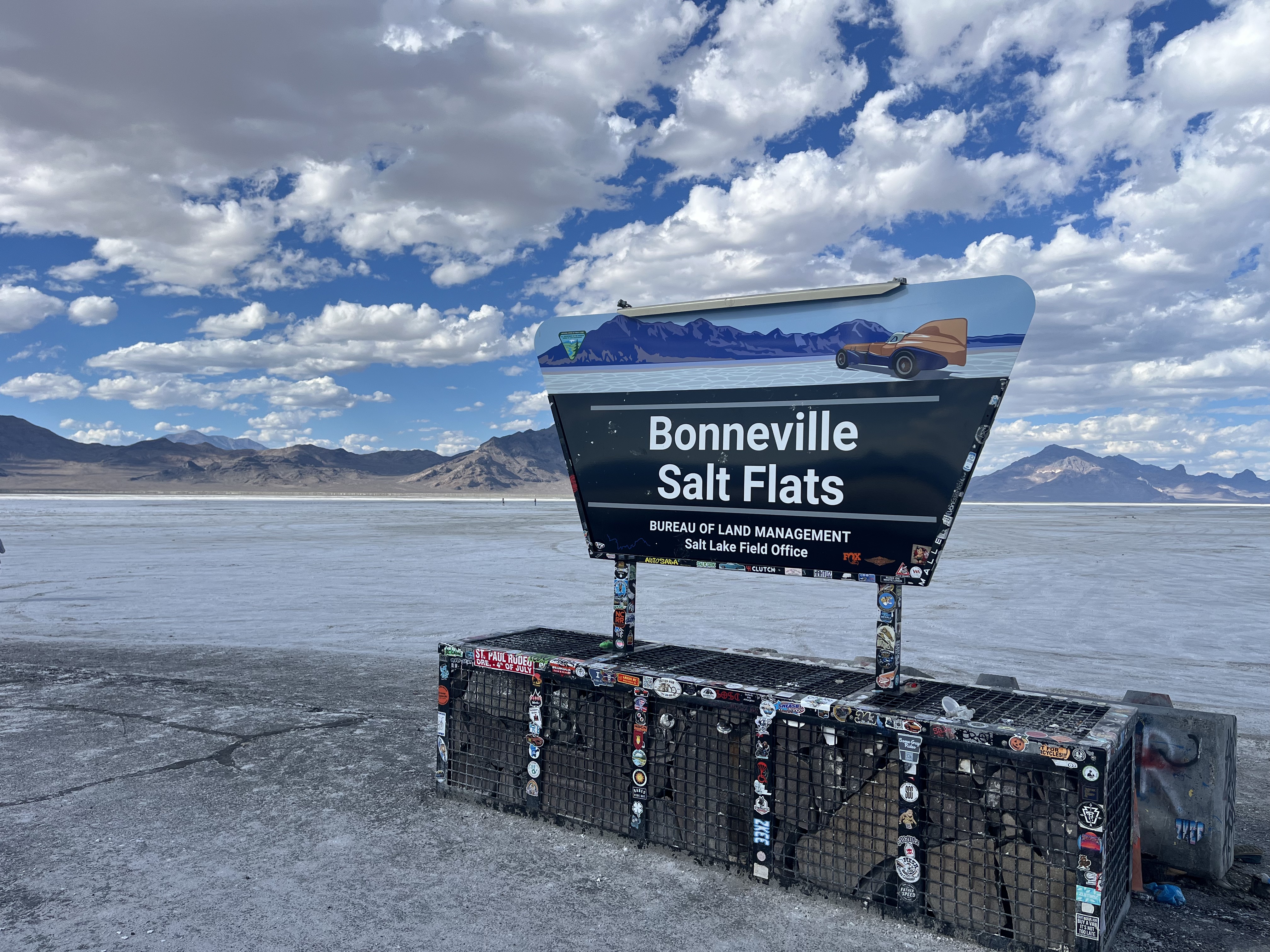
Afte leaving the La Sals, headed North, stopping at the Bonneville Salt Flats and making camp just over the Nevada border in the foothills of the Ruby Mountains. Our penultimate day on the road took us North into Idaho and Snake River country. After a stop for cheeseburgers at Cindy’s Cafe in Grandview, we turned off the pavement and onto the Owyhee Uplands Backcountry Byway. This took us through the canyons and sagebrush plains of the Owyhee and also through the area burned by the 500,000 acre Big Grass Fire. The fire is officially out now and we saw the last of the fire crews packing up, but the vast burn scars will remain for a long time, a reminder of yet another unprecedented fire season here in the Northwest. We spent a windy night on the edge of Leslie Gulch in the farthest reaches of Eastern Oregon.
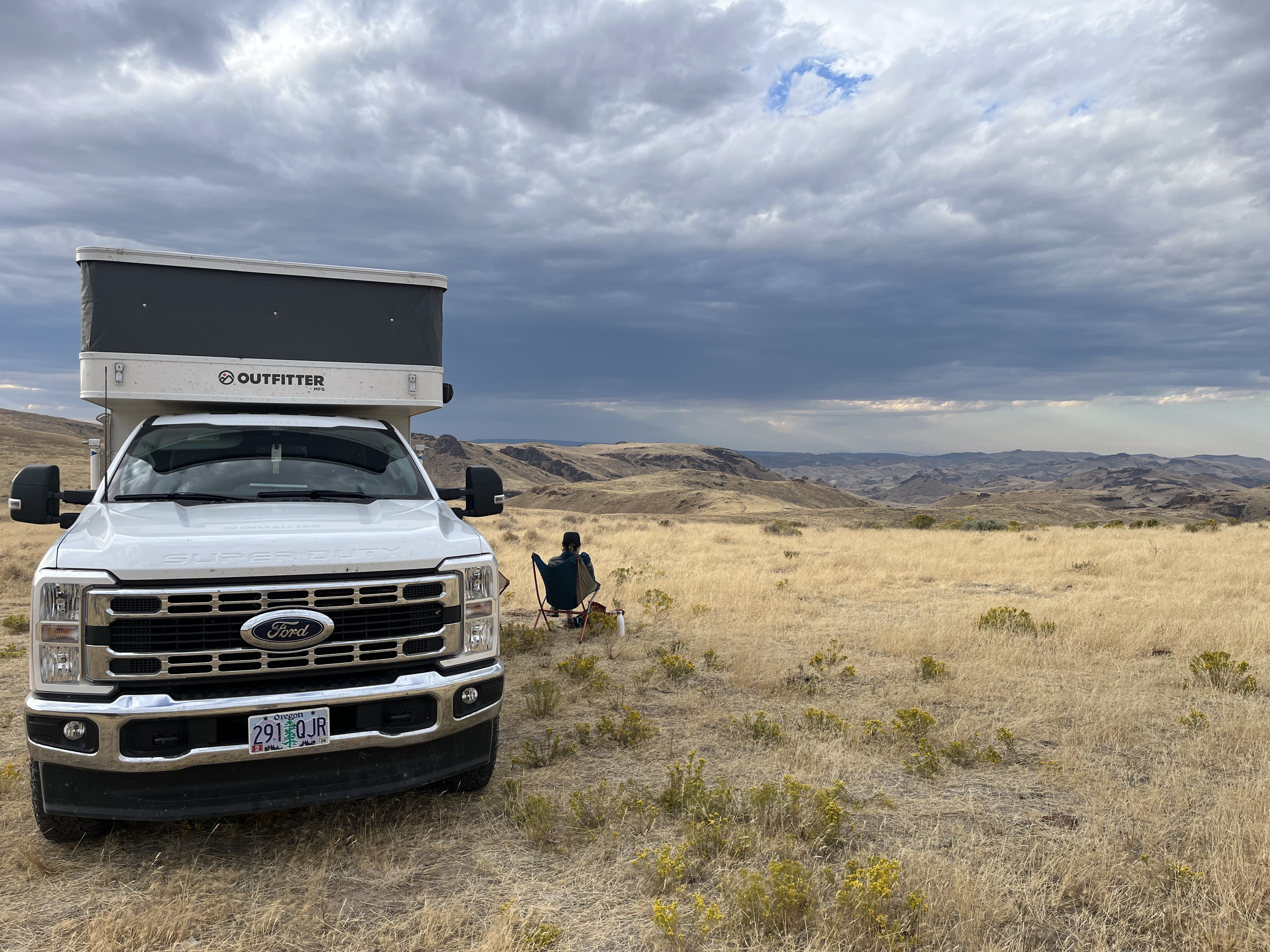
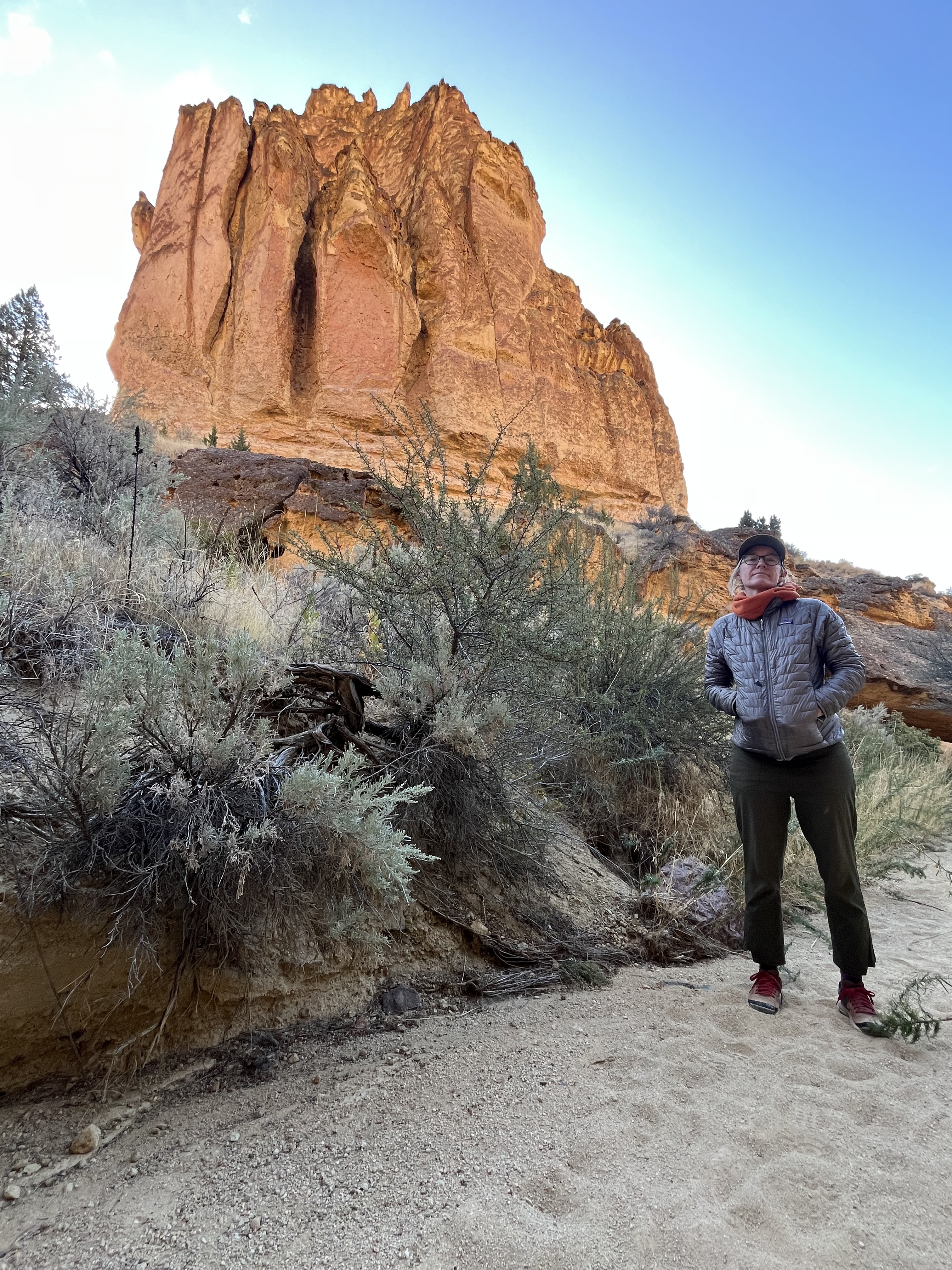
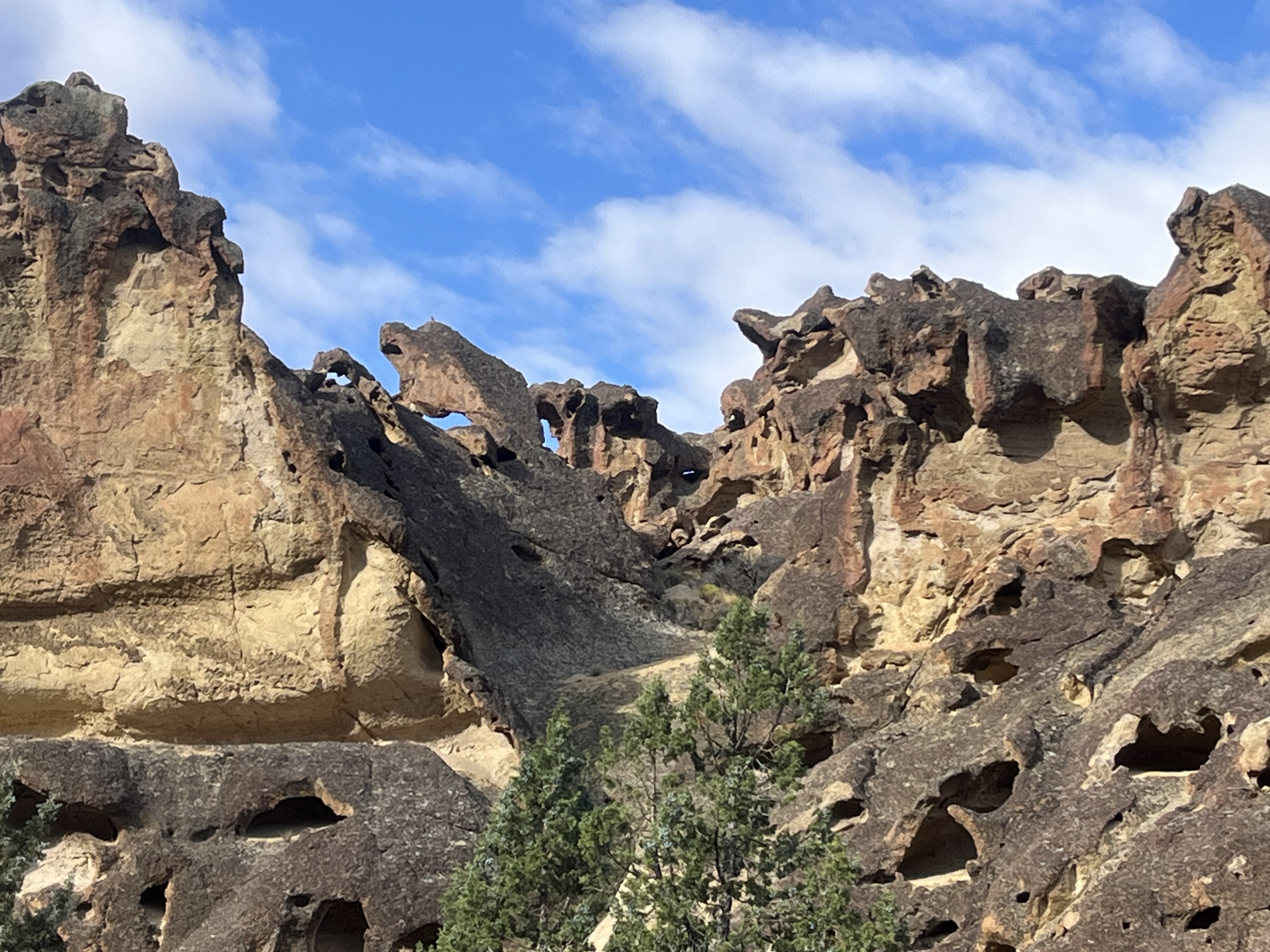
Our last day on the road started with a drive down to Owyhee Lake, which wasn’t much of a lake, the river having retreated to its original channel. Yet another reminder of the dryness here this year. We hiked in Juniper Gulch among the towering yellow cliffs in their whimsical shapes pocked with tiny caves, homes for birds or trolls or both. While we did a good job of avoiding interstate highways on this trip, our last leg took us on I-84 back home. This is actually one freeway I don’t mind too much, especially the part coming into the Western Columbia gorge. With its big trees, big river, and big waterfalls it pulls me in with a warm embrace and welcomes me home.
While this trip was a bit of a whirlwind, it was one of those that packed in so many great experiences that it seems like it was much longer than two weeks. There was a lot of driving, but there was also the opportunity to slow down and get to know a few places on the Rio Grande and in the La Sals. We also got a taste for the high country of Colorado and will definitely be back there I hope. We’re back home now for the waning days of summer and the beginning of Fall, harvesting our potatoes and watching the Vaux’s Swifts do their acrobatic displays in the evening as they settle into their roost in our local school’s chimney. I’m looking forward to some time here at home, a few local adventures, and planning our winter trip to Baja.
 The Crooked Trail
Leave a comment