Author: tom

  • Dirt, Snow, and Good Company: A Week Well Spent

    Dirt, Snow, and Good Company: A Week Well Spent

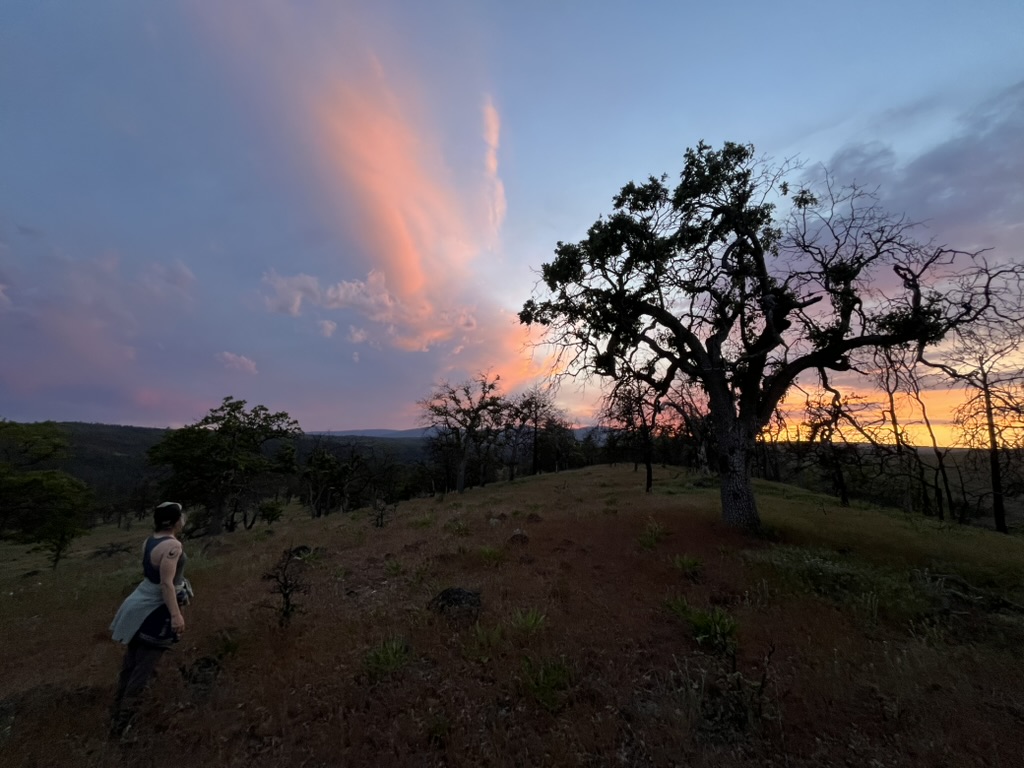
    The past week was a perfect microcosm of how I want to be spending my time in this next chapter of life. It included service and habitat restoration, music and dancing with friends into the wee hours, meaningful work on the land with people I care about, and a great day of adventure in the mountains.

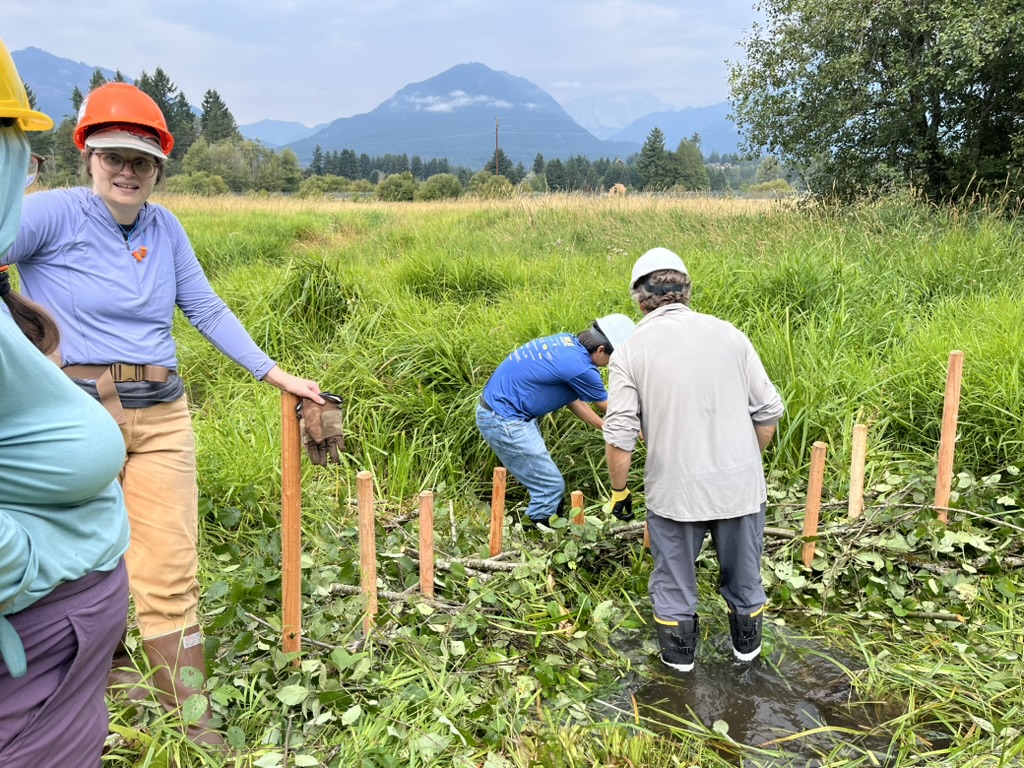
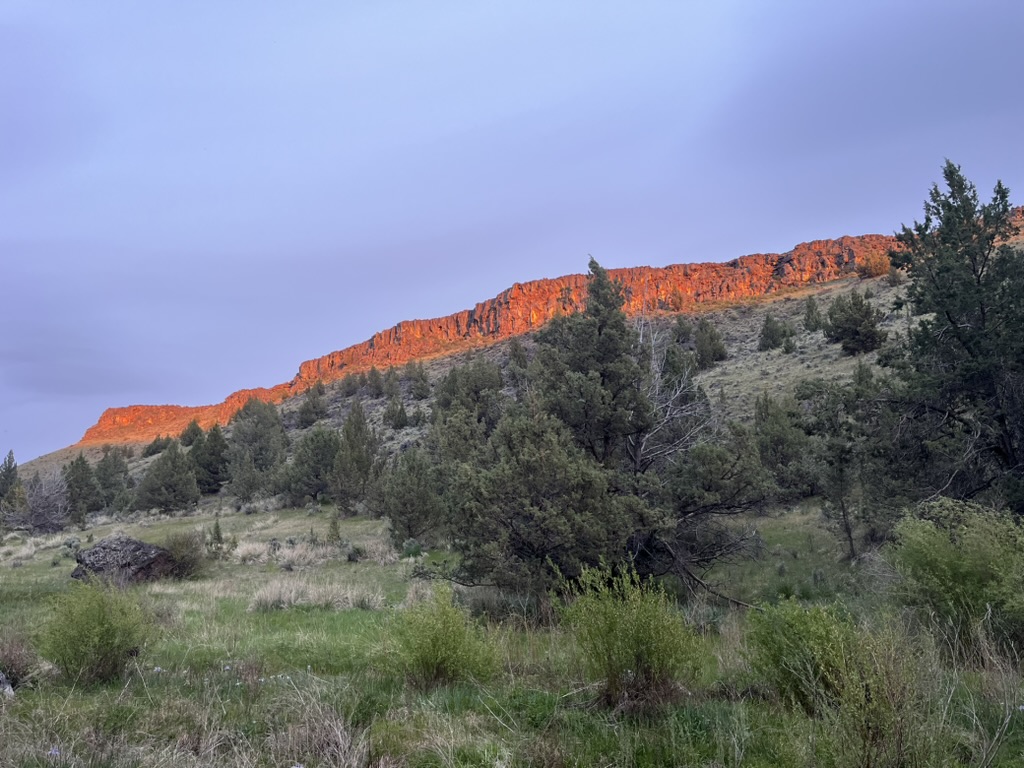
    I spent most of the week down in the Eugene area. Before heading to Eugene on Saturday however, I spent the morning volunteering with Bark and the Parrot Creek Cultural Ecology Project. This was the second time I’ve been out to this site and the weather was much more obliging than the first time – a sunny, warm Spring day vs. a cold, rainy Fall day the first time. The project focuses on restoring an 80-acre site near Oregon City so that it can be a space where Indigenous people can safely gather natural resources such as foods, medicines, and weaving materials while connecting with the land and their communities and traditions. On this particular day we were working to remove invasive Hawthorne, Blackberry, and Scotch Broom in an area that will someday be restored to a White Oak Savannah. Saturday night was out on the town in Eugene with friends dancing to Blu Egyptian and Skeletons from the Closet.

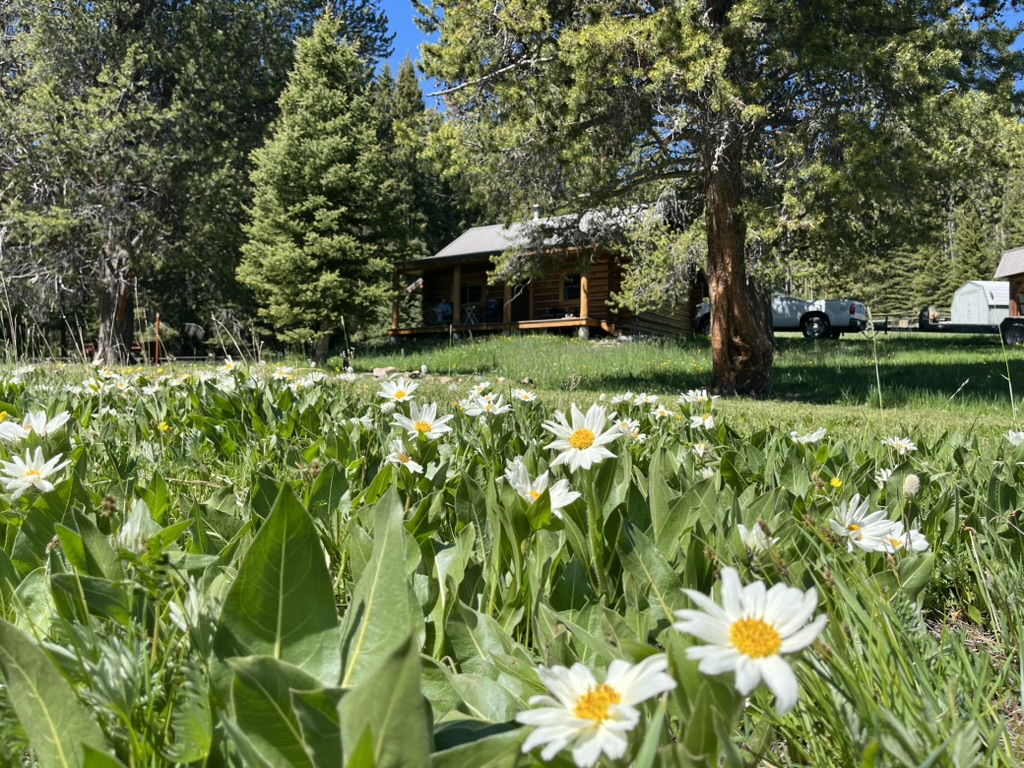
    Most of the rest of the week I spent on my friend’s farm, Mountain in the Mist. I helped with garden work and preparing an area for a pond. We also found some time to hit some nearby mountain biking trails. I’ve been able to spend some substantial time out there recently and I really love it. It’s such a beautiful, peaceful place, and Drake and Emily are some of my favorite people. There is something so satisfying about working with people I care about, tending to the land and to each other, outside in the fresh air. The work we’re doing can be physically demanding and hard, but in some ways it hardly feels like work. We’re listening to music, talking, laughing, and at the end I can see real results in the form of a nicely weeded garden, well pruned fruit trees, or a patched up fence. It is certainly a taste of a different way of being, maybe one that our ancestors would be more familiar with. Where work and leisure, labor and play, sort of meld together. Where we are working on the land with people we care about to provide for our own livelihood, not going to an office or a factory to spend the majority of our waking lives with people we don’t really know to make money for a faceless corporation. They feed me incredibly well and I always sleep great, which is ample compensation in my book.

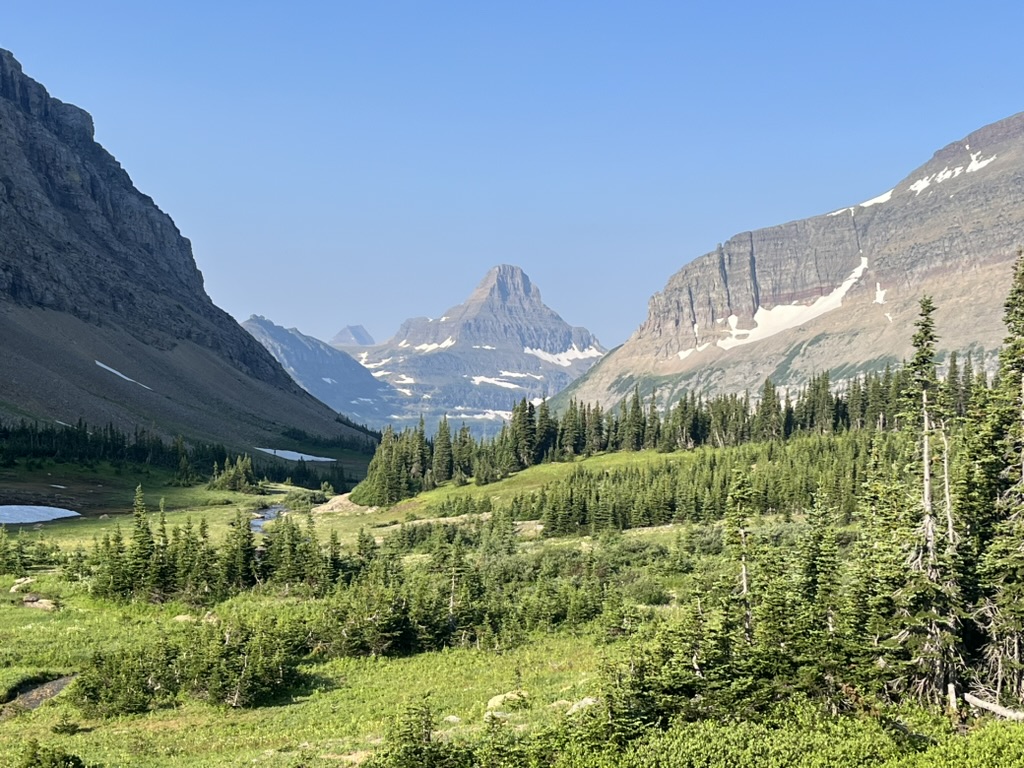
    The biggest highlight of the week was a backcountry ski trip to Mt. Bailey. We left at 5 am on Thursday to make the 3 hour trip South and get to the trailhead and on the mountain before the promised sunshine started melting the snow too much. On arrival, there was a light dusting of new snow at the bottom of the mountain around 5,000 feet, a good sign. We decided to bushwack up the Eastern side of the mountain instead of taking the more established trail on the South side of the mountain. This would be a more direct route and would get us easier access to the North bowl that gets less sun and might have better snow conditions.

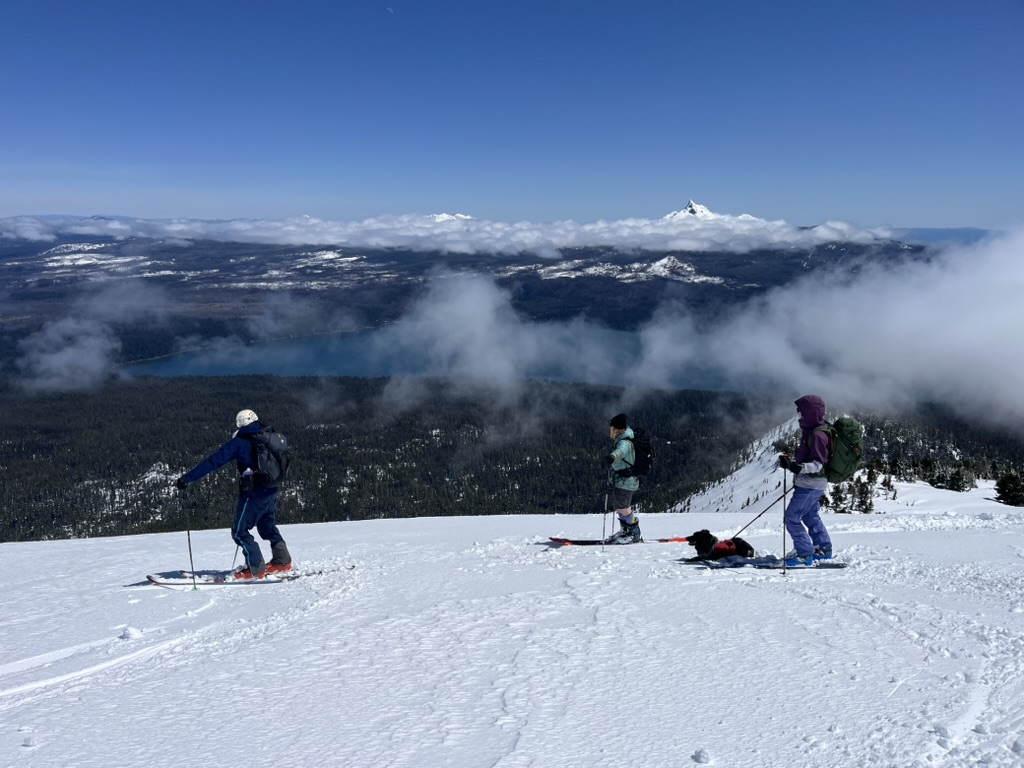
    The hike started clear and cool as we made our way through mixed conifer forest carrying our skis on our backs. There was some downfall to begin with, but as we climbed the forest started to open up and the hiking became somewhat easier, at least from a downfall perspective. A couple miles in, around 6800 feet, we started to climb the ridge we’d be on to the summit and we got our first panoramic views of the landscape below. Rugged Mt. Thielsen to the East with Diamond Lake below, Crater Lake to the South, and Diamond Peak to the North, all of it shrouded in a thin layer of clouds and covered with a dusting of new snow.

    Around the 7,000 foot elevation level, the snow got deep enough to put the skins on our skis and ski the rest of the way to the summit at 8,368 feet, which we reached around 1 pm. The wind was whipping and cold at the top, so after a brief interlude for some photos we started our descent.

    We descended a couple hundred feet to get out of the wind and have a lunch break.

    After lunch we began our descent in earnest, opting to stick to the East side of the mountain. The snow was pretty good in my estimation, although I’m no expert. Light enough to make some good turns, but definitely starting to get a little wet and heavy in the sun. We enjoyed a good 500 feet of descent in a big wide open bowl and another 500 or so in sparse trees.

    We were back to the cars by around 3 pm where we hung out for a while eating some snacks and enjoying the sunshine. On the way back we hit up Umpqua Hot Springs, a great treat for some weary muscles, and had a Greek feast at Alexander’s Greek Cuisine in Roseburg. By the time we got home around 9 pm, full bellies and tired bones, sleep came easily.

    This past week felt right in many ways. It was full, but not depleting. It was tiring and involved a fair amount of discomfort at times (climbing the mountain, cutting thorn laden Hawthorne, pulling weeds). But it all somehow left me energized, filled up. Busy feels scattered and depleting, this week felt full in the sense that my days were built around what actually matters to me – the land, community and people I care about, the mountains, adventure. I’m still in the early stages of figuring out what things look like going forward, but this last week felt like a step in the right direction.

  • I Left My Tech Career at 46: Here’s the Honest Truth Three Months Later

    I Left My Tech Career at 46: Here’s the Honest Truth Three Months Later

    There’s a memory from our recent trip through the desert Southwest and Baja that I keep coming back to. We were in Kofa Wildlife refuge at a spot we’ve been to twice now. I had woken up early to hike up the hill behind our camp to look for Bighorn Sheep. I walked out onto a point that overlooked a pool that had gathered in a large depression in the red slickrock. I sat there, binoculars in hand, scanning the canyon and the hillsides, the first bits of sun hitting the red rock and beginning to warm my face. I didn’t get any glimpses of sheep, but what I did get was a powerful, pervasive, yet subtle feeling that I was exactly where I was supposed to be, doing exactly what I was supposed to be doing. It was a profound sense of rightness. It was deep down, at an animal level, outside of intellect or reasoning. Tears came to my eyes when I told Jocelyn about the experience later that morning. Two days later I said goodbye to the job I’d had for the past decade.

    The Leap

    The decision to make the leap and leave my career as a software engineer was years in the making. At the time I left, I had been working in the software industry for almost 20 years. For most of that time, I loved the craft and I built something of an identity around it. I got a particular sense of satisfaction from seeing an application come to life, the craftsmanship of creating elegant code that solves tough problems. I worked at the same company for over a decade, long enough to grow with it, to care about it and the people that I worked with. In many ways, it was the the perfect job. Fully remote, allowing me to travel and work from the road, well paid, lots of vacation time, a boss who I respected and who respected me, and products I believed in for the most part. Eventually though, for reasons I still haven’t quite been able to discern, I just lost the passion and interest in it.

    A few things happened that probably contributed to the loss. The company was bought by a private equity firm and after a few rounds of layoffs and executive turnover, the culture changed dramatically. The place that had felt like mine started to feel like someone else’s. The introduction of AI and an incessant push from the new executive team to use it for everything also took away much of what I loved about the craft. I don’t think AI is inherently bad, it’s just not how I prefer to work. Prompting an AI to write code instead of writing elegant and efficient code myself takes away much of the joy of craftsmanship that I found in the work. I was also feeling pulled in a different direction, away from screens and the digital world and toward wilderness, water, trees, and human connection not mediated through a Zoom link. Underneath it all there was also the awareness that I am no longer young and time isn’t an unlimited resource. With middle age, I was starting to feel the weight of my own mortality, that my time here is limited, and so is my good health. The window to do some of the things I want to do in life may be closing. I started to wonder, “If not now, then when?” Eventually I found that I was having a hard time focusing, and for the first time in my career, I noticed that I was beginning to dread Mondays. All of this combined to make it clear that for both my own sake and the sake of the company it was time for me to make a change.

    So, I jumped. It wasn’t an impulsive decision, but more like finally going through a door that had been slowly opening for a couple of years. I had some ideas of what I wanted to do instead, but no detailed plan. I was trusting that keeping myself open to possibility would show me a path forward. Trusting that the finances would work, and that Jocelyn and I would navigate the uncertainty together.

    The Long Game

    As I said, the final leap wasn’t an impulsive decision. It was actually more than ten years in the making.

    Sometime around 2012 or 2013, I came across Mr. Money Mustache and the FIRE (Financial Independence Retire Early) movement. He was a former engineer who retired in his 30s through frugality, diligent saving, and investing. His irreverent style and anti-consumerist bent really appealed to me. His classic post, “The Shockingly Simple Math Behind Early Retirement” opened my eyes to the possibility that with diligent saving, simple investing, and frugal habits anyone could take control of their most precious commodity, their time. I was hooked by the idea, not because of some retirement fantasy of playing video games all day, but because of the freedom that it promised.

    We were already frugal so none of this was a big stretch, but the idea of FIRE gave me a goal and a purpose for our frugal habits. We bought way less house than we could technically afford according to the bankers and we still live in that same 1500 square foot 3 bedroom, 1 bath (the horror!) house we bought almost 18 years ago and that we paid off 7 years ago. We shared one used car for many years. We commuted by bike and brought a lunch most days when we were still going to an office pre-Covid. We cooked at home the majority of the time. Some years we saved 50% of our income. We have no debt. However, we’ve traveled extensively, pursued our hobbies, and done everything we’ve wanted to do. We have never felt deprived of anything, we’ve just been intentional in how we spend our money making sure it’s on things that we really value.

    We’ve been relatively frugal and intentional, but we’ve also been very lucky in some ways as well. We were able to buy our house in 2008 when they were still relatively affordable and we had help with the down payment from a small inheritance. We were able to graduate from college with minimal student debt. I had a high paying tech job. We don’t have children. All of those things helped, and I don’t want to downplay those. However, we still could have easily inflated our lifestyle with a bigger house or fancy cars every time one of us got a raise and not ended up where we are. That is in fact the default path in our society and one that we didn’t want to take. A bit of luck combined with some discipline allowed us to have the flexibility and options we have now. Money can’t buy happiness, but it can buy options. I am now exercising those options that we’ve spent the last decade plus creating.

    We are not quite fully financially independent in the sense that neither one of us ever needs to work or earn money again. We are also not fabulously wealthy. We still need to be intentional about our spending just as we always have been. What we do have is a sense of what is enough and the knowledge that real wealth lies in having control over our lives. In the words of Chris Brogan, “The goal isn’t more money. The goal is living life on your own terms.” Jocelyn really likes her job and sees herself continuing to do it for the foreseeable future. This gives us the majority of the income we need to live and so our savings and investments should continue to grow until working also becomes optional for her in a few years. I am immensely grateful for her support and encouragement in making this jump.

    The Road

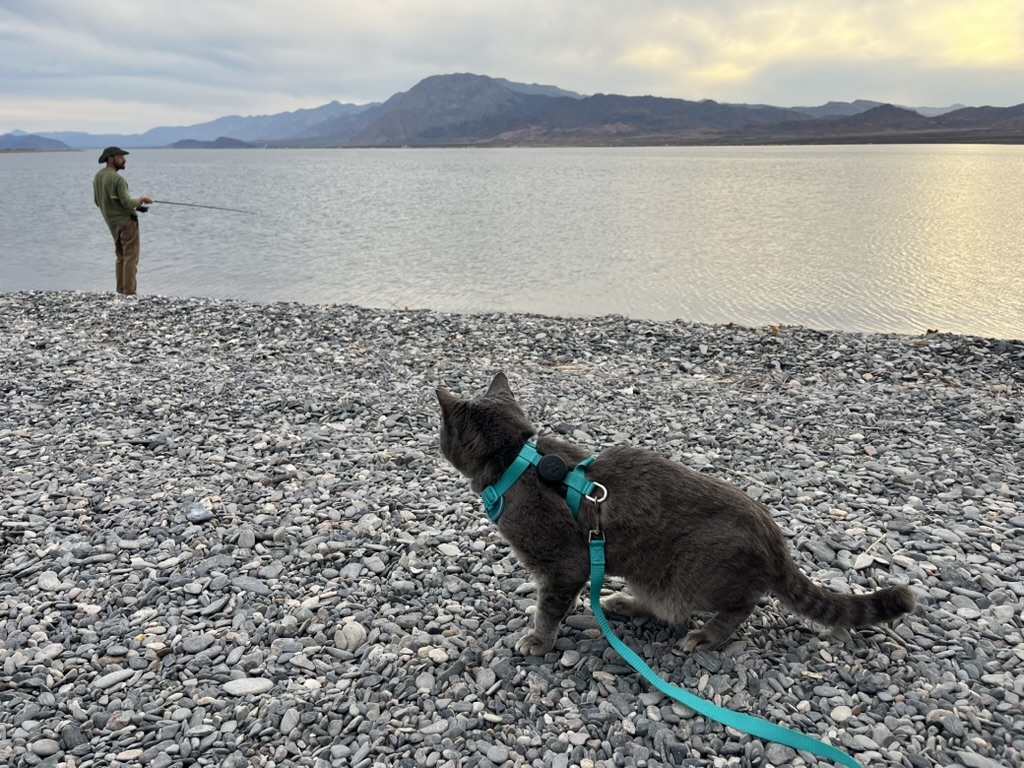
    Two days after my last day of work, we were crossing the border into Baja. This trip was a great way to start the transition and ease into this next chapter. On one hand, much of the time was easily filled by the activities of being on the road–deciding where to go and what activities to do, meeting new people, learning about the culture and landscape. On the other hand, there was ample time where we slowed down and stayed in one spot to allow Jocelyn to work. This allowed me to to begin to really appreciate the new freedom. I could spend time preparing food for us, fishing, paddling, writing, and reflecting about my next steps. It allowed me to settle into a simple rhythm in tune with the natural cycles of the day, the ocean, and the desert–away from the screens, distractions, and stresses that had characterized my days for the majority of my adult life. At first it just felt like a long vacation, but as the days and weeks passed, this rhythm became more natural and I began to revel in the freedom and possibility of each day and by extension the rest of my life. What a feeling to have my time be truly my own!

    A Complicated Homecoming

    Coming home from a long trip always comes with some complex feelings. On one hand, it’s nice to be home, in a familiar place, with endless, glorious hot running water, my own space, familiar routines, the friends and community that have been built over years, and the beauty of the Pacific Northwest in Springtime. On the other hand, it’s hard to downshift to those familiar routines when I’ve become so used to the constant stimulation and novelty that life on the road brings.

    Life on the road is in many ways simpler as well. It lays bare the fact that we don’t need that much stuff to live and be happy. We lived well for two months in 40 square feet. We had everything we needed and never really felt lacking for anything. There is a certain freedom in that sort of simplicity. At home, while there is much more comfort, there is also a lot more to maintain. Just keeping entropy at bay takes a significant amount of time and effort. There’s always something to fix, to decide, to deal with. I don’t want to minimize the good. I am glad to be home. However, in the days after returning from a big trip like this, I often find myself longing for the simplicity of the road and wondering why we have all this stuff, this yard to take care of, this house to maintain.

    This homecoming was particularly complicated for me because while I was coming back to a familiar home and many familiar routines, there was a big hole where work and career used to be. The job and career that had structured so much of my time, that so much of my life had been built around, that had given me a large part of my identity, was gone. I’m still adjusting to that absence.

    Something Bigger

    So, on to the big question. What now? I’ve spent most of my adult life focused on myself, my career, financial security, and building a comfortable life. I don’t regret any of that, and it’s what’s given me the foundation to pursue something else. What has become more and more clear, however, is that true happiness and purpose lies outside of myself, in contributing to something bigger.

    The guiding principle I’ve decided on is simple: service. It feels good to be able to give freely of my time and talents to help the people and causes that are important to me.

    There’s a concept from the activist and scholar Joanna Macy that really resonates with me called The Great Turning. The idea is that we are at a civilizational turning point. A move away from an industrial growth society built on extraction from the earth and each other and toward a society of reciprocity and care that supports and sustains life. She calls it the most important work of our time. I believe it is and I want to be a part of it. I also believe it happens through small acts of care in our communities, not necessarily from flashy, big actions. It’s building and caring for our relationships, protecting and preserving life where we can.

    This work also doesn’t have to take itself too seriously all the time. To that end, I want adventure, travel, music, dancing, good food enjoyed with people I love. Enjoying life with the people we love is it’s own sort of resistance to a culture that wants us to work ourselves to the bone in isolation so that we can buy stuff we don’t need.

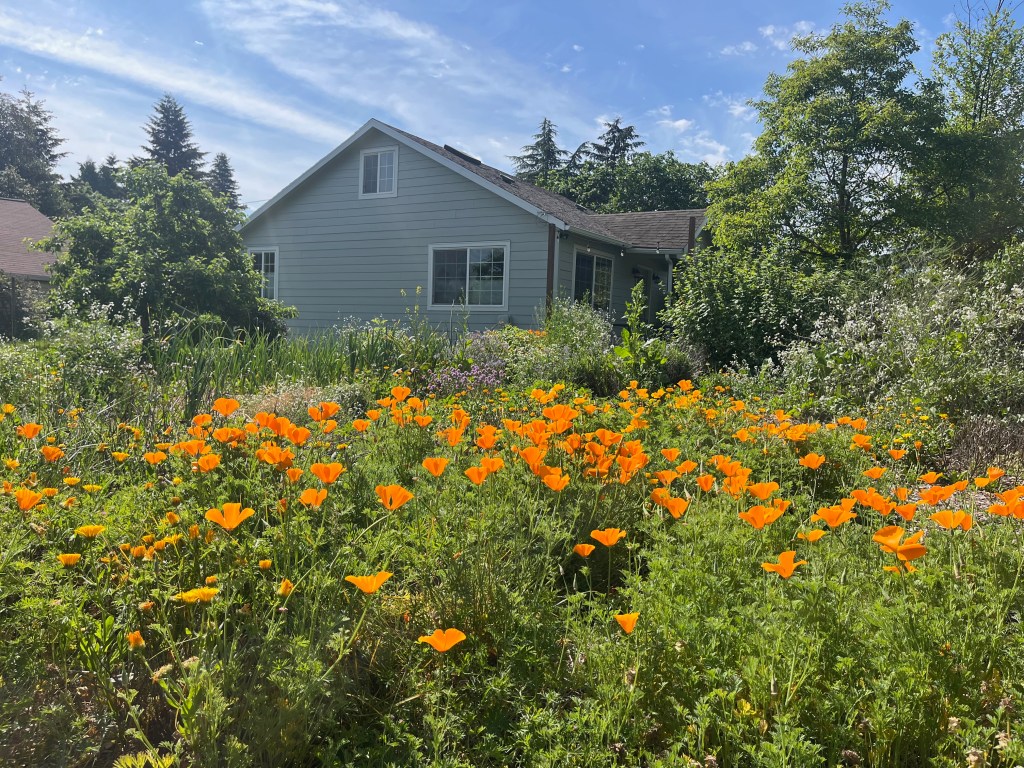
    So what does that look like in practical terms for me? Well, so far it looks like volunteering to do forest defense and habitat restoration work with Bark, and habitat restoration with Oregon Natural Desert Association. I’ve also volunteered with Adventure Scientists to place acoustic monitoring devices in the forest as part of a biodiversity survey. I’ve helped out at my friend’s farm and I will be spending a large part of the summer helping my parents in Montana. I’ve volunteered with Rhythm Seed farm right down the street from my house to help in their mission of building local food sovereignty and security. I’m also planning on extensive travel including heading back down to Baja at the end of the year. There will be plenty of outdoor adventure from backpacking to skiing to hunting. I’ve gone skiing a couple of times despite the dismal amount of snow here in the Northwest and being able to go midweek, after a storm, when the snow is the best, has been amazing. There has been and will be music, festivals, and dancing. I’ve planted our own garden here at home and I’ve taken on the food shopping and cooking duties in our household. I’ve been enjoying improving my cooking skills and making fresh, healthy meals from scratch. I’ve been making yogurt and kombucha. I repaired our 20 year old refrigerator, keeping it going for a few more years I hope ,and saving us at least $1,000 if we would have had to replace it. In all of this, I am also trying to remain conscious of the fact that I don’t need to fill every moment with something. I don’t need to be busy for the sake of being busy or to look productive. I need to leave room for reflection and for serendipity to perhaps lead me in a direction I wasn’t anticipating.

    Honest Assessment: 3 Months In

    I want to be honest about the ups and the downs I’ve experienced in the last three months. I think that’s more important than just presenting an idealized version fit for social media about how amazing life is.

    First though, yes, it is amazing in many ways. Waking up every day and having the day be truly my own, to make of it whatever I want, that is an incredible feeling. I am sleeping better than I have in years. I am spending much more time outside and away from screens doing things in the real world with real people. I am exercising and eating well. I feel great mentally and physically. Each day feels like a gift.

    Yet, there is still discomfort. The uncertainty that arises from these liminal spaces. That feeling of owning my time and being totally responsible for how I spend it, while liberating, can also feel overwhelming. The freedom can sometimes feel a little too close to aimless drifting. I wonder if I’m squandering this incredible gift. If I’m making the most of it. The majority of my time and much of my identity has been structured by my job and career for decades. I was a software engineer. Now what am I? What do I tell people at dinner parties when the subject inevitably comes up? I’m still figuring that out and I suspect I will be for a long while. Some days that feels exciting, and other days it feels paralyzing.

    Thinking back to that hillside in Kofa, I’m realizing that what I had been waiting for was permission to live differently. The permission arrived that morning in that particular place and at that particular time. I’m working to settle into the uncertainty and to trust that the path will reveal itself in due time as long as I’m paying attention and moving forward. If you’re thinking about making a similar leap, I can tell you it’s survivable and that it’s worth it. If you’re looking for your own permission, maybe this is it.

  • Notes from the trail #7: Homeward bound

    Notes from the trail #7: Homeward bound


    Stocking Up in Ciudad Insurgentes

    For our trip back North, we decided to circle around the Pacific side of Baja to see some new territory that we hadn’t encountered on the way down. Our first stop was Ciudad Insurgentes to restock groceries, water, and of course, tortillas. The city is named in honor of the insurgent fighters of the Mexican War of Independence and is the heart of Baja’s bread basket. Surrounded by lush fields of vegetables and grain, the city of 9,000 provides much of the produce for Baja. Good, fresh produce can be hard to come by in Baja, but the Ley Express here had a large produce section with great variety and quality. We happily stocked up on fresh spinach, carrots, peppers, and avocados.

    We headed to a combination agua purificada and tortilleria hoping to kill two birds with one stone. Unfortunately, the tortilleria portion was closed, but the purificada was open for business.

    A word about purificadas and filling RV style water tanks. First of all, it’s necessary to find one that has a hose. It seems most do, but not all. When looking them up on iOverlander, this will usually be mentioned. This can be confirmed by asking the attendant, “hay manguera?”, “is there a hose?” Second, if you have a threaded inlet to your tank like we do, you’ll likely need something like a Water Bandit to be able to hook the hose up. None of the ones we encountered had a threaded end.

    After filling our tank, the attendant pointed us to an alternative tortilleria where we restocked our fresh tortilla supply and were on our way North.

    The Closed Campground at La Purisma

    Our original destination for the night was to be La Purisma, a small riverside oasis town in the interior. When we arrived in town though, we found the gate to the campground we were planning to stay at closed and locked. Using the WhatsApp information on the gate, we were able to contact the proprietor who informed us they were in La Paz for a medical issue and the campground was closed. We haven’t made any camping reservations ahead of time on this trip, preferring to remain flexible, but in this case, where camping options in this small town are limited, it would have probably been good to at least call or text them beforehand. We’ll make sure and do that the next time. Unable to find another option in La Purisma, and running short on daylight, we decided to continue on to San Juanico.

    Valentine’s Day in San Juanico

    San Juanico is best known as a destination for surfing and wind sports. It’s another tiny coastal village with a single paved boulevard, dirt and sand streets, a few small stores, and a gas station that consists of a guy selling fuel out of jugs. Arriving right at dusk, we made our way to the Scorpion Bay Restaurant and Campground and set up camp near the buildings with their palm thatched roofs among the cactus and Ocotillo. As it was Valentine’s Day, we had dinner in the small open air restaurant where the sea breeze drifted through, and the distant echo of crashing waves could barely be heard over the Norteño music videos playing on the overhead TV. As romantic a Valentine’s Day dinner as we’ve had over the years.

    Highway 53: A Lesson in Baja Roads

    The next day, we set out to continue or journey North. The plan was to continue on Highway 53 to San Ignacio. The “highway”, it turned out, was 150 kilometers of some of the roughest, rockiest, dirt and washboard road I’ve ever experienced. We bumped along for most of the day through mostly non-descript desert without much interesting to see before it finally turned back to pavement at the San Ignacio Lagoon. We finally arrived in San Ignacio late in the afternoon feeling lucky the truck was still intact and the fillings still in our teeth. The lesson learned here is that in Baja a road may be designated as a highway, but that doesn’t mean it’s necessarily going to be a good road!

    Two More Days in San Ignacio

    Jocelyn had to work on Monday before taking the rest of the week off, so we spent the next two days in San Ignacio. We stayed at the same campground, Paraiso Misional, that we stayed at on our way up. We really like this place. It’s tucked into the palm trees, super clean with lovely grounds and hot showers, and it’s full of interesting and fun fellow travelers. There was Ricardo, who gave us three gigantic clams out of a five gallon bucket he’d filled on the beach that day, and the group of bike packers in the middle of their trek down the Baja divide trail. I got a garden tour from the proprietor, Andres, who was obviously used to speaking Spanish with tourists. He spoke simply and slowly as he walked me through, boosting my confidence and giving me some great practice. The campground is also really close to the main square where we met up with some new friends we’d made the previous week, and enjoyed more food including one more helping of tostielotes and date shakes. We hiked the trail that goes up from the campground to a hill above town, went to the little museum near the mission complete with a life size replica of some nearby cave paintings, and got one last pack of fresh tortillas from the tortilleria.

    Crossing Back: From Mexicali to the California Coast

    We spent our last night in Baja in San Felipe before crossing back over the border at Mexicali East on a Thursday morning. The border crossing back into the U.S. took about an hour and half, mostly spent waiting in line. The remnants of a strong storm were making their way across the desert East of San Diego and LA where we ran into some strong winds and rain coming over the mountains. We spent our first windy night back in the U.S. in Thornhill Broome State Park, a beach campground sandwiched between the crashing waves and Highway 101.

    Big Sur

    We continued up the California Coast going through the stunningly beautiful Big Sur area where we saw hundreds of Elephant Seals lounging on a beach, took a short hike to a waterfall through the spicy fragrance of the Bay Laurel forest, and generally soaked in the lush, green, rolling hills and oak savanna. After winding up a steep road that climbed straight up from the coast, we spent a night perched 3000 feet above the rugged coast line high up in the Santa Lucia mountains. Snow capped peaks to one side, the vast expanse of the Pacific to the other, all the while surrounded by massive California Black Oaks and Ponderosa Pines. The big trees and green fields were a welcome greeting after more than two months in the desert.

    Home

    Our final night on the road for this trip was spent in Sycamore Grove Campground just outside of Red Bluff, CA on the Sacramento River. This was a great little spot right off the interstate, but far enough that there’s no noise. For $16, we got a spacious spot, clean bathrooms, and abundant birdsong in the rich riparian environment. This will definitely be a place we’ll stop over again on blasts down the I5 in the future.

    After 60 days and 5,400 miles, we arrived home in the late afternoon of Sunday February 22nd. We spent all but one of those nights in our camper in some of the most beautiful places I’ve had the privilege of experiencing. This was indeed the trip of a lifetime and one I hope to repeat annually in the coming years. Baja has left it’s mark on me and I’ll count the days until I can be back with it’s wonderful people and stunning environs bursting with life.

  • Notes from the trail #6: Loreto, carnaval, and the best beach camp yet

    Notes from the trail #6: Loreto, carnaval, and the best beach camp yet

    We left our beach camp on another bright Saturday morning, the sun warming us as we packed up. We said our goodbyes to our new friends and made our way back to Mex 1, bumping along the 6 kilometer dirt road for the last time. We drove South along the stunning Bahía Concepción with it’s turquoise waters, white sand beaches, and steep red rock cliffs, stopping to check out a few of the beaches and camp areas on the Southern end. We also stopped in at Nomadico coffee at Playa Coyote where we grabbed iced coffee and chai, and a delicious house-made cardamom chocolate bar.

    Exploring Loreto

    We arrived in Loreto around noon and checked into our camp site at a place called Camp Moro. We chose this place because it was in the center of town, close to the boardwalk, the mission and square, food, etc. and because it was recommended by the fine folks at twohappycampers in their book “The Ultimate Baja Camping Guide”. Loreto was definitely the biggest town we’d been in to this point (population 16,000!) and it was bustling in the center on this Saturday afternoon.

    After some lunch we headed out to explore. We stopped in at a little bookstore that had a good selection of books about Baja as well as a smattering of just about every other genre. While two women in a corner gossiped about a colleague, not making any effort to keep volume in check, we talked to a gringo man sitting at a small desk covered in books on the other side of the room. We talked about Baja, Steinbeck, and his 40 year history in the area. He asked us if we were in town for carnaval, to which we gave blank looks and said we had no idea it even was carnaval. With wide eyes, as if to say “you’re in for a treat!”, he told us that there would be a parade that afternoon and then music and dancing all night. And as we would learn, he wasn’t kidding about the “all night” part.

    We left the bookstore, Jocelyn with a new book, and walked toward the mission and square. The mission, and Loreto itself, were the first successful Spanish settlements in Baja. Constructed in 1697, it’s a beautiful building accompanied by the typical public square. Loreto was the capital of the Province of the Californias, which included Baja and much of what is now the Southwestern United States, until 1777.

    The Carnaval Celebration

    From the square, we strolled down the pedestrian avenue that goes out in either direction. Lined with shops, boutiques, restaurants, and plenty of shade trees, it’s a delightful thoroughfare. As we approached the end of the street, we saw a crowd forming and quickly discerned they were there to watch the carnaval parade.

    The festivities started with a samba group that performed in the middle of the street. Drum beats reverberating off the buildings, a feathered dancer strutting to the beat, a stilt walker with a tambourine, and an acrobat doing back flips. The parade continued, featuring brightly decorated floats and dance troupes all in the theme of the Chinese Year of the Fire Horse. It was a boisterous, colorful, and sometimes literally fiery, display.

    After the parade, we attempted to go to a taco shop called Tacos Nany that our friend’s Brian and Christina had recommended, but unfortunately it was already closed. As we were walking we saw the area where the carnaval celebration would continue, complete with brightly lit carnival rides, and what we assumed would be plenty of food. We walked through the other large public square where the city hall is located and came across an elote cart. We’d heard about the life changing qualities of this particular corn based street food and decided to give it a go. We tried the variety known as “Tostielotes”. The dish starts out with a bag of Salsa Verde Tostidos, which seems to only be available here in Mexico. These chips by themselves are delicious. They are flavored tortilla chips like Doritos or similar, but with a salty, tangy, citrusy twist to them. They start by cutting the top off of the bag lengthwise. Then, they put a large spoonfull of hot, seasoned sweet corn on top. That is followed by cheese, heavy cream, hot salsa, and finally some salsa fresca. It is an explosion of rich, creamy, deliciousness and it was a great start to our culinary adventures for the evening.

    We headed to the festival grounds and went in. It was very much like what you might see at an American carnival with rides, games, and food, but with a Mexican twist of course. Churros instead of funnel cake for instance. There were however similarities like cotton candy and corn dogs. We started off with a “super burro”, which was more or less a burrito but freshly prepared on a grill top in front of us. We continued with a “vampiro taco”, which is a toasted, crunchy corn tortilla topped with melted cheese and beans. Jocelyn tried a dish called “papas mixta”, which was mashed potato with meat and melted cheese served with tortillas. After all that on top of the tostielotes, we didn’t have room for churros unfortunately.

    The main stage featured 3 MCs who were enthusiastically introducing more dance routines and welcoming the Carnavel Court; king, queen, princesses, etc. There were all kinds of people there from families with kids to groups of young men who had carried their own coolers full of Tecate in, as well as the ever present assault rifle carrying military police. By the time we left around 10 PM, the headliner music act had not even started and many people were just showing up. It seemed like things were maybe just getting started. We went back to the camper, full of good food and memories, put in our earplugs, and went to sleep. At one point I woke up and heard the music still going. Glancing at my watch, it was 3:30 am! All night indeed. It was so great stumble into this cultural experience and incredible party. Another example of the serendipitous wonders we’ve experienced here without even really trying and just letting things happen. And boy, do they happen.

    Six Magical Days

    On Sunday we continued South turning off of Highway 1 in the mountains after it starts going West. I’m going to be purposely obscure about the exact location of this next leg. I’m sure anyone who can do a little bit of research can figure it out easily enough. It’s far from unknown, but given the remote nature of this place and some of the impact I know increased tourism has had on it, I think I have a responsibility to not make it too easy. It’s not a desire to gate keep or keep others away, but just to be respectful of the Mexican people and these unique and fragile landscapes. Part of the fun and adventure of this kind of travel is in finding off-the-beaten-track locations and I think that people who put in a little work to find places might be a little more respectful of those places. With that said, the beach we spent the week at was by far my favorite of the entire trip.

    The road in was rough, steep, and narrow, with extremely sharp switchbacks in places. The views as we wound our way through the steep mountains and down to the coast were breathtaking however. Deep blue water against the pastel creams, reds, and greens of the beach and mountains. Small islands and coves along the coastline. Before going to a campsite we had our eyes on, we stopped for tacos at a beachfront restaurant in a tiny nearby fishing village. The place had only three walls and a thatched roof, open to the beach on the fourth side. The tacos, as usual, were amazing, as was the view.

    After our fill of tacos, we made our way to the camp spot we had our eye on. We cut a few overhanging branches on the access road to make it easier and just before the beach, we hit a steep dune with deep loose sand we had to get over. It took us a couple tries with aired down tires, 4×4, and locked rear differential to get the momentum to make it up and over. Once we did however, we were rewarded with an empty beach and a beautiful camp spot nestled up against the cliffs.

    We spent 6 magical days at this spot. We saw humpback whales out in the cove two days in a row. I paddled around exploring small offshore islands where I saw a school of rooster fish breaking the surface with their long, spiky dorsal fins, and steep coastline with caves, interesting rock formations, and flocks of black cormorants making their strange grunting call as I slid past in the glassy water.

    There was excellent snorkeling offshore where I saw all kinds of beautiful reef fish. There was the black and yellow striped Panamic Sergeant Mayor, The black Angel Fish with it’s single brilliant orange vertical stripe. The strange and aptly named Cornet Fish, which looks like a slender, silver tube with a nose that looks like the bell of a trumpet. Puffer fish with their bulging eyes that can move much faster than their bulbous bodies and tiny fins look like they should enable. The black Damselfish, with it’s feathery forked tail, and Yellowtail Jack with it’s silver body and contrasting bright yellow, forked tail. Such abundance and diversity of life even in just this one small patch of rocky coastline.

    Each morning greeted us with a splendid sunrise over the water and cliffs to the East, accompanied by the gentle swishing of the waves against the sandy shore. Monday afternoon there was a raucous thunderstorm; bone-shaking booms and lightning bolts that lit the sky over the water. Just after the storm, the smell of ozone and petrichor still hanging in the air, I caught what was likely my last fish of the trip, a beautiful Cabrilla that made our own delicious tacos for dinner that night. The next day I lost the magic Krocodile spoon that I had caught every fish of this trip with on the rocks and none of the others lures I had seemed to work, at least here. All good things come to an end I suppose and it keeps me humble. I had a better experience shore fishing in Baja than I ever expected I would, especially for my first time here. I’ll definitely be bringing more Krocodiles with me next time.

    On our final Friday afternoon, we hiked up to a large cave up above our camp that we heard had some poictographs. It was a fairly short hike, but required some scrambling on steep, loose rock. The cave was a large two-room affair and the pictographs consisted of a dozen or so red handprints at the entrance. While the handprint pictographs might not be the most artistically interesting, they always give me the most feeling of connection to the people who made them. These were people, like me in so many ways, but so different in so many others. I can’t help but wonder what their lives were like here on this coastline where I’ve lived for the last 6 days, and what was going through their minds as they stood here and made these handprints hundreds or maybe even thousands of years ago.

    This was as far South as we’ll get on this trip and now we start the long journey back North. It was another incredible week in Baja and I’ll be longing for tostielotes and this beach until we return next year. Thanks for reading!

  • Notes from the trail #5: Taking it slow at Santa Ines

    Notes from the trail #5: Taking it slow at Santa Ines

    As our first week at Playa Santa Ines came to a close, we were faced with a choice about what to do and where to go next. We could either continue our push South and try to get down to the Loreto area for our next work week and then to the Southern end of the peninsula the following week, or we could stay at Santa Ines for another week, take it easy, and explore the Mulegé area more. While we technically had the time to make it all the way South, it would require spending most of our weekend driving and would also mean some long days behind the wheel on our way back North. We ultimately decided to stay another seven days at Playa Santa Ines. This speaks to how much we we liked it there as well as our desire to travel slowly, preferring depth to breadth of experience when possible. In travel, as in life, decisions often come down to what you aren’t going to do as opposed to what you are. We know we’ll be back to Baja in the years to come and there’s no need to try to rush through everything on this trip.

    Saturday was a chore day. We needed to do do our laundry and get groceries. It can’t be adventure all the time on the road, we still need to make space every so often for the more mundane tasks. However, even these routine tasks can be an adventure with the right perspective when traveling. As Rolf Potts says in his masterpiece of travel philosophy, Vagabonding:

    “The secret of adventure, then, is not to carefully seek it out but to travel in such a way that it finds you. To do this, you first need to overcome the protective habits of home and open yourself up to unpredictability. As you begin to practice this openness, you’ll quickly discover adventure in the simple reality of a world that defies your expectations.”

    We packed up and went into Mulegé for the weekly farmer’s market there. First though we dropped our laundry off at a lavandería, recommended to us by other travelers, just to the North in a tiny village called Palo Verde. Self serve laundromats are much harder to come by in Baja than in the the U.S. it seems. As was the case with this one, most of them require you to drop your laundry off, they wash it, and you pick it up later. The laundry was located on one of two paved streets in town right across from a well kept school. We handed our bag of laundry to the friendly proprietress and she told us to return that afternoon sometime before 5 when they closed. The adventure here lay in the unpredictability and novelty of the situation. Even though we had good recommendations of the place, there’s still a little uncertainty in dropping off most of the clothes one currently possesses with an unknown person in a dusty village in the middle of the Baja desert and trying to work out the details of when to pick it up in a language you barely speak.

    We made our way back South to Mulegé and turned under the large arch that is the entrance to the town center. We found a parking spot in the narrow streets a few blocks from the farmer’s market. It was a small market, especially when compared to what we’re used to in Portland, but there was still a pretty good variety of items. Manuel, who runs the Santa Ines campground with his wife Blanca, was there selling his seashell jewelry. We picked up some fresh carrots and zuchinni, sweet empanadas, and a loaf of bread that was much more substantial than what we’d been able to find at the grocery stores thus far.

    After the farmer’s market we decided to spend the afternoon at Bahía Concepción just to the South of town. We’d explored there a bit when looking for a campsite initially, but wanted to spend some more time in this beautiful area. We set our sites on Playa Coyote which had been recommended by a local in San Ignacio we talked with over chilaquiles. As we’d experienced with the other beaches on the bay, this one was pretty full up with campers, some of which looked like they were set up for the long haul. It is a beautiful place and it’s no wonder it’s popular. Turquoise blue water in a calm, half-moon cove lined with red rock cliffs and palm trees, a desert island a mile or so offshore. We found a place to park for a couple hours, made some lunch, and set out our chairs. I also pulled out the snorkel gear I’d brought and took it for it’s maiden voyage. There wasn’t much to see in the sandy-bottomed cove, but the calm water was a good place to try out my gear for the first time, including a wet suit which was nice as the water was a bit chilly.

    After a couple of relaxing hours on the bay, we went back North toward Mulegé and the grocery store. With our grocery stock re-supplied, we headed to our final stop before going back to our camp, the laundry in Palo Verde. We pulled up in front where there was a group of kids playing, all smiles and waves. Jocelyn gave them some colored pencils while I went in to retrieve our laundry. It was there waiting for us–clean, crisp, and expertly folded–all for 80 pesos or about $5.

    Sunday we packed up again and drove East up into the mountains toward a little village called San Jose de Magdalena. The coastal desert gave way quickly to steep, verdant hills and canyons. After a few miles, the small village came into view in a river valley surrounded by green cropland and palm trees. In just a few miles we had entered something of a different world. We parked the truck and went for a walk along the river. The lush banks and running fresh water were a welcome reprieve from the desert and coastal environs we’d been in the last couple of weeks. The area was beautiful and teaming with life. The banks were lined with Cattail, Palm, Palo Blanco, and Mesquite. Bird song filled the air and schools of fish darted in and out of deep pools in the red rock banks. Since it was Imbolc, the Celtic holiday celebrating the coming Spring at the halfway point between Winter Solstice and Spring Equinox, we cut some Cattail fronds to make the traditional Brigid’s Cross later that evening as part of our own small celebration.

    Back at camp, we weaved our Imbolc crosses and prepared to make one of our more ambitious camp meals, dutch oven sourdough pizza. We brought sourdough starter with us from home and had prepared the dough the previous evening. We took the dough out of the fridge and built a fire that we let burn down low to get coals for the dutch oven. We baked two small pizzas to perfection under the full moon, a blessed meal indeed.

    The rest of the week at Santa Ines was as good as our first. We paddled the kayak, caught and ate more fish including another Corvina and Jocelyn’s favorite Barracuda, and had another campfire get-together with some of our new Canadian friends. We also had a serendipitous meet-up with some internet acquaintances.

    I had come across Brian and Christina, known as dirtrailswanted on the internet and social media, a couple years ago when I was looking for inspiration for our Go Fast Camper build out. They have lived out of their GFC for the last few years and their travels, photos, and storytelling have been inspirational to us in our own travels. We’ve been in touch off and on online and we knew we were both currently in Baja and we were working on finding a time and place to possibly meet up. One morning I was paddling the kayak up the shoreline from Santa Ines and saw a couple of rigs parked on the beach up from the campground. Curious, I paddled closer to get a better look. As I got closer, I instantly recognized their dark gray first gen Tundra named Delores. They were camped just about a mile down from us on the same beach! I paddled ashore and we finally met each other face-to-face. Quite a piece of Baja Magic making this connection happen.

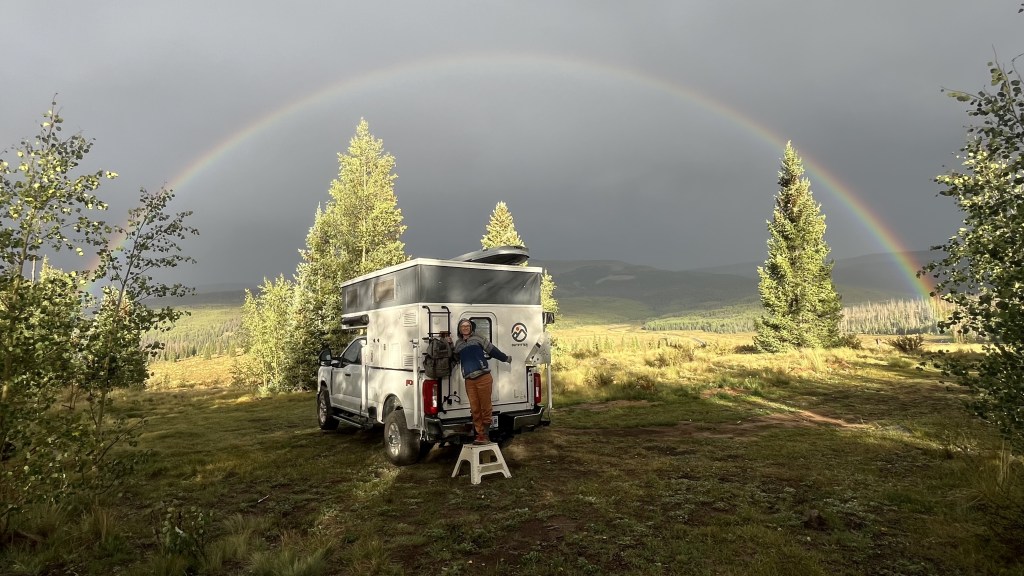
    On Friday night we drove up the beach and camped with Brian and Christina and some other friend’s of theirs, Mark and Jenny from the other Portland in Maine. We were treated to a little rain and a rare desert rainbow over the water. That night we had good conversation and to top things off, bioluminescence that made the sand glow as the waves crashed ashore. It was so fun to finally make this online connection a real life one and I look forward to sharing a camp site with them again soon.

    Next up we continue heading South to Loreto.

    Thanks for reading!

  • Notes from the trail #4: Whales and Oases in Baja California Sur

    Notes from the trail #4: Whales and Oases in Baja California Sur

    We left Bahia de Los Angeles early on a Friday morning. We were bid farewell by another beautiful sunrise that followed one of the best sunsets we saw in our time there, which itself followed a final dinner of fresh caught Barracuda. The Bay of LA treated us well and we’ll definitely be back.

    Our destination was Guerrero Negro on the Pacific side where we had a whale tour booked for Saturday. We decided to take a dirt route over the mountains with a stop over at a remote 18th century mission called San Borja. It was a long, bumpy drive, but well worth the effort.

    On our way out of town, we stopped at the Pemex station to top off our gas, fill up our Jerry can, and drop our trash. When we went into the store for some snacks, a local Mexican guy in there recognized me from the La Gringa beach we had just been camped at. They had been fishing next to us one day and I was having a particularly good day catching Barracuda, giving them the extras as I reeled them in. Jocelyn was also trying her hand and as she was reeling in a fish, a gang of pelicans swooped in and tried to steal it in a blaze of flapping wings, splashing water, squawks, and giant beaks! It was wild. They didn’t manage to get the fish, but we got a good laugh about it as did the locals next to us. I only got a little bit of what he said in Spanish, something about Playa La Gringa, fish, etc., but he was all smiles and we had a good chuckle together.

    We pulled out of the Pemex and back onto Highway 12. We missed the turn to the road to San Borja once, but after a quick turnaround, we made it onto the sandy two track headed West toward the mountains. We stopped to air down the tires to help the truck ride smoother on the bumpy roads, reduce the chances of a flat on sharp rocks, and provide additional traction on any sandy sections we might run into. The road started out sandy, but turned to rough rocks as we climbed up into the mountains. There were some washouts to negotiate and some steep sections that we crawled up in low range. The whole time we were surrounded by huge Cardón cactus, Cirio, and a dense underbrush of Yucca, Elephant Tree, and Cholla, the vegetation become greener and thicker as we climbed into the relatively moister mountain environment. In the distance, massive mesas and peaks. As we crested the pass and started heading down the other side toward the Pacific, it almost seemed like I could see all the way to the water.

    We reached the San Borja mission after about 3 hours of driving covering about 24 miles. It was slow going to say the least. As we dropped down into the canyon site, the palm trees that seem present in any inhabited area near water here, and the massive stone structure, came into view. The first inhabitants we saw were three dogs that ran out to greet us. As we pulled around to the front of the building, a woman came out of a nearby house and started unlocking and opening the doors to the building.

    The mission was originally built in 1767 and then stopped operating as a mission in 1818 after the native Cochimi population it “served” was decimated by disease. It has since been taken care of by locals including the woman who gave us the tour. She told us she had lived in this remote area for 40 years and her family maintained the buildings and grounds. The tour, all in Spanish, included a small museum with a few artifacts and an impressive, if a bit steep and scary, spiral staircase to the roof. I think I got maybe 80% of the Spanish and was even able to ask a few questions. I felt pretty good about that given my rusty and rudimentary Spanish skills. When the tour concluded, I gave her a tip, but what she really wanted was chocolate and fresh fruit which she asked us for. It seems these are hard commodities to come by in this remote location. We gave her a bit of chocolate covered nuts we had left and some dried apples and persimmons from our trees back home. After eating some lunch ourselves we were on our way. The rest of the road out to the small town of Ejido Nuevo San Rosalia was much better and we covered the remaining 20 miles in about an hour. We didn’t see another vehicle on the route until we got into town, evidence of the remoteness of the journey.

    We drove the rest of the way to Guerrero Negro, crossing into the state of Baja California Sur, and to the office and campground of Baja Magic where had a whale tour booked for the next day. The tour included one night of camping along with breakfast and lunch the next day. We arrived around 4:30 and made camp in their gravel parking lot. We had a delicious dinner of pasta carbonara made by their Argentinian chef. We got to know our tour mates a little bit over dinner, two Canadian couples and a couple from Colorado. This is about the ratio we’ve experienced overall here. About two-thirds of the other travelers we’ve met are Canadian with the rest being mostly American and a smattering of other countries. Shari Bondi, the whale naturalist and our tour guide, herself a Canadian expat, then conducted a talk on the behavior and biology of the Gray Whales we would be seeing in the Ojo de Liebre Lagoon the next day.

    Gray whales complete an annual migration from their feeding grounds off the Alaska Coast, to the shallow lagoons of Baja where they have their calves and mate. These are the same whales we see during their migration off the Oregon Coast, where we’re lucky to see a spout or a tail breaking the surface in the distance. It definitely doesn’t compare to the up close and personal experience we would have here.

    It poured rain most of the night, which continued off and on into the morning. We were glad we made our camp in the gravel parking lot instead of in the dirt area where the other folks had camped which had turned into a mud pit. After a simple but tasty breakfast of eggs, beans, a tortilla, and fruit salad, we all loaded up into a van and headed toward the lagoon. Most of the trip was across a muddy salt flat; the thick, salty grime thudding against the side of the van as we pushed through it and it was thrown off of the tires. I could almost feel the frame and rocker panels corroding away as we drove. I was glad it wasn’t our truck we were driving out there.

    We arrived at the dock, which included a building with some information about whales, a small gift shop and a restaurant. We waited around for a couple more hours for the rain to pass before finally boarding our boats and heading out into the lagoon. According to Shari, the conditions were far from ideal to get close to the whales. The rough water and wind made it hard for both boat and whale to navigate into position.

    As we got out into the lagoon though, we almost immediately started seeing spouts and whale backs breaking the surface. We saw tail breaches, “spying”, where the whale stands on the bottom of the lagoon with it’s tail and points it’s head straight up, and full breaches where the whale jumps completely out of the water and rolls. We also saw a calf, and some mating trios. The whales mate in groups of three, one female and two males. The males are typically an older and a younger one, the older teaching the younger how it’s done. The pinnacle though was where a female came right up to the boat, close enough for a couple people to touch it. Gray whales are the only species that will do this. They are intensely curious and seem to like to have contact with humans. It was incredible to see these gentle, curious, and intelligent creatures I’ve only seen from a distance on our own Coast, so up close and personal here.

    After the tour we returned to the Baja Magic office and had our lunch of baked fresh fish and vegetables. Simple, but delicious fare. We said our goodbyes to our fellow whale watchers and were back on the road toward San Ignacio.

    San Ignacio is a beautiful, tiny, oasis town of only 500 residents in the interior of the peninsula. Driving through the parched desert from Guerrero Negro on highway 1, you’d never guess that you’d eventually drop down into this lush valley of palm trees, a river, and a large freshwater lagoon. We stayed at a campground a few hundred yards from the town square nestled into palm trees, green grass, and quite a bit of mud from the previous two days of rain. We explored the square and the grounds of the mission which included a little botanical garden with labeled plants native to the surrounding desert. Built in 1786, the mission is the focal point of the inviting square lined with shops and restaurants.

    Our final destination on Sunday was Mulegé and the Bahía Concepción area where we planned to spend the work week. There are multiple camping options around the bay, but they are all close to the road and we’d heard there could be a lot of noise, particularly from semis using their engine brakes in the hilly terrain. Nevertheless, we decided to check them out, and we had a backup option to the North of Mulegé that one of our whale watching partners had recommended if nothing struck our fancy.

    First though, we needed to fill up our water tank and get groceries. This would be our first tank fill and grocery trip in Mexico, so we were ready for a bit of adventure. We stopped at a store right off of Highway 1 simply named, “Super Market”. While it wasn’t as big as a typical supermarket you might find in the U.S., it was well stocked and had most of what we were looking for. The only thing that was really lacking was fresh, leafy greens like lettuce or spinach. We ended up making due with cabbage for our salads. Next up was filling the water tank. We navigated our way through the narrow streets of Mulegé to the Agua Purificada in the center of town. These are stations all over Baja, in most any town, where you can buy purified water. This one had a hose that allowed us to fill up our tank directly. We needed 11 gallons of water to top off the tank, which cost 70 pesos, somewhere around $3 US. It was tight maneuvering in the streets and into the station and I definitely wouldn’t have wanted to be in a rig any bigger than ours.

    Re-provisioned, we headed South toward Bahía Concepción. The first beach with camping we came to was Santispac. It was a beautiful spot, right on the turqoise water of the bay, but as we’d been warned, right next to the road and also very crowded. We continued on to Playa Escondida, which was a little bit off of the road, but also very crowded. It didn’t look like there was even a spot for us to squeeze into. Deciding the Bay probably wasn’t our scene for camping, we decided to try our luck at Playa Santa Ines a few Kilometers North of Mulege.

    Play Santa Ines lies down 6 kilometers of bumpy dirt road from highway 1, which is probably part of it’s saving grace. When we arrived, we were greeted by Blanca, the caretaker, who was extremely friendly and patient with my Spanish. The sites were well spaced and we were well away from the highway with miles of beautiful beach and mountains in the distance. They had clean, hot showers, water at each site, and flush toilets; amenities mostly missing from the other camps on the bay that we had seen. For 300 pesos a night, we were sold and paid for 5 nights up front.

    That very first night, our neighbors invited us for a camp wide potluck and bonfire. It seems a temporary little community had sprung up here among the mostly Canadian snowbirds. Many of them had been here for weeks, and some even months, including Steve, who was there for at least three months every winter and who I dubbed the Mayor of Santa Ines. It was so nice to be so immediately welcomed and it was a great start to our time here. One thing I’ve noticed is that nomads like these folks are quick to make friends and form community. Since everyone is on the move, there’s no time to waste in creating those human connections, however temporary they may be. This same scene repeated itself one other time during the week as well.

    As has been my experience so far everywhere we’ve been in the Sea of Cortez, the fishing at Santa Ines is also excellent. The abundance of these waters is on a scale I have never experienced. I haven’t been skunked once (yet). If we want to eat fish, I simply walk down to the water and throw my line in for a couple hours in the evening and we have fresh fish. I caught the biggest fish of my life off the shore here, some sort of Cabrilla that made delicious fillets, and a beautiful silver and blue Corvina that was excellent steamed in the Instant Pot. I am thankful for these fish and these waters for showing me that there are still places in our world that are thriving and full of life, against all odds it seems sometimes, and for allowing me to feel this connection to my food and to the sea in a world where disconnection from those fundamental processes of life is the unfortunate norm.

    Thanks Baja, and thanks for reading!

  • Notes from the trail #3: Our first week in Baja California

    Notes from the trail #3: Our first week in Baja California

    We’ve now been in Mexico for a bit over a week, but it seems like we’ve been here longer. I mean that in the best way. The people have been warm and welcoming, the weather perfect, the food incredible, and the scenery beautiful. We’ve settled in easily and felt comfortable quickly.

    We spent our last night in the states in Yuma, opting for a hotel room, our first of this trip, so we could get on the road and get to the border early. This is our first time driving across the border and we didn’t know quite what to expect. With the short winter days, we wanted to have as much daylight as possible to get across the border and get to our destination in San Felipe. One of the most frequent tips about driving in Mexico is to avoid driving at night at all costs. We didn’t want to make that mistake on our first day.

    We chose the Mexicali East border crossing even though there are a couple that are closer to Yuma. From what I could gather online the Mexicali East crossing has a couple of things going for it over the others. There is plenty or parking to go into the immigration office, and it’s easy to get onto highway 5 heading South without dealing with toll roads or driving through the center of Mexicali.

    We arrived at the border around 7:30 AM and there was virtually no line, just a few other vehicles ahead of us. The first agent waved us through and into the secondary check area. We parked in a nice, big, covered parking area and were directed to get out of the car. The agent had us open the camper, she briefly looked inside, asked if we had any guns, gave me one more look over and then said, “OK”. And that was that. I told her we needed to get a tourist visa, known as an FMM (Forma Migratoria Múltiple) and she directed us to another nearby building. We headed over, past a soldier in full fatigues holding an assault rifle, and in the mirrored door.

    Inside was a large empty room that smelled of bleach from the mopping the floor had just received, and a single counter manned by a single immigration agent who didn’t seem to be in much of a hurry to do anything. Luckily the line was short with just a couple of people ahead of us. With our FMMs secured, we were on our way. The entire crossing took about an hour.

    The drive from Mexicali to San Felipe was about 200 kilometers, which took us around 3 hours on highway 5. The road was 4 lanes in some places, but mostly two lane and in pretty good shape. I noticed a couple things pretty quickly. First, driving speeds are much slower than in the U.S. There are long stretches where the speed limit is 60 or even 40 kilometers per hour, which is about 40 and 25 miles per hour respectively. The maximum I’ve seen so far is 80 km/h, or about 50 miles per hour. Not everyone sticks to those speed limits, but even the people who pass us I would guess aren’t going any more than maybe 90 or 100 km/h, or 55-60 MPH. It’s a far cry from U.S. interstates where people are going 80 or 90 MPH. It’s kind of a microcosm of the Baja vs. U.S. culture in general. Baja just has a much slower, more laid back pace and feel. I like the slower driving speeds. It feels safer, I get a lot better gas mileage, and the slower pace of things in general is refreshing. The second, kind of unfortunate thing, is that there doesn’t seem to be the same kind of roadside tidiness culture that we have in the U.S. There are some beautful, pristine places in Baja that we’ve seen so far, but in general, along the roads, there is a lot of trash.

    We spent the night at a campground called Kiki’s in San Felipe that had good reviews on Google and iOverlander. It was definitely more crowded than where we usually like to stay, but it was right on the beach on the Sea of Cortez, had hot showers, and was within walking distance to the main drag in town. All in all, it made for a good first night in Baja.

    After getting settled in, we walked into town and mingled with the locals on the water front boardwalk who were out for their Saturday night paseo. Families with kids, a pick-up Mariachi band, people cruising in their cars up and down the street blasting Tejano music from the speakers. It was a lively scene indeed, even in this small fishing town. We had our first fish and shrimp tacos from a place called Brenda’s. Baja is famous for it’s seafood tacos and our first sampling did not disappoint. We also had piña coladas and churros from street vendors to round out the gastronomic experience.

    We left Kiki’s on Sunday morning and got back onto highway 5 heading South. Our destination was Bahia de Los Angeles where we intended to spend the work week. The highway left the coastline eventually and started climbing a bit into the central mountains. It was then that we got our first view of the cirio or Boojum Tree. We exclaimed with wonder and excitement at our first glimpses of the tall tapered trunks with short leaves making them look almost furry. A plant rivaling the Joshua Tree in its whimsical appearance, as if it had jumped straight from a Dr. Seuss book. It’s such moments that travel affords. It allows me to experience that kind of wonder and jaw-dropping excitement at seeing something so new and strange in this world even after having been on this planet for almost half a century.

    Highway 5 eventually intersected with highway 1, which was much narrower with no shoulder for the most part. The first few semis passing in the opposite lane were a bit nerve wracking as I wondered if there was actually going to be enough room for both of us to pass. From highway 1, we turned onto highway 12 toward Bahia de Los Angeles or “Bay of LA” as the gringos say. There was a fair amount of construction on this stretch, which slowed us down some, but also a lot of new pavement which made for nice driving. I heard later from some other travelers that this road was in pretty bad shape in prior years. It looks like they are making some significant investment in improving it. We arrived in the tiny fishing village of Bahia de Los Angeles and found one of the few restaurants open on a Sunday to get lunch. We had another round of fish tacos and fresh squeezed fruit juice drinks. These were even better than the first that we’d had in San Felipe.

    We drove just North of town to a beach called La Gringa. This isn’t a paid campground, but it’s a popular spot and there are other campers around. It’s on a narrow spit of gravel that curves around a little bay jutting out into the main bay. People generally park on this gravel spit, but leave plenty of space between camps. There’s no amenities like water, garbage service, toilets or showers, so campers need to be self contained and self-sufficient. This brings up a point about how we’ve chosen to approach camping in Mexico versus how we approach it in the U.S. In the U.S. we generally prefer to get away from other people and maximize our solitude. Solitude, silence, dark skies, and wild places are a big part of traveling and camping for us in the States. However, we know the rules there around land ownership, where camping is allowed, and we generally know how to assess safety of any given place. In Mexico, we have none of that knowledge or instinct. Therefore, at least so far, we’ve preferred either paid camping, or places such as La Gringa where there are other people around. It’s also good to see what the locals do and so far from what I’ve learned, the locals don’t just go out and boondock in the middle of nowhere by themselves. That’s a good indication that it may not be a great idea.

    Bahia de Los Angeles and Playa La Gringa are beautiful. Clear blue water contrasted against the red and brown desert landscape of the surrounding mountains and offshore islands. Our first night we arrived to a feeding frenzy of brown pelicans. They would fly up about 20 feet and then tuck their wings and point their huge long beaks straight down and plunge into the water like a missile, gulping down their catch as they came back up. It was quite a welcoming party. I’ve since learned that brown pelicans are the only pelican species that dive like that.

    We took a walk out to the end of the spit and I talked to a guy named Andy and his son who were down from Ensenada for a fishing trip. I asked what kind of lures they were using and chatted a bit about their background. His English was perfect and I learned that he had lived in San Diego, and most of his family was still there, but that they had recently moved back to Mexico. When we got back to the truck, they were parked next to us processing a nice-sized halibut that the son had caught. He was beaming with excitement as I congratulated him on his catch. We chatted some more and I explained that I was a total novice to Baja fishing. They said they’d be back the next day and offered to help me out if I needed it. It was an example of the typical friendliness and helpfulness of the people we’ve met here.

    The next day was a Sunday so we started out with our customary pancake breakfast. As I was airing up our kayak for a paddle around the bay, a whale and calf surfaced out in the water not 30 feet from me. We watched them circle the bay for a good half hour. There was also a seal that was occasionally surfacing as he made his own rounds. We paddled the kayak around the bay a bit and managed to get back before the usual afternoon winds kicked up.

    Once back in camp I got my fishing rod rigged up and headed out to try my luck. I saw Andy who I’d met the day before and showed him my setup asking if my lure was too big or too small, or completely wrong. I’d just grabbed a couple of lures from a Sportmen’s Warehouse based on some reading I had done and really had no idea if they were anywhere close to what’s needed. He told me it looked good and that the Krocodile spoon I had on there was similar to what they’d used to catch the halibut the day before. I walked down the beach from them a ways and threw my line in. Soon after, I had my first fish on and landed what I learned later from Andy was a barracuda. I caught another one in short order, but threw them both back not really knowing what they were. He also informed me thy were good eating just cut into steaks and grilled. Luckily I caught many more over the course of the next few days so we got to eat plenty of it. That first evening I ended up catching my own small halibut. It was the perfect size to steam in our Instant Pot, also a preparation suggestion from Andy, and we made our very own fish tacos. We ate fresh fish 3 of our 5 nights in Bahia de Los Angeles, all caught a few feet from the camper door. Absolutely spectacular fishing, even for a complete novice like me.

    One morning I paddled the kayak out to Coronado Island about 2 miles offshore. The island is uninhabited and has the 1500 foot Coronado Volcano on one end and Tortuga Bay on the other. I landed near Tortuga Bay and walked around it checking out the oyster beds, birds, and starfish that lined it’s banks. I found the remains of a sea turtle on the beach and some of the prettiest shells I’ve found so far.

    Our first week in Baja has been everything we could have hoped for. While there’s definitely a period of adjustment, we’re in a foreign country after all, everything has been fairly smooth. Let’s hope that continues. The people have been friendly, helpful, and kind. The food has been delicious, and the scenery has been spectacular. Next week we’ll continue heading South toward Mulege and Bahia Concepcion.

    I want to mention the events happening in our home country while we’re traveling, particularly in Minnesota with the ICE crackdown, the protests, and the murder of Alex Pretti and Renee Good. What has happened to them is an unmitigated tragedy and my heart goes out to their families. I realize it’s an extreme privilege to be doing what we’re doing, to freely cross the border when so many others don’t have that privilege and are living in fear. But I think by being here we can show the people of Mexico a different face—that not all of America and not all Americans are unwelcoming and cruel. We’ve done our best to show our appreciation for Mexico, its people, and its incredible landscapes. The people have been welcoming and kind, a reminder that for the most part, people can separate the people of a country from the actions of its government. I hope my own countrymen can find it in themselves to have the same welcoming spirit we’ve encountered here. I also think it’s a subtle form of resistance to go about living our lives. This administration wants to make our entire lives about it, to take over our public discourse and our entire psyches if they can. Donald Trump wants nothing more than undivided attention from everyone all the time, and when we refuse to give that to him, we are resisting. We could have cancelled this trip out of guilt or some sense of duty, but that wouldn’t have helped anyone and it would just feed that desire to have us all construct our lives around them and whatever the latest outrage is. I refuse to do that. It doesn’t mean we shouldn’t know what’s going on and do what we can to help our neighbors and resist what’s happening, but we should also continue to live our lives and find joy, love, and wonder in this big, beautiful, messy world.

    Thanks for reading!

  • Notes from the trail #2: Sonoran Slowdown

    Notes from the trail #2: Sonoran Slowdown

    Our second and third weeks on this trip saw us returning to work, which necessitated slowing down and staying in one spot for the week. We spent a week each in Anza Borrego State Park in Southern California and Kofa Wildlife Refuge in Southern Arizona.

    From Joshua Tree, we pushed South on Highway 86 leaving the Mojave Desert and entering the Sonoran just North of the Salton Sea. We turned West onto Highway 78 and entered Anza Borrego Desert Park, California’s largest state park at 650,000 acres, a few miles later. This was our second time there, the first being in 2024. That first time we camped in the lower elevations among the multicolored, eroded badlands in Fish Wash. This time we decided to explore the Southern end of the park around Blair Valley, a little higher up in elevation.

    As we turned off of Highway 78 at the community of Shelter Valley, the first thing that struck me was just how green everything was. The atmospheric river events that had caused widespread flooding in much of California the previous weeks had also brought a brief burst of green to the desert.

    We turned off the pavement outside of Shelter Valley and onto a sandy two track. The heavy truck sank in as I engaged four wheel drive and switched off traction control pushing through the soft sand. We continued out across the flats and into Little Blair Valley just to the East of the main Blair Valley, separated by some rocky hills. The valley floor was a deep green meadow surrounded by granite boulder hills covered in Ocotillo, Yucca, and Cholla cactus. We scoped out a few potential camp sites and continued on to the Pictograph Trailhead.

    The Pictograph Trail is a short 1.6 mile round trip to some very well preserved pictographs from the Kumeyaay people. The Kumeyaay used the area as a seasonal gathering ground for Yucca and other plants. A little further past the pictographs was a dry waterfall or “pouroff” with stunning views down into the Carrizo Valley below.

    After finishing up the trail we backtracked to one of the campsites we’d identified earlier and set up for the week. As we were doing that, a couple of park employees stopped by, which at first had me worried we might be in a disallowed spot. They said we were fine and that they were simply cleaning up campfire remnants to discourage people from having ground fires, which are prohibited here. We chatted about Oregon, the Columbia River, and the merits of various Patagonia fleeces.

    We had arrived on Saturday and so had an entire Sunday to do what we pleased. We decided to spend it hiking nearby Whale Peak. We started with a pancake breakfast to fuel us for the 12 mile round trip hike with over 2800 feet of elevation gain. The top of the peak yielded incredible 360 degree views all the way to the Salton Sea to the Northeast and probably to Mexico to the South.

    The rest of the week treated us to more incredible sunrises and sunsets. The moon was full while we were there so we had a magical moonlit walk, Chollas glowing in the silver light. When we stay somewhere for a while, I often find a rock that I go back to each morning to drink my coffee and do my morning meditation. This particular one had a pair of jackrabbits that came be most mornings, picking their way through the Creosote and Agave.

    In between Anza Borrego and Kofa, we stayed at a Hipcamp on a date farm outside of Yuma named Naked Dates. We restocked on food and water in Yuma and were able to do laundry and take long hot showers at the farm. They also had a brewery, restaurant, and even morning yoga. The highlight in my book was the bacon wrapped dates stuffed with bleu cheese.

    After two nights at the date farm, we headed back North from Yuma toward Kofa Wildlife refuge. First though, we made a stop in Quartzite, Arizona to see what the scene was like there. Quartzite is a fascinating place that has a year round population of just 2500, but sees between 1.5 and 2 million people pass through each year, primarily in the winter months, as nomads and snowbirds flock to it’s warm temperatures and nomad friendly atmosphere. We stopped in at the famous swap meet and it was indeed a sight to see. Acres of booths with people selling everything from kitchen gadgets to RV parts, antiques to art. We grabbed some caramel corn from a snow bird couple in their 8th season at the swap meet and a couple of notebooks along with 5 pens for a dollar from a huge tent with a little bit of everything including power tools and craft supplies.

    In Kofa we returned to the same spot we spent a week at in 2024. It’s a big world out there with a lot to see and seeing new places is a big reason why we travel. But, it’s also nice to have places you love and want to go back to again an again. Something about this spot nestled against Castle Dome to the South and and then a vast plain to the North puncuated by Saguara sentinels at regular intervals and the Kofa mountains to the North, speaks to us. There’s a nearby wash with mesquite and Palo Verde, teaming with birdsong even in winter. We were here in the Spring last time so there’s no flowers now like there were then, but the place still feels quite alive. We decided to christen it Camp Colibri (hummingbird in Spanish) due to the rare Costa’s Hummingbird that Jocelyn spotted one morning.

    Our last day in Kofa also happened to be my last day of work in my current job as a Software Engineer. I’m leaving the corporate tech world for at least a year, in what I’m calling a sabbatical. I’ve found myself at midlife ready for a change and wanting to spend more time in nature and away from screens helping to protect wild places and things. I’m really excited, a little scared, and most of all thankful to be in a place and have the support to take such a leap. More to come on this.

    We’ve enjoyed our time in the American corner of the Sonoran Desert, but now we’re off to explore the Mexican side on the Baja Peninsula.

  • Notes from the trail #1: Baja bound

    Notes from the trail #1: Baja bound

    I’m starting a new series of “notes from the trail” posts that will first highlight our two month trip down to Baja and back at the beginning of 2026 and then, going forward, the series will highlight our other trips, big and small. We’re making some big changes in our life this year, one of which is having a goal of spending a lot more time on the road and traveling.

    The first big update is that last spring we replaced our Go Fast Camper that we enjoyed for close to two years and used on our last big trip in 2024 with a slide-in pop-up camper from Outfitter Manufacturing in Colorado. The bigger, heavier camper also necessitated a truck upgrade to a 2024 Ford F-250. I’ll do another post with more details on the camper and why we chose Outfitter over all the competition. But, one of the things that our trip in 2024 taught us is that we needed a bit more space to be able to be comfortable on the road, particularly when weather is bad. We both work remotely, and we needed a place where we could both be comfortable inside when the weather wasn’t co-operating. The GFC simply wasn’t enough space for us to be comfortable both working inside. In addition to giving us much more space, we also have amenities like heat, a fridge, lots of battery capacity, an inverter, and a water system. The whole setup is also not much bigger than our previous one allowing to still get to the hidden and off the beaten track places we like to go. So far we’ve been really happy with it.

    We left on Christmas Day, heading East for our first night at Crane Hotsprings outside of Burns, Oregon. We both had the week between Christmas and New Year’s off so the plan was to spend that making our way slowly South to Southern California where we’d set up for our first week of work on the road. It’s about a six hour drive over the Cascades and we came through a deluge over the mountains before things finally cleared up and treated us to our first high desert sunset as we pulled into our campsite. We immediately headed for a soak in their pristine gravel bottomed hot “pond” as we watched the remnants of light fade and the first stars come out. In the common room, festively decorated for the holidays, we were graciously invited to share Christmas dinner of beef stew and ham with a family of fellow Oregonians. Our first of probably many acts of kindness from strangers we’ll encounter on this trip if the past is any guide.

    From Crane we headed South into the the wide open wilds of Northern Nevada. We had a soak in a much more rustic hotspring out there before making camp on nearby BLM land.

    Our next destination was Death Valley. We spent most of the day driving and camped at Spicer Ranch just outside of Beatty, Nevada. This was a great place to spend the night. They have a large camping area, hot showers, and flush toilets, all provided on a donation basis.

    We drove into Death Valley the next day. We spent most of the day hiking on the Badlands loop trail. We started at Zabriskie Point, one of the more popular viewpoints in the park, beautiful but crowded. We followed the washes and canyons all the way to the Badwater road and back up Golden Canyon. It ended up being about 7 miles altogether and as usual in National Parks, just a few miles from the main trailheads the crowds diminished and we found some solitude among the multicolored soil and strange rock formations. Death Valley is indeed a geologic wonderland and beautiful in it’s way, but being just a few days removed from our verdant NW rainforest, the barrenness of it was a bit of a shock.

    We camped on the far Western side of Death Valley near the tiny settlement of Panamint Springs. Death Valley is a bit unique among national parks because camping is allowed about anywhere as long as you’re a mile from any main roads among a few other rules. That’s exactly what we did and as happens a lot in the desert, the next morning was incredibly windy. This was the first time we’d tried to put down the camper top in this kind of wind and it proved nearly impossible. As the top was coming down, the wind would push the sides out leaving fabric hanging out and the top not completely down. We tried putting it up and down multiple times, each time resulting in the same problem to my growing frustration. We finally managed to get it down by teaming up and having one person push the sides in from the outside as the top came down. It was a reminder of one of the great lessons of travel, and indeed in life. Things happen that are mostly beyond our control, such as the wind in this case. However, there is always something I can control and that’s my reaction to the situation. I can get angry and frustrated, or I can remain calm, the choice is completely mine.

    We continued West the next day up and over the mountains and toward Mt. Whitney and the Eastern Sierra front. We explored the Alabama Hills and the “Movie Road” where many Hollywood Westerns have been filmed over the years and spent the night at one of the most fantastic campsites I’ve ever had the privilege of staying at. The Alabama Hills, due to their popularity, limit camping to designated areas. Somehow we lucked out and got this one just a bit off the main road up a short but rocky four wheel drive trail.

    The next day we headed back East and into the Park. We hiked the Darwin Falls trail and, to the delight of our Northwestern hearts, found maybe the only ferns for hundreds of miles around in the oasis created by the spring fed creek and falls.

    We resumed our Southward trajectory spending the next night at Tecopa Hotsprings. This was another reminder of another lesson travel teaches. That is to not always judge a book by it’s cover. As we pulled in and paid for camping, it definitely looked a little rough around the edges. Peeling paint, and the camping area was really nothing more than a gravel parking lot. But, when we parked and headed in for a soak, it was clean, the water was hot and relaxing, and the showers refreshing. For $45 for a night, it was well worth it. Don’t get me wrong, it’s also important to listen to your gut and not stay somewhere that feels genuinely uncomfortable or dangerous. However, finding one’s edge and pushing the limits is part of the growth travel affords as well. Knowing the difference is a finely honed skill of the experienced traveler.

    The next day on our way toward Joshua Tree, we stopped at the China Ranch Date Farm and the hiked the Amargosa River Trail. This was another true Oasis in the Desert. Down a steep hill through barren dirt canyons, lies this Date Palm filled Oasis and a running river, the only free flowing one in the Mojave. Lined with Mesquite and Willow, there are many endemic species that only live in this thin green strip in the desert. There’s even a slot canyon and one of the best date smoothies around at the farm store.

    We spent New Year’s Eve and Day with an old friend in Joshua Tree at her amazing property there. It was cold and rainy just like the last time we were in Joshua Tree two years prior. If I didn’t know better, I would think it’s us bringing that Northwest weather South. While some nicer weather would have been welcome, rain in the desert is always a blessing as our friend reminds us. It meant we could spend time cozy indoors by the fire eating good food, drinking tea, and chatting about our plans and intentions for the new year. It was a relaxing and sweet way to start off 2026.

    On our way out, we drove through Joshua Tree National Park getting the rare site of Joshua Trees in the fog. We did finally get some sunshine and a good hike and some bouldering in.

    Our next stop is Anza Borrego Desert State Park where we’ll be slowing down and stopping for a week to go back to work.

  • Desert Winds and Hidden Waters: Our Work Week at Camp De Leon

    Desert Winds and Hidden Waters: Our Work Week at Camp De Leon

    Our introduction to Camp De Leon came with an unexpected welcoming committee: relentless winds that howled across the desert at 25-30 MPH, punctuated by gusts hitting 55 MPH. I retreated to the truck cab for the day’s work, a mobile office that quickly turned into a sweltering box under the Texas sun. Not ideal, but we persevered. The GFC weathered the gale without complaint. The dust kicked up a hazy curtain so thick it nearly erased the western mountains from existence, turning them into ghostly outlines in a beige sky.

    Tuesday brought more of the same wind symphony, though with slightly less enthusiasm. By evening, the desert seemed to catch its breath, offering us a chance to stretch our legs. We discovered a cairn-marked trail winding up the eastern hill that beckoned us upward. Following these stone breadcrumbs, we climbed until the landscape unveiled itself in a panoramic reward. The Chisos Mountains stood majestically to the west while the eastern view dropped dramatically into the Rio Grande canyon, with Mexico sprawling beyond. Standing at this natural crossroads between two countries, I felt the unique magic that only borderlands possess.

    The skies cleared for Wednesday and Thursday, treating us to clear skies and the stargazing this dark sky park is known for. The calmer weather let me establish a proper outdoor office—second monitor and all—a luxury that felt almost decadent after those first confined workdays.

    Friday morning, we decided to beat the heat with an early adventure to Ernst Tinaja. We set out on bikes around 8:00, pedaling the short half-mile down to the trailhead where the real journey began. On our way, we stopped at a small grave site marked by a simple cross and cairn—the final resting place of Juan De Leon himself, our campsite’s namesake. The modest marker bears witness to an unsolved frontier mystery. In 1932, De Leon was shot while riding his horse through this remote terrain, but the circumstances of his death remain shrouded in mystery. No one knows who pulled the trigger or why.

    The trail led us through a wash and into a sandstone canyon that seemed designed by a geological artist. The rock formations defied simple description—rippling, curving layers in a palette of earth tones that reminded me of pulled taffy in those old-fashioned candy store displays. Nature’s confectionery, millions of years in the making.

    The tinaja itself was worth every bit of the journey—a deep, permanent pool cradled in stone and protected from the harsh desert sun. What captivated me most was the hypnotic slow circular current on its surface, spinning gentle ripples that seemed to whisper ancient secrets. I found myself staring, half-convinced that with patience, one might see visions in those waters, a glimpse into the future perhaps. We had the place entirely to ourselves, a private audience with this desert marvel.

    Our timing proved perfect. As we returned to our bikes, the first waves of visitors were arriving in cars and on foot. And as if offering a parting gift, a canyon wren—whose distinctive calls had teased us on previous hikes—finally revealed itself among the rocks. A fleeting glimpse, but a satisfying conclusion to our morning expedition.