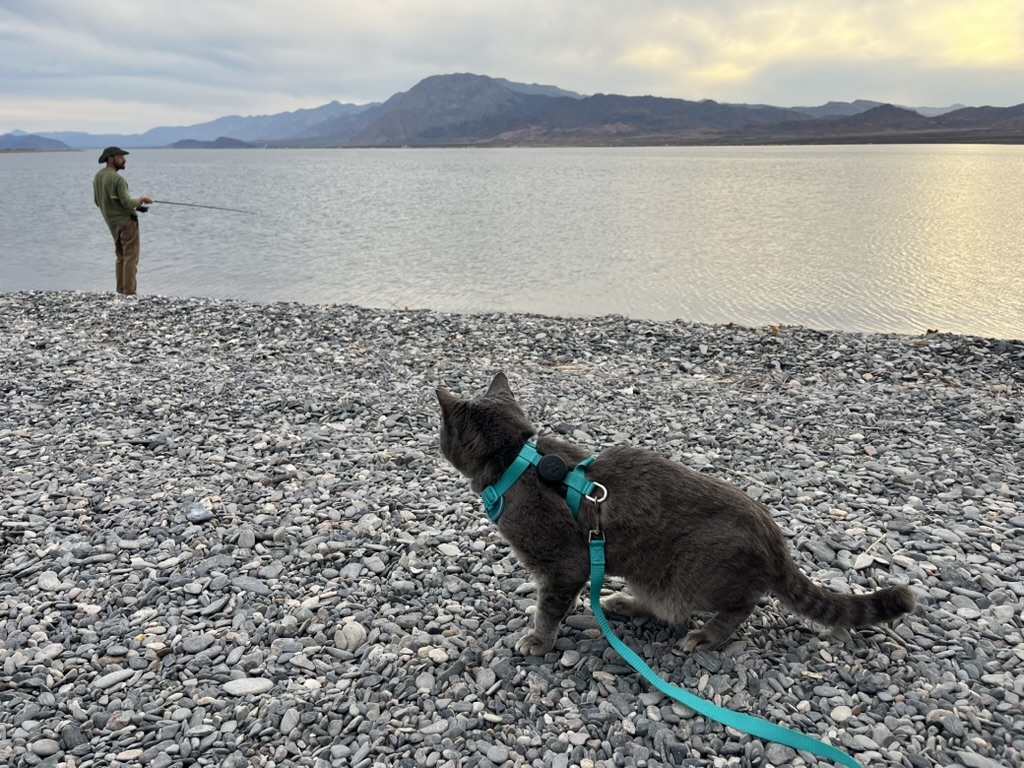
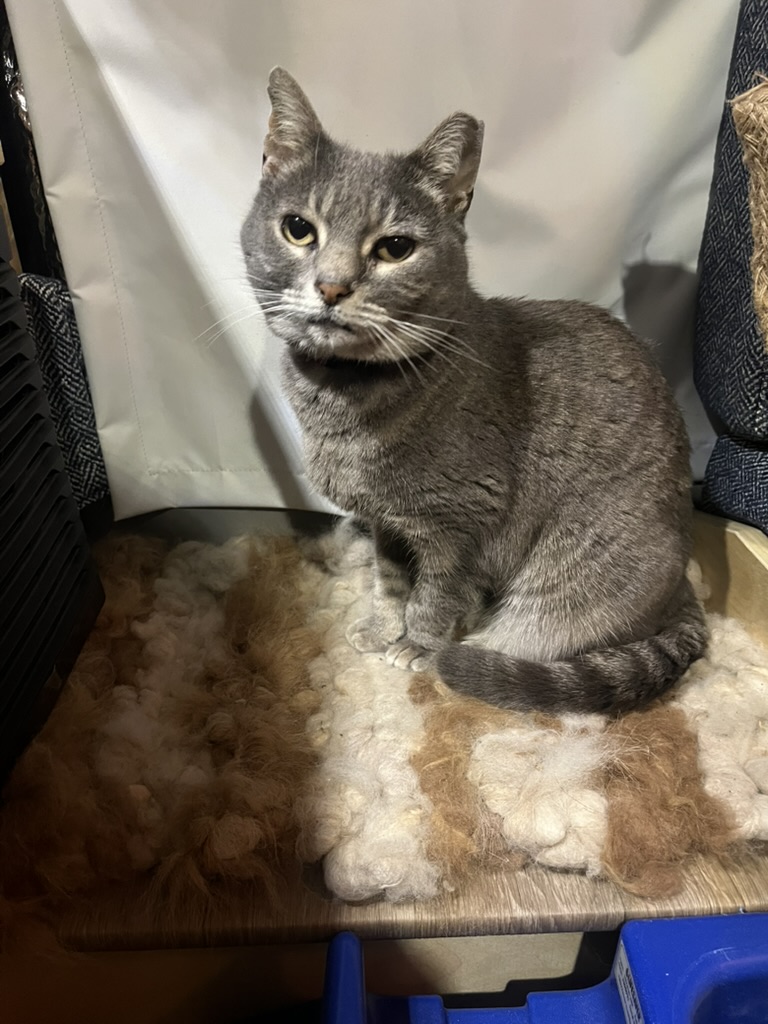
Our cat, named Asha, is a seven pound gray tabby that we brought home from the Humane Society twelve years ago. On past long trips, we’ve left her at home with a house sitter instead of taking her with us. On our recent trip earlier this year to the desert southwest and Baja we decided to take her along instead. We weren’t sure how it would work out, but in the end she adapted surprisingly well to life on the road. This post will go through how we trained her and prepared her for the trip.
Initial Considerations
The first consideration is to start early. If you’re planning on taking your cat on a long trip, plan on starting training at least a couple months before you leave. Cats are creatures of habit and shifting those habits and creating new ones takes time and patience.
Asha is an indoor/outdoor cat. She has a cat door from the house into the garage and one from the garage to outside. She lets herself in and out as she sees fit. In the summer months, she’ll spend most of her time outside following the sun around the yard, and in the winter she’ll mostly be found lounging under a heater vent. Since she was already familiar with the outdoors, we figured the transition to other outdoor spaces might be less impactful for her. On the other hand, a purely indoor cat might be fine with just moving into a camper and staying in there all the time.
The other consideration is the cat’s general temperament. As I said, Asha is an indoor/outdoor cat, so she’s somewhat used to dealing with changing conditions, sensory inputs, and occasional dangers that come with life outside. She generally likes people and is OK meeting new ones. She can be cautious, but isn’t skittish in general. The exceptions to that are dogs, which she really doesn’t like, and large groups of loud people. If you are thinking of taking your cat on the road, consider their temperament. Are they skittish and shy, or are they laid back and friendly? It’s not to say that a more high strung cat can’t be made into an adventure cat, it may just take more patience and a longer time frame to get them used to the idea. Asha is 12 years old, which I’m sure made this training more difficult. If you’re starting with a kitten, things may be easier as they don’t have years of routines and preferences already built up.
Backpack Training
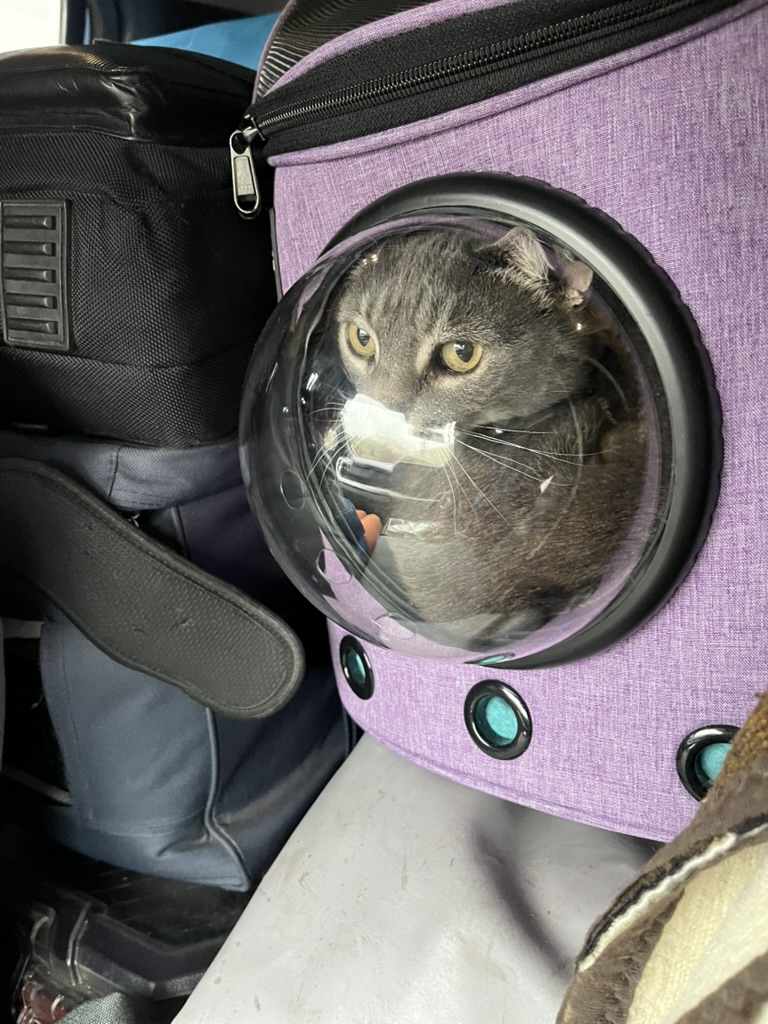
One of the first things I bought a few months before the trip was a cat backpack for transporting Asha from the house to the truck, from the truck to the camper, etc. and also for perhaps taking her on short hikes with us. We did already have a crate that we use to take her to the vet, but since that one was already associated with some rather traumatic experiences in her mind, I figured starting fresh with a different carrier would be good. The one I purchased was from Travel Cat.
The trick to all of this training is slow and incremental steps. Don’t force the cat to do anything if you can help it. The idea is to get them to associate the backpack with pleasant experiences, not traumatic ones.
To start with, I just left the backpack near Asha’s scratching post (one of her favorite items) for a week or so. This let her get used to it being around, to sniff at it, rub it, etc. I didn’t try to immediately stuff her into it and go for a walk or anything.
Next, I laid it on its side and opened it up so that she could go inside if she wanted to. For the next couple of weeks, I started putting treats and wet food inside the backpack to entice her in and start associating it with pleasant experiences.
Once she was comfortable going in and out of the backpack on her own, I started trying to put her in myself. The first couple of times there was a little bit of resistance. I just took my time and was as gentle and reassuring as possible. At first, I put her in, zipped it up for a minute or two and then opened it so she could get out if she wanted to. I didn’t try to go anywhere, but left her in the living room and stayed right there with her where she could see me for reassurance. I immediately followed this up with a treat or wet food as a reward.
After a week or so of going in the backpack once or twice a day for a minute or two, I started putting her in and then taking her outside into the yard for slightly longer periods each day. From there, I started putting the backpack on my back and taking short walks around the yard, and then around the neighborhood. After any of these activities, I always rewarded her with a treat or some wet food.
The key to this was taking things very slowly and getting her used the backpack and following up with rewards and treats. At this point, she goes into the backpack with no resistance and often goes into it of her own accord when she’s feeling nervous or threatened, seeing it as a safe and familiar place no matter the external circumstances.
Harness and Leash Training
The second part of adventure cat training after the backpack was getting Asha used to wearing a harness and walking on a leash. We wanted her to be able to go outside but also wanted to make sure we could keep track of her and make sure she didn’t get spooked and run away. Therefore, getting her used to a harness and leash was a necessity.
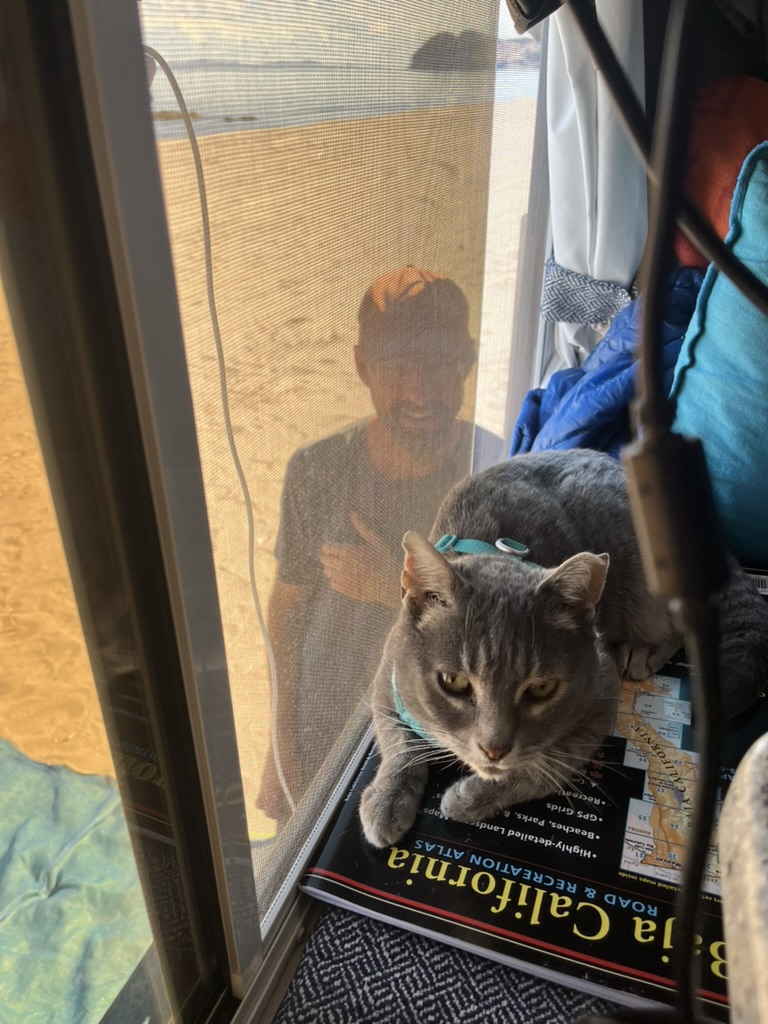
I took a similar approach to the harness training as I did to the backpack training, slow and incremental. First, I started with putting the harness on her for just a few minutes each day. It’s safe to say she wasn’t a fan at first. She would elongate her body and slink around like there was something sitting on top of her–obviously very weirded out by the sensation of the harness on her body. After each of these sessions, I would give her a treat or some wet food. I slowly started increasing the amount of time that the she wore the harness until after a few weeks she was wearing it all day. By the end, she was used to it and moving normally as if the harness wasn’t even there.
I did the leash training separately from the harness. Again, I started slow. At first, I just put the leash on the harness, but didn’t even hold it. I let her walk around the house with the leash attached to get used to that feeling a little bit. From there, I started holding the leash and following her around. She seemed a bit weirded out by me following her around at first, but got used to it quickly enough. In general, when walking on the leash, I let her call the shots. I walk at her pace and pretty much go where she wants to go. If she starts to go somewhere I don’t want her to go, a gentle tug on the leash seems to be enough to redirect her.
On the Road
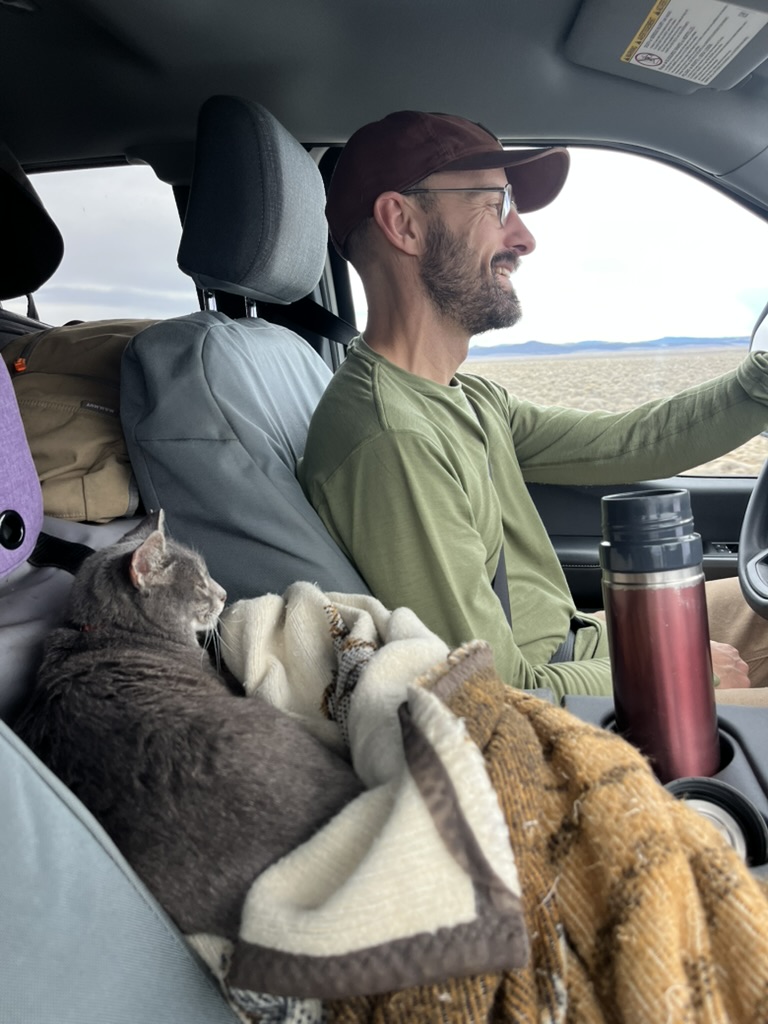
The final piece of training for Asha was getting her used to riding in the car. She had done some brief car trips before, but these had almost exclusively been to take her to the vet so likely had some slightly traumatic associations to de-program. If you’ve read the rest of this post, then you’ll know how this goes. I started with loading her into her backpack and going for short drives, followed by treats or wet food. We worked these up in length slowly over time. I also made sure she got plenty of time in the camper with the truck in the driveway and we got out on a couple of overnight trips before we hit the road in earnest.
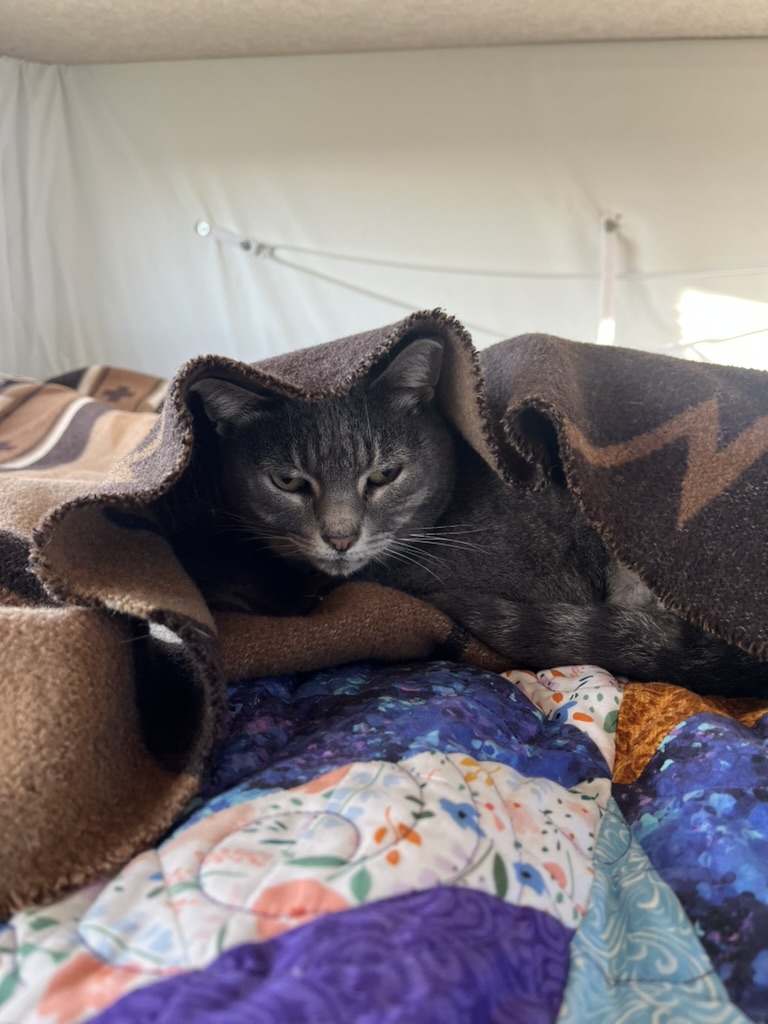
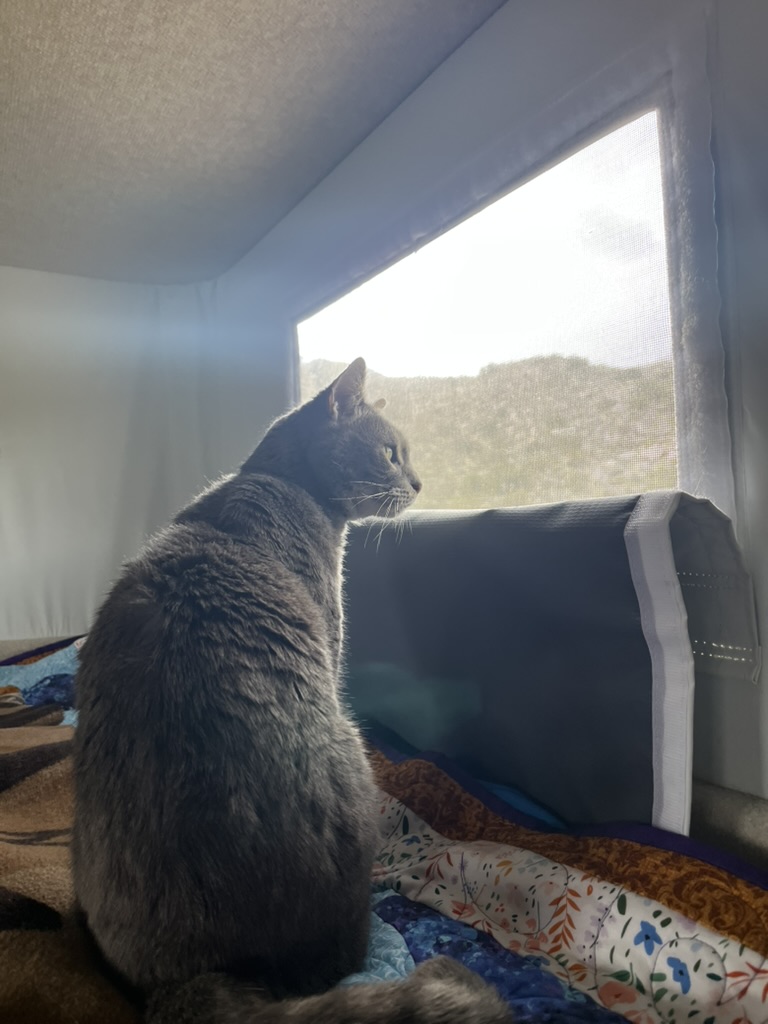
With the slow patient training leading up to the trip, Asha adapted and settled into life on the road surprisingly easily. We haven’t taken her on any real long hikes on the leash or in the backpack. She seems content to lounge in the camper most of the day, much as she does at home, venturing out for short walks to explore when we’re somewhere quiet. I think she enjoyed being in Baja almost as much as us, particularly the fresh fish. Whenever I caught something, she got a little of her own. We didn’t have any trouble at the border with her and having her in Jocelyn’s lap even garnered some grins from the guards at the military checkpoints. We have really enjoyed having her along with us on our adventures. She’s a member of our family and having her with us makes our camper feel even more cozy and like a true home away from home.
If you’re thinking of taking your cat with you on the road, it’s entirely possible to do in a way that’s not stressful for them or for you. Some patient training leading up to departure will go a long way. Do you have any adventure cat training tips or tricks, or any questions for me about adventure cat training? Let me know in the comments.


Leave a Reply