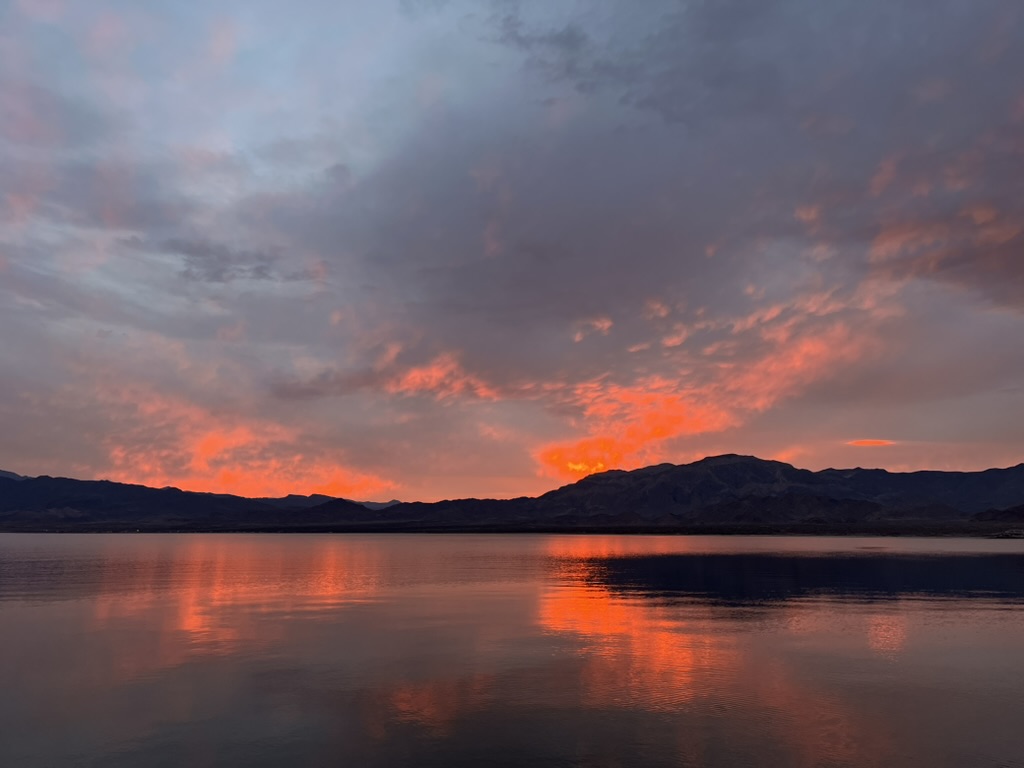
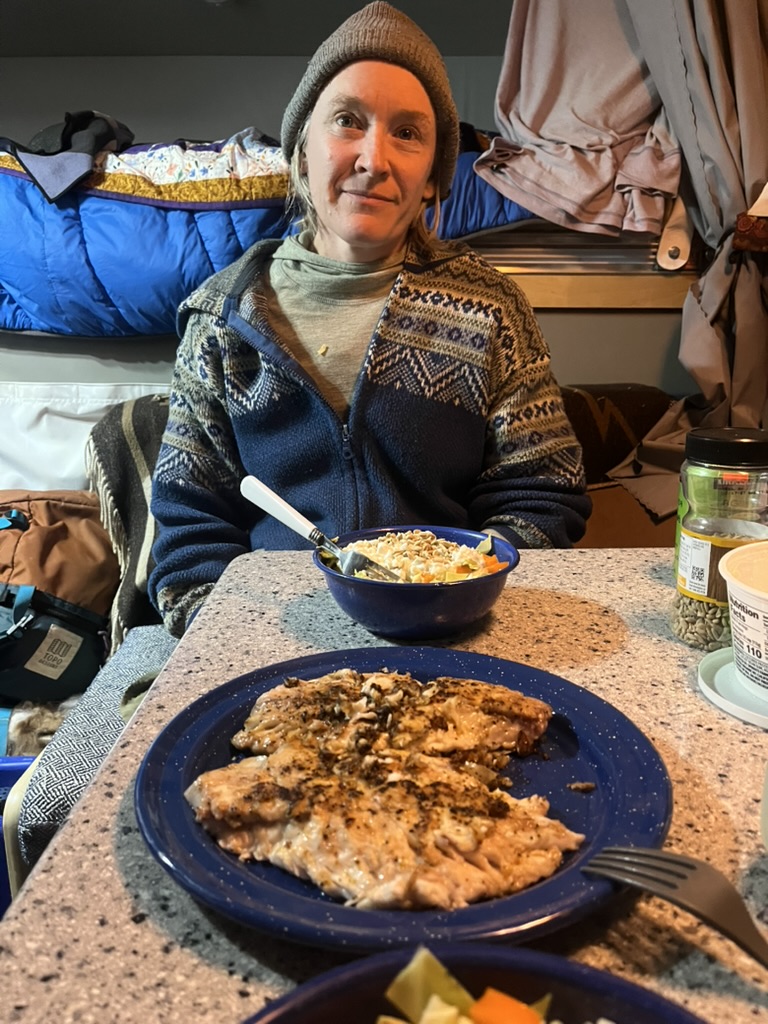
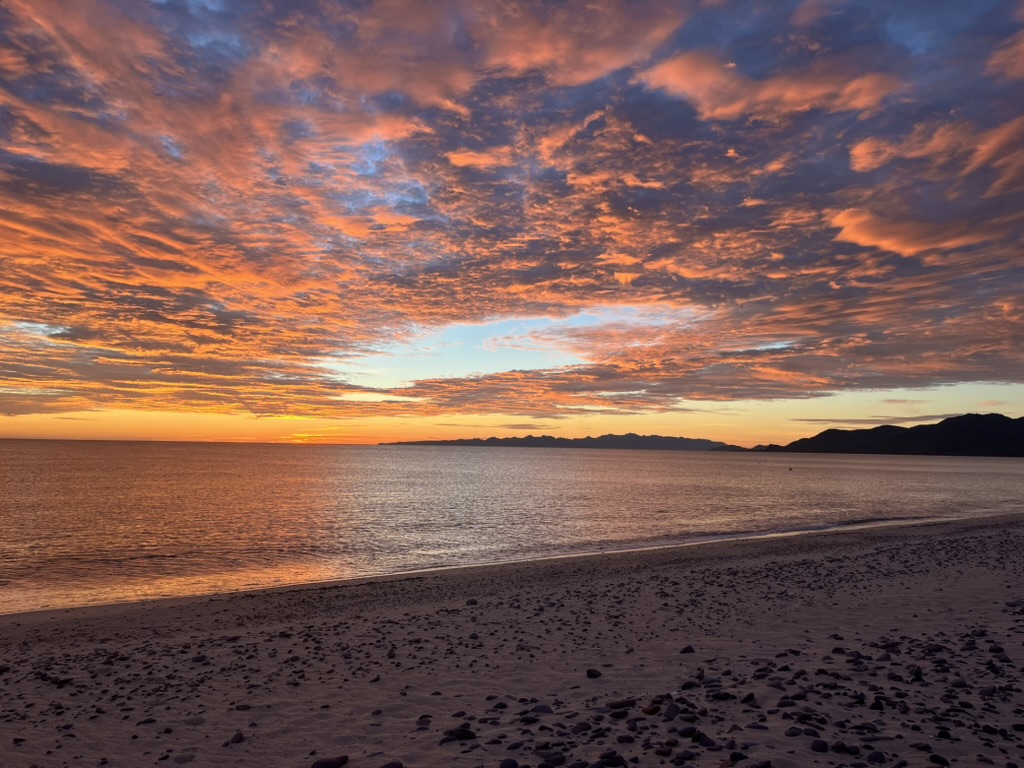
We left Bahia de Los Angeles early on a Friday morning. We were bid farewell by another beautiful sunrise that followed one of the best sunsets we saw in our time there, which itself followed a final dinner of fresh caught Barracuda. The Bay of LA treated us well and we’ll definitely be back.
Our destination was Guerrero Negro on the Pacific side where we had a whale tour booked for Saturday. We decided to take a dirt route over the mountains with a stop over at a remote 18th century mission called San Borja. It was a long, bumpy drive, but well worth the effort.
On our way out of town, we stopped at the Pemex station to top off our gas, fill up our Jerry can, and drop our trash. When we went into the store for some snacks, a local Mexican guy in there recognized me from the La Gringa beach we had just been camped at. They had been fishing next to us one day and I was having a particularly good day catching Barracuda, giving them the extras as I reeled them in. Jocelyn was also trying her hand and as she was reeling in a fish, a gang of pelicans swooped in and tried to steal it in a blaze of flapping wings, splashing water, squawks, and giant beaks! It was wild. They didn’t manage to get the fish, but we got a good laugh about it as did the locals next to us. I only got a little bit of what he said in Spanish, something about Playa La Gringa, fish, etc., but he was all smiles and we had a good chuckle together.
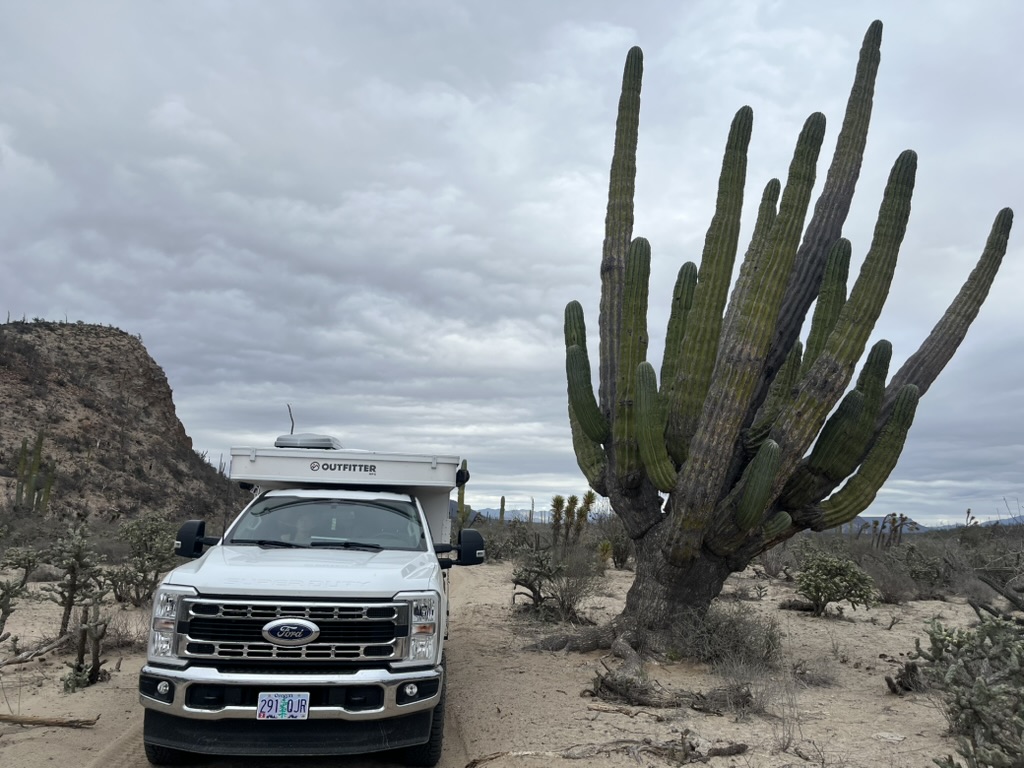
We pulled out of the Pemex and back onto Highway 12. We missed the turn to the road to San Borja once, but after a quick turnaround, we made it onto the sandy two track headed West toward the mountains. We stopped to air down the tires to help the truck ride smoother on the bumpy roads, reduce the chances of a flat on sharp rocks, and provide additional traction on any sandy sections we might run into. The road started out sandy, but turned to rough rocks as we climbed up into the mountains. There were some washouts to negotiate and some steep sections that we crawled up in low range. The whole time we were surrounded by huge Cardón cactus, Cirio, and a dense underbrush of Yucca, Elephant Tree, and Cholla, the vegetation become greener and thicker as we climbed into the relatively moister mountain environment. In the distance, massive mesas and peaks. As we crested the pass and started heading down the other side toward the Pacific, it almost seemed like I could see all the way to the water.
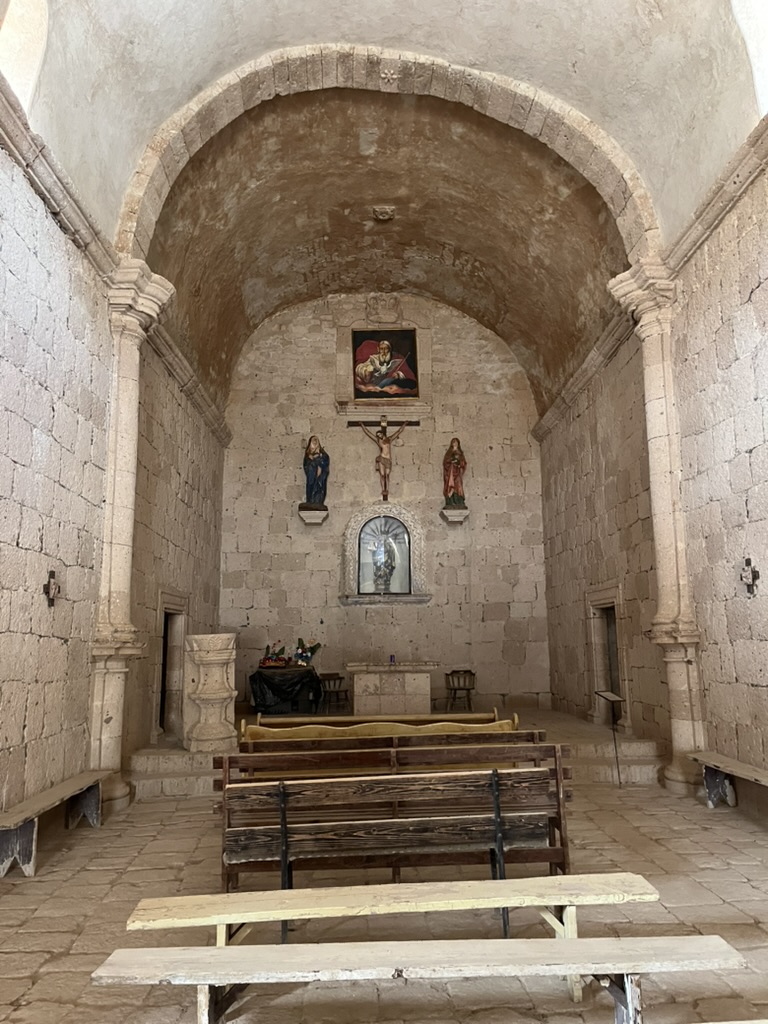
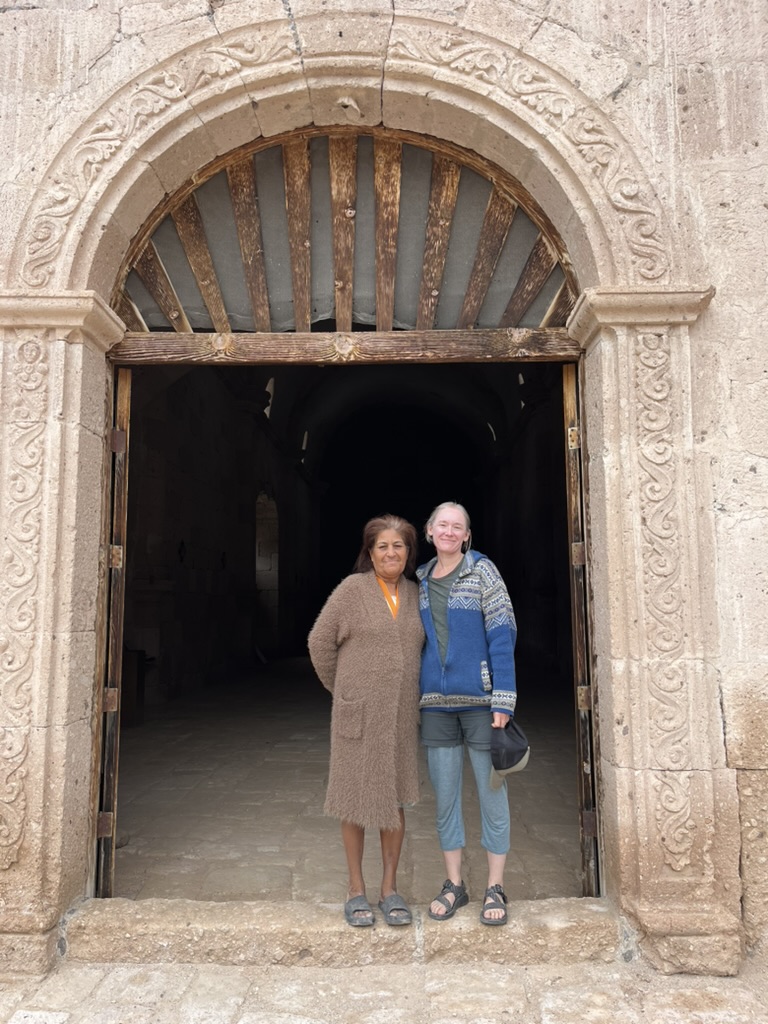
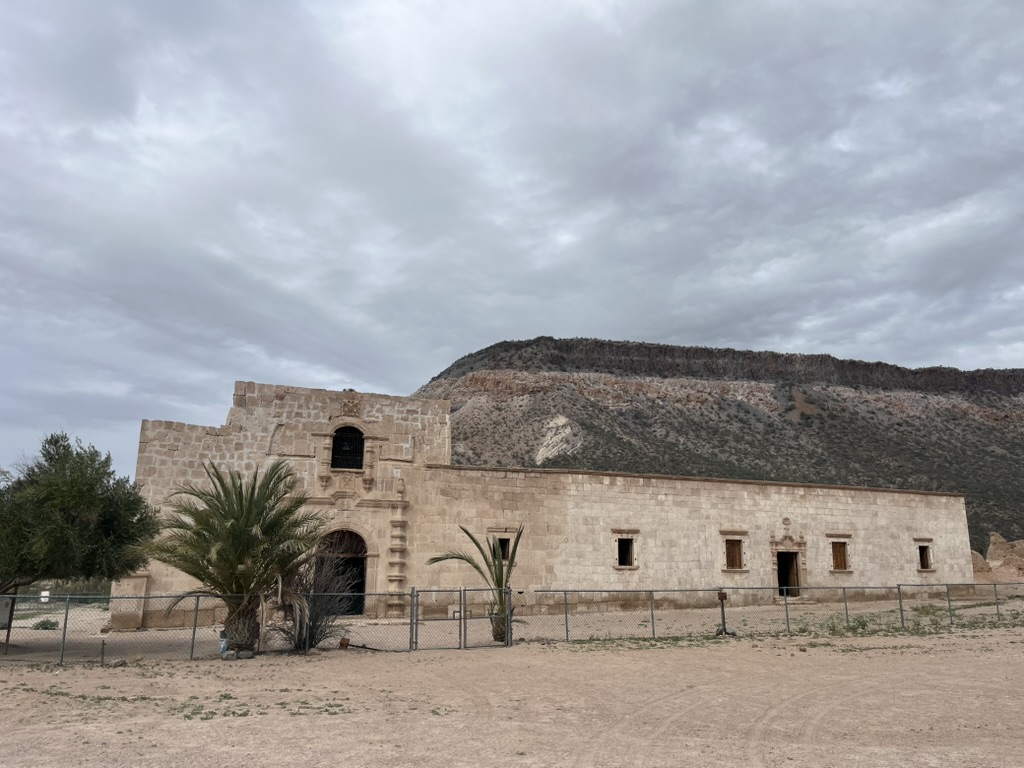
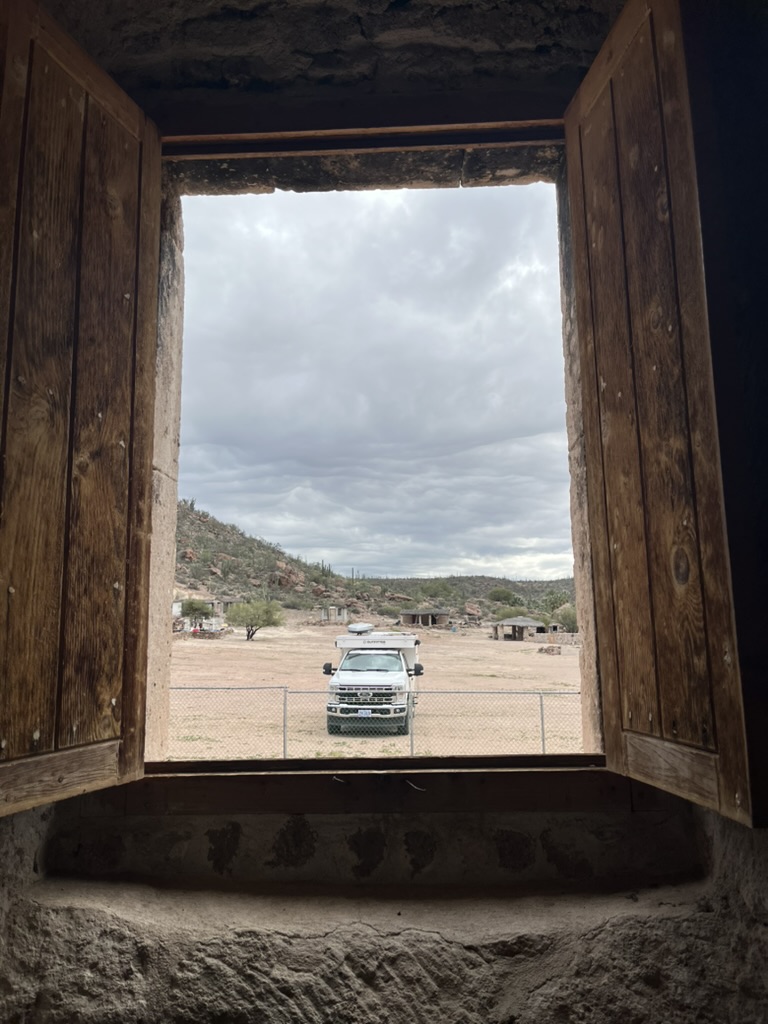
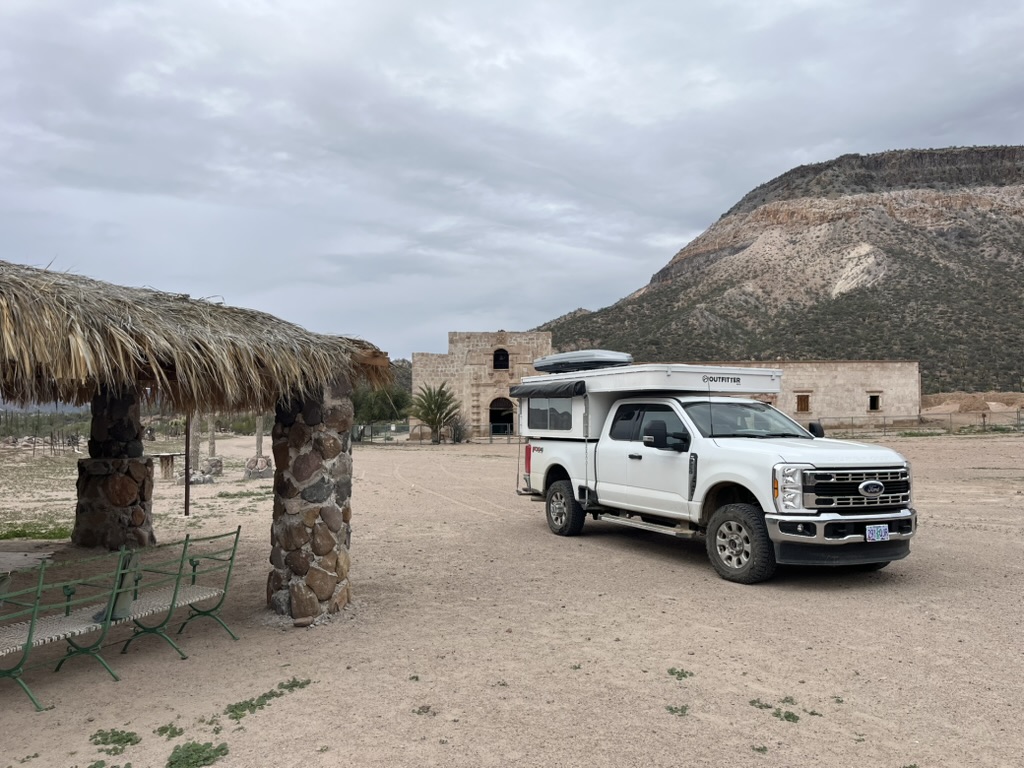
We reached the San Borja mission after about 3 hours of driving covering about 24 miles. It was slow going to say the least. As we dropped down into the canyon site, the palm trees that seem present in any inhabited area near water here, and the massive stone structure, came into view. The first inhabitants we saw were three dogs that ran out to greet us. As we pulled around to the front of the building, a woman came out of a nearby house and started unlocking and opening the doors to the building.
The mission was originally built in 1767 and then stopped operating as a mission in 1818 after the native Cochimi population it “served” was decimated by disease. It has since been taken care of by locals including the woman who gave us the tour. She told us she had lived in this remote area for 40 years and her family maintained the buildings and grounds. The tour, all in Spanish, included a small museum with a few artifacts and an impressive, if a bit steep and scary, spiral staircase to the roof. I think I got maybe 80% of the Spanish and was even able to ask a few questions. I felt pretty good about that given my rusty and rudimentary Spanish skills. When the tour concluded, I gave her a tip, but what she really wanted was chocolate and fresh fruit which she asked us for. It seems these are hard commodities to come by in this remote location. We gave her a bit of chocolate covered nuts we had left and some dried apples and persimmons from our trees back home. After eating some lunch ourselves we were on our way. The rest of the road out to the small town of Ejido Nuevo San Rosalia was much better and we covered the remaining 20 miles in about an hour. We didn’t see another vehicle on the route until we got into town, evidence of the remoteness of the journey.

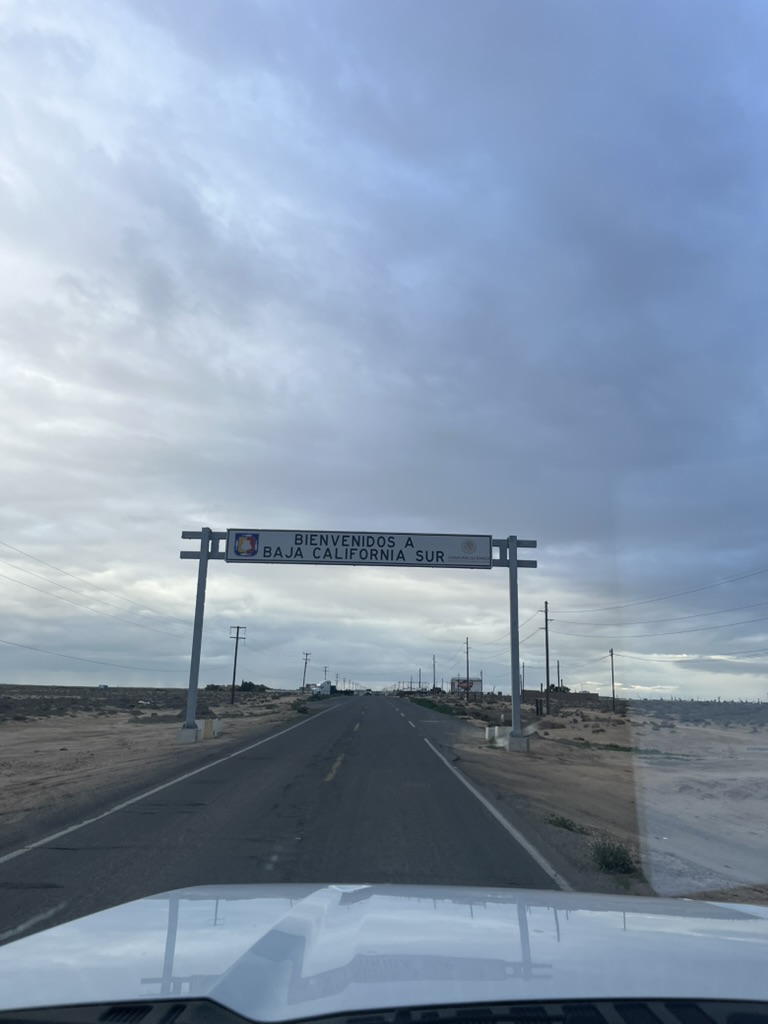
We drove the rest of the way to Guerrero Negro, crossing into the state of Baja California Sur, and to the office and campground of Baja Magic where had a whale tour booked for the next day. The tour included one night of camping along with breakfast and lunch the next day. We arrived around 4:30 and made camp in their gravel parking lot. We had a delicious dinner of pasta carbonara made by their Argentinian chef. We got to know our tour mates a little bit over dinner, two Canadian couples and a couple from Colorado. This is about the ratio we’ve experienced overall here. About two-thirds of the other travelers we’ve met are Canadian with the rest being mostly American and a smattering of other countries. Shari Bondi, the whale naturalist and our tour guide, herself a Canadian expat, then conducted a talk on the behavior and biology of the Gray Whales we would be seeing in the Ojo de Liebre Lagoon the next day.
Gray whales complete an annual migration from their feeding grounds off the Alaska Coast, to the shallow lagoons of Baja where they have their calves and mate. These are the same whales we see during their migration off the Oregon Coast, where we’re lucky to see a spout or a tail breaking the surface in the distance. It definitely doesn’t compare to the up close and personal experience we would have here.
It poured rain most of the night, which continued off and on into the morning. We were glad we made our camp in the gravel parking lot instead of in the dirt area where the other folks had camped which had turned into a mud pit. After a simple but tasty breakfast of eggs, beans, a tortilla, and fruit salad, we all loaded up into a van and headed toward the lagoon. Most of the trip was across a muddy salt flat; the thick, salty grime thudding against the side of the van as we pushed through it and it was thrown off of the tires. I could almost feel the frame and rocker panels corroding away as we drove. I was glad it wasn’t our truck we were driving out there.
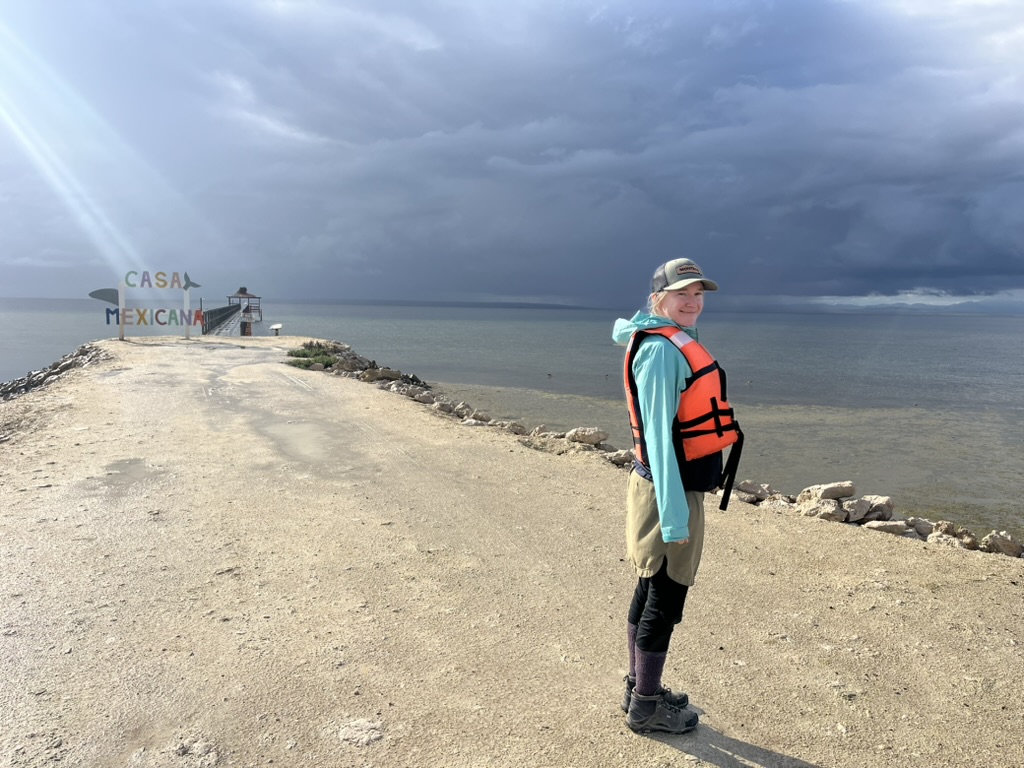
We arrived at the dock, which included a building with some information about whales, a small gift shop and a restaurant. We waited around for a couple more hours for the rain to pass before finally boarding our boats and heading out into the lagoon. According to Shari, the conditions were far from ideal to get close to the whales. The rough water and wind made it hard for both boat and whale to navigate into position.
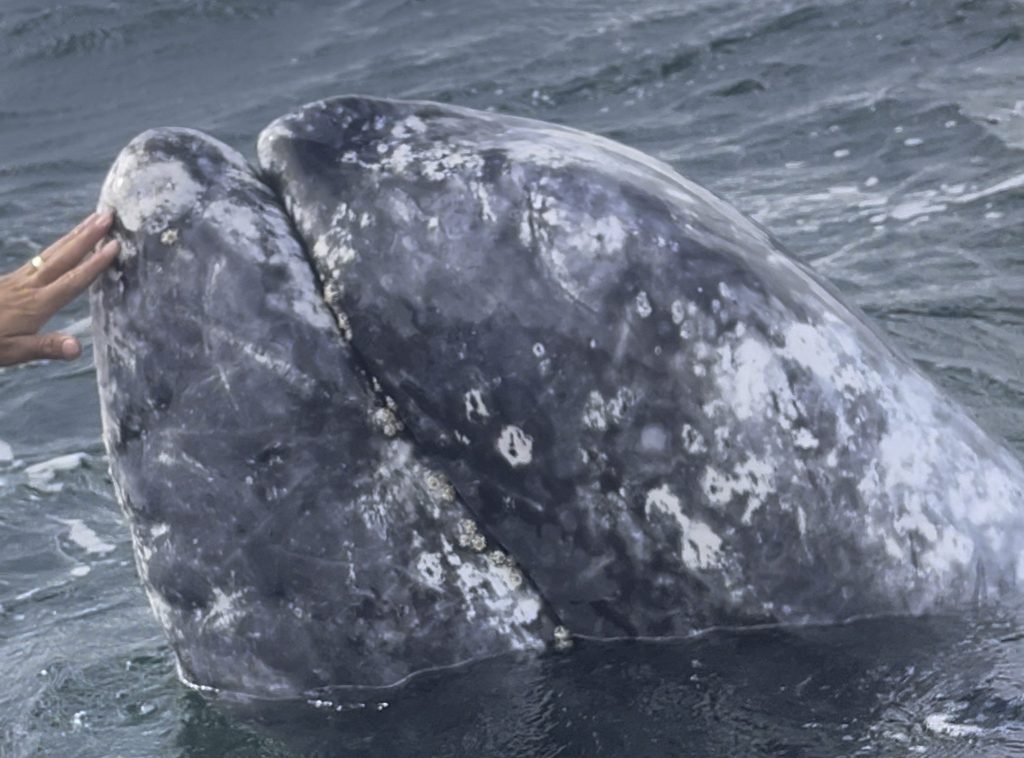
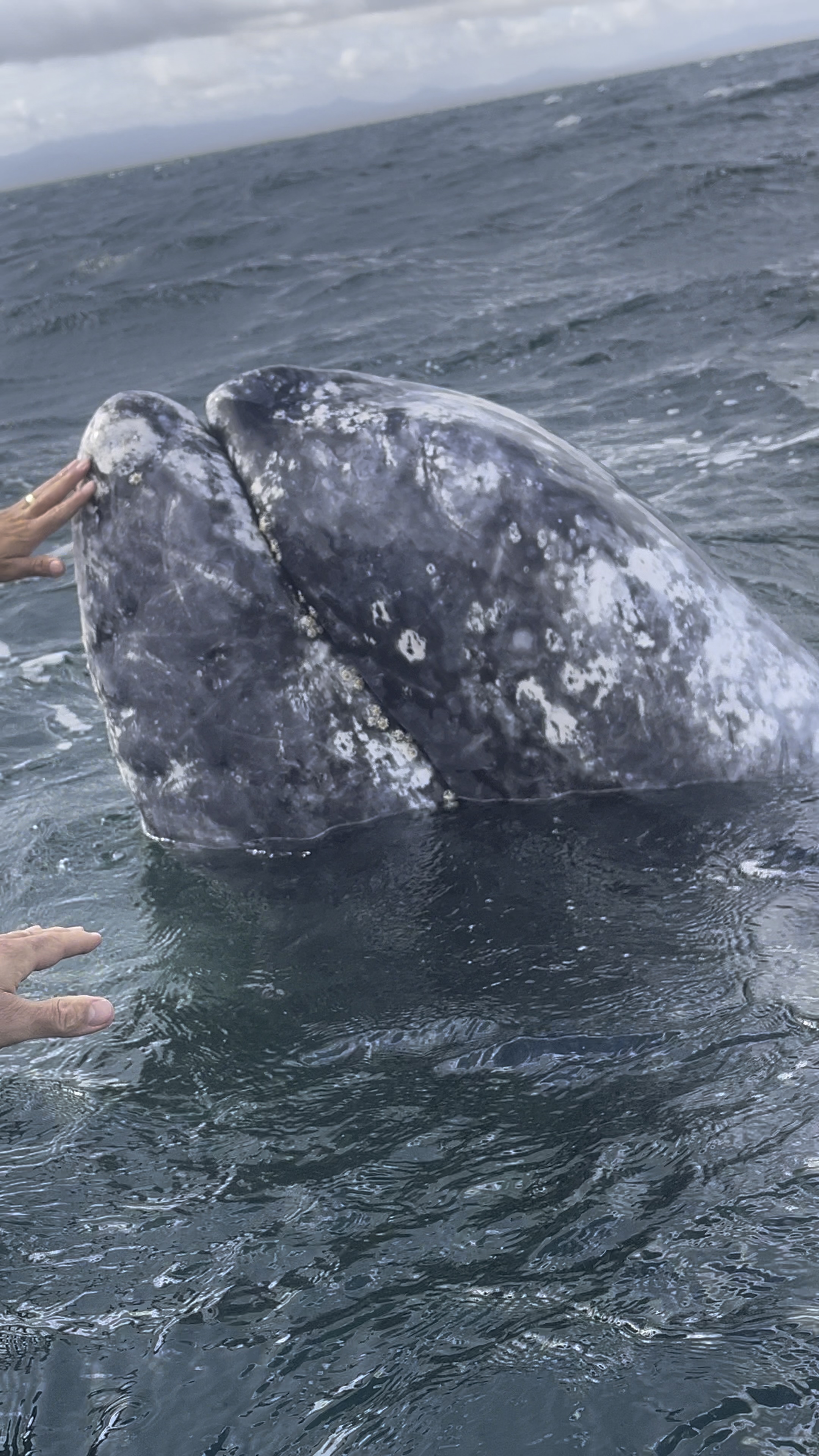
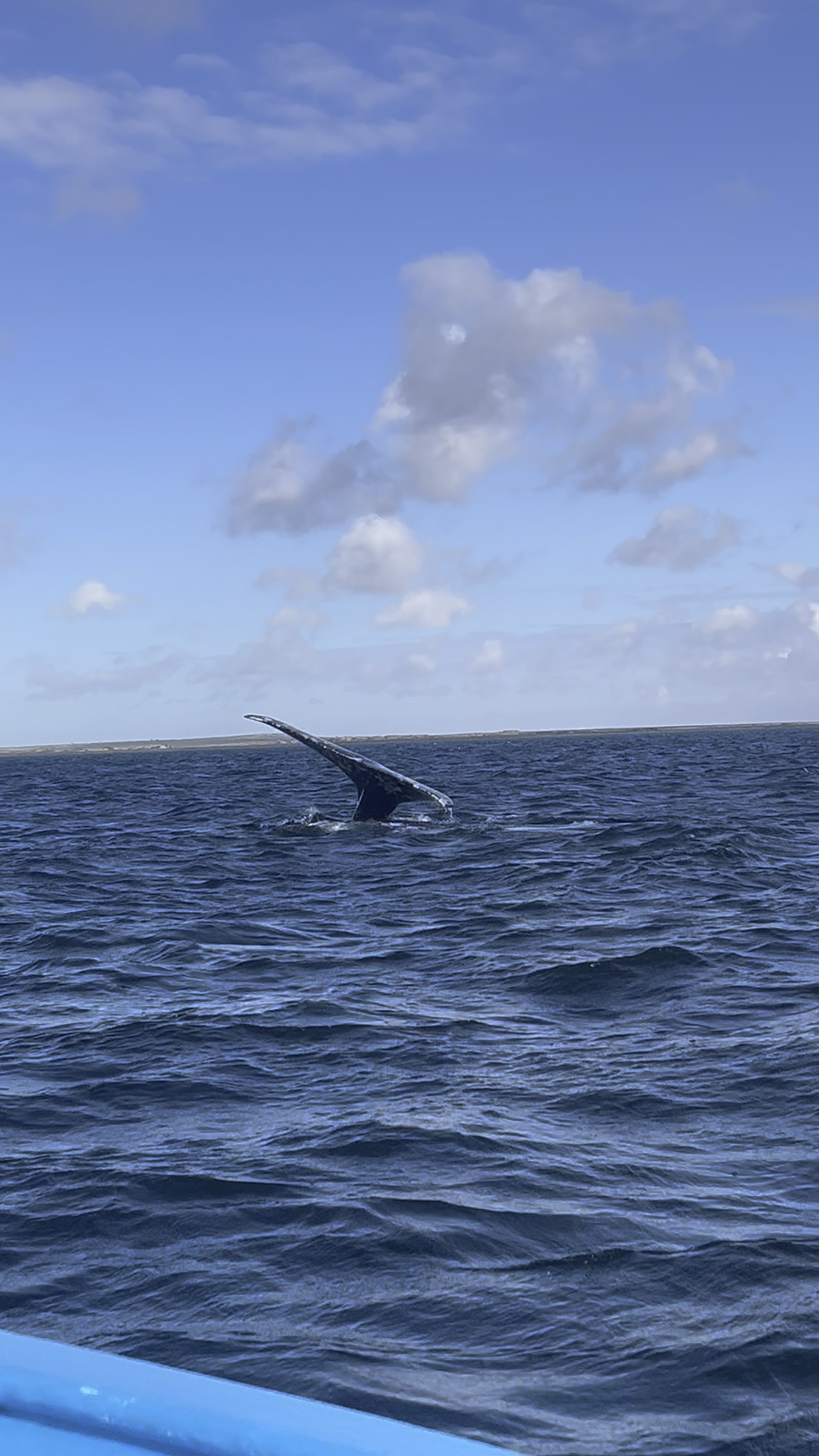
As we got out into the lagoon though, we almost immediately started seeing spouts and whale backs breaking the surface. We saw tail breaches, “spying”, where the whale stands on the bottom of the lagoon with it’s tail and points it’s head straight up, and full breaches where the whale jumps completely out of the water and rolls. We also saw a calf, and some mating trios. The whales mate in groups of three, one female and two males. The males are typically an older and a younger one, the older teaching the younger how it’s done. The pinnacle though was where a female came right up to the boat, close enough for a couple people to touch it. Gray whales are the only species that will do this. They are intensely curious and seem to like to have contact with humans. It was incredible to see these gentle, curious, and intelligent creatures I’ve only seen from a distance on our own Coast, so up close and personal here.
After the tour we returned to the Baja Magic office and had our lunch of baked fresh fish and vegetables. Simple, but delicious fare. We said our goodbyes to our fellow whale watchers and were back on the road toward San Ignacio.
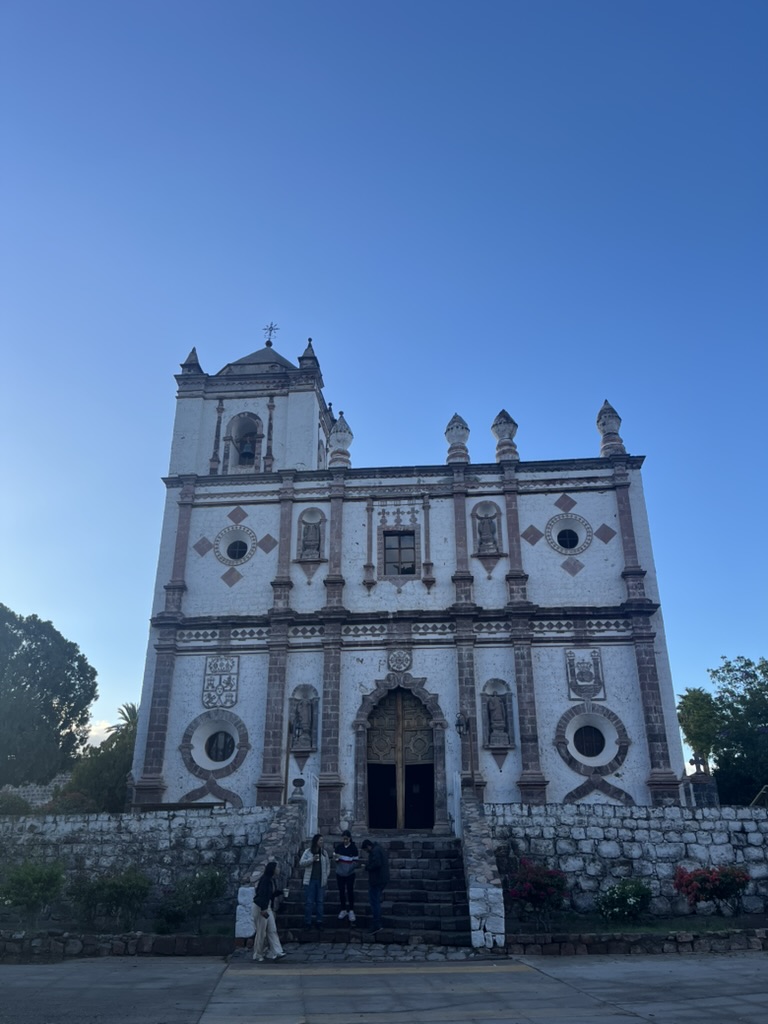
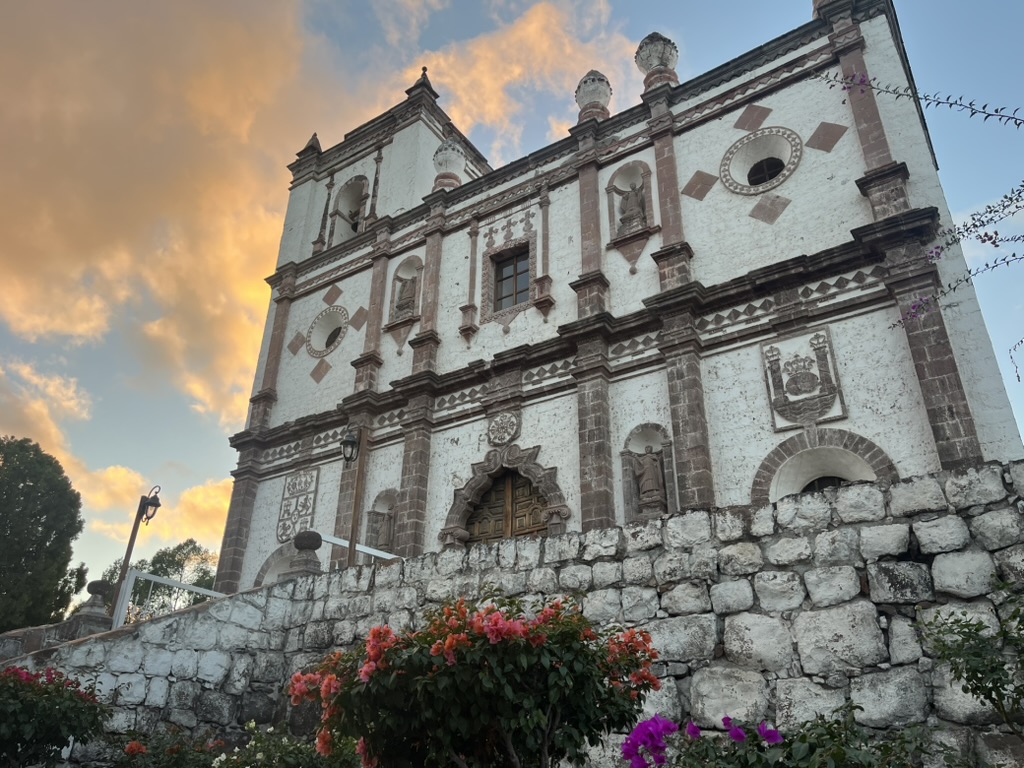
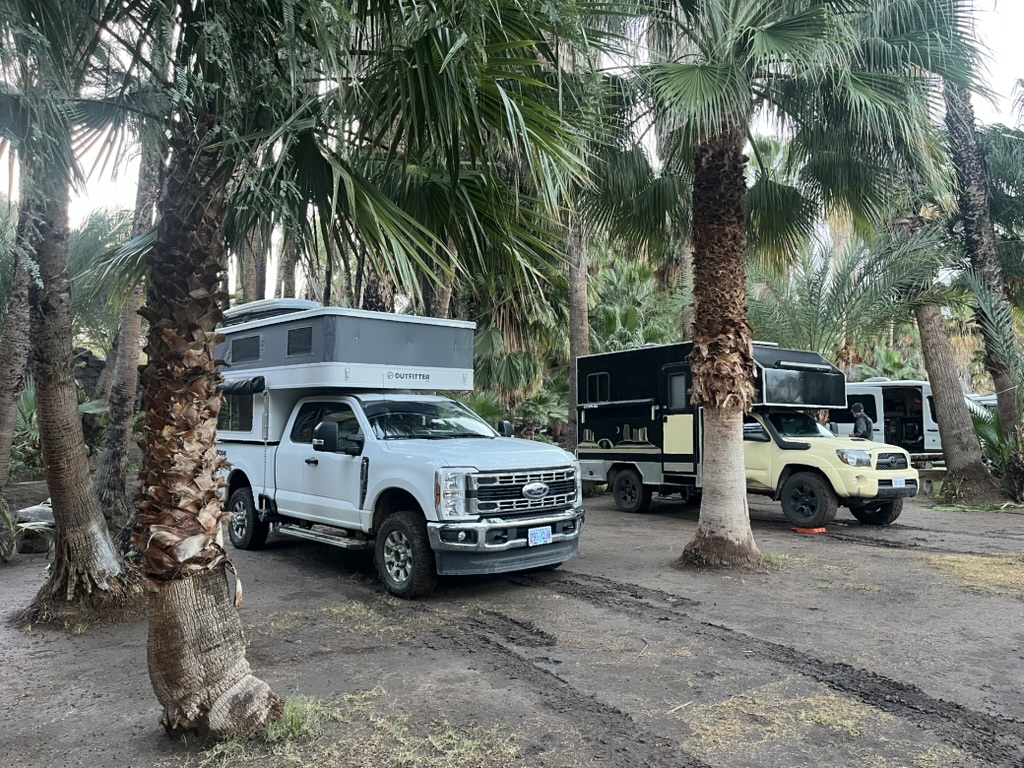
San Ignacio is a beautiful, tiny, oasis town of only 500 residents in the interior of the peninsula. Driving through the parched desert from Guerrero Negro on highway 1, you’d never guess that you’d eventually drop down into this lush valley of palm trees, a river, and a large freshwater lagoon. We stayed at a campground a few hundred yards from the town square nestled into palm trees, green grass, and quite a bit of mud from the previous two days of rain. We explored the square and the grounds of the mission which included a little botanical garden with labeled plants native to the surrounding desert. Built in 1786, the mission is the focal point of the inviting square lined with shops and restaurants.
Our final destination on Sunday was Mulegé and the Bahía Concepción area where we planned to spend the work week. There are multiple camping options around the bay, but they are all close to the road and we’d heard there could be a lot of noise, particularly from semis using their engine brakes in the hilly terrain. Nevertheless, we decided to check them out, and we had a backup option to the North of Mulegé that one of our whale watching partners had recommended if nothing struck our fancy.
First though, we needed to fill up our water tank and get groceries. This would be our first tank fill and grocery trip in Mexico, so we were ready for a bit of adventure. We stopped at a store right off of Highway 1 simply named, “Super Market”. While it wasn’t as big as a typical supermarket you might find in the U.S., it was well stocked and had most of what we were looking for. The only thing that was really lacking was fresh, leafy greens like lettuce or spinach. We ended up making due with cabbage for our salads. Next up was filling the water tank. We navigated our way through the narrow streets of Mulegé to the Agua Purificada in the center of town. These are stations all over Baja, in most any town, where you can buy purified water. This one had a hose that allowed us to fill up our tank directly. We needed 11 gallons of water to top off the tank, which cost 70 pesos, somewhere around $3 US. It was tight maneuvering in the streets and into the station and I definitely wouldn’t have wanted to be in a rig any bigger than ours.
Re-provisioned, we headed South toward Bahía Concepción. The first beach with camping we came to was Santispac. It was a beautiful spot, right on the turqoise water of the bay, but as we’d been warned, right next to the road and also very crowded. We continued on to Playa Escondida, which was a little bit off of the road, but also very crowded. It didn’t look like there was even a spot for us to squeeze into. Deciding the Bay probably wasn’t our scene for camping, we decided to try our luck at Playa Santa Ines a few Kilometers North of Mulege.
Play Santa Ines lies down 6 kilometers of bumpy dirt road from highway 1, which is probably part of it’s saving grace. When we arrived, we were greeted by Blanca, the caretaker, who was extremely friendly and patient with my Spanish. The sites were well spaced and we were well away from the highway with miles of beautiful beach and mountains in the distance. They had clean, hot showers, water at each site, and flush toilets; amenities mostly missing from the other camps on the bay that we had seen. For 300 pesos a night, we were sold and paid for 5 nights up front.
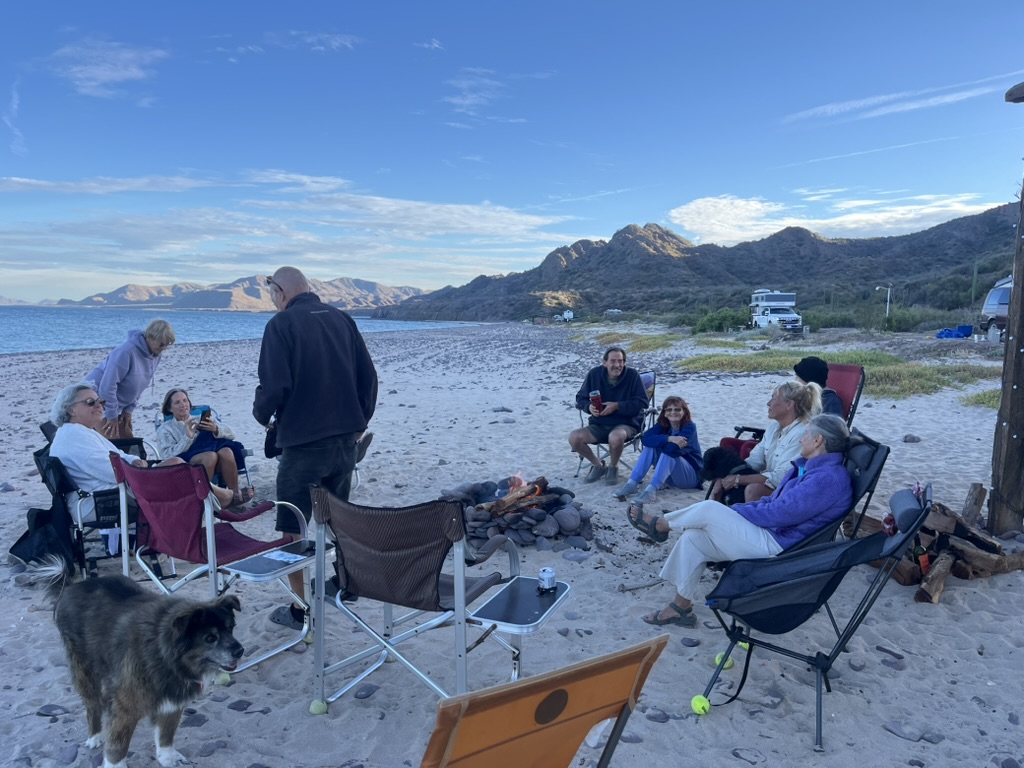
That very first night, our neighbors invited us for a camp wide potluck and bonfire. It seems a temporary little community had sprung up here among the mostly Canadian snowbirds. Many of them had been here for weeks, and some even months, including Steve, who was there for at least three months every winter and who I dubbed the Mayor of Santa Ines. It was so nice to be so immediately welcomed and it was a great start to our time here. One thing I’ve noticed is that nomads like these folks are quick to make friends and form community. Since everyone is on the move, there’s no time to waste in creating those human connections, however temporary they may be. This same scene repeated itself one other time during the week as well.
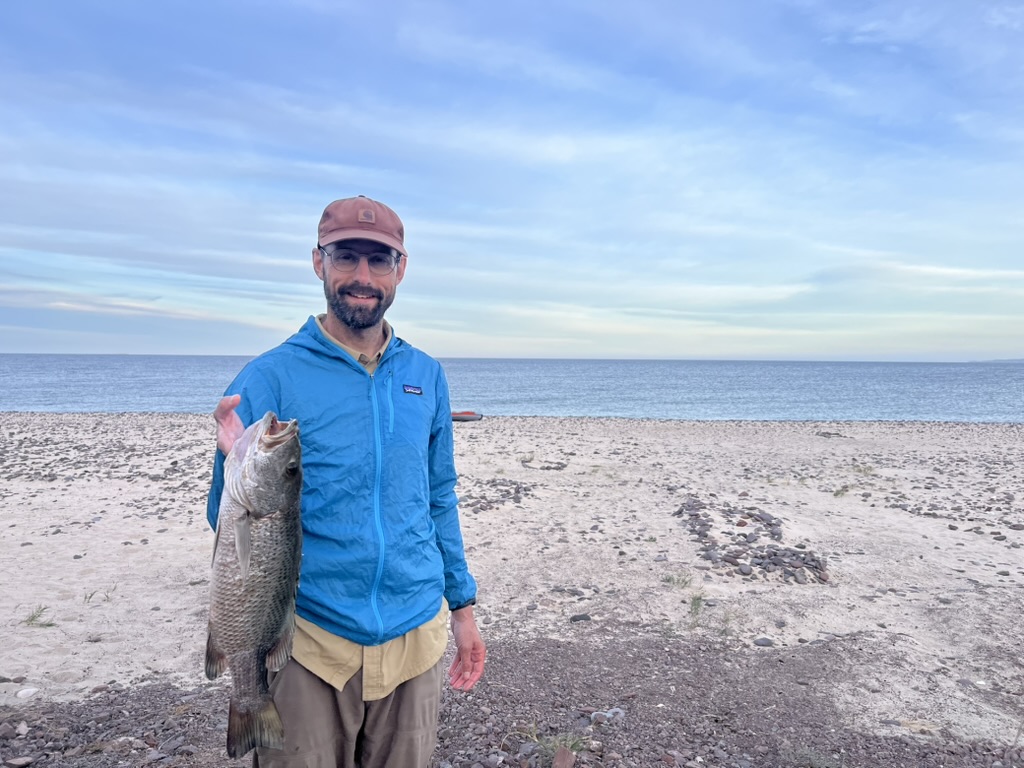
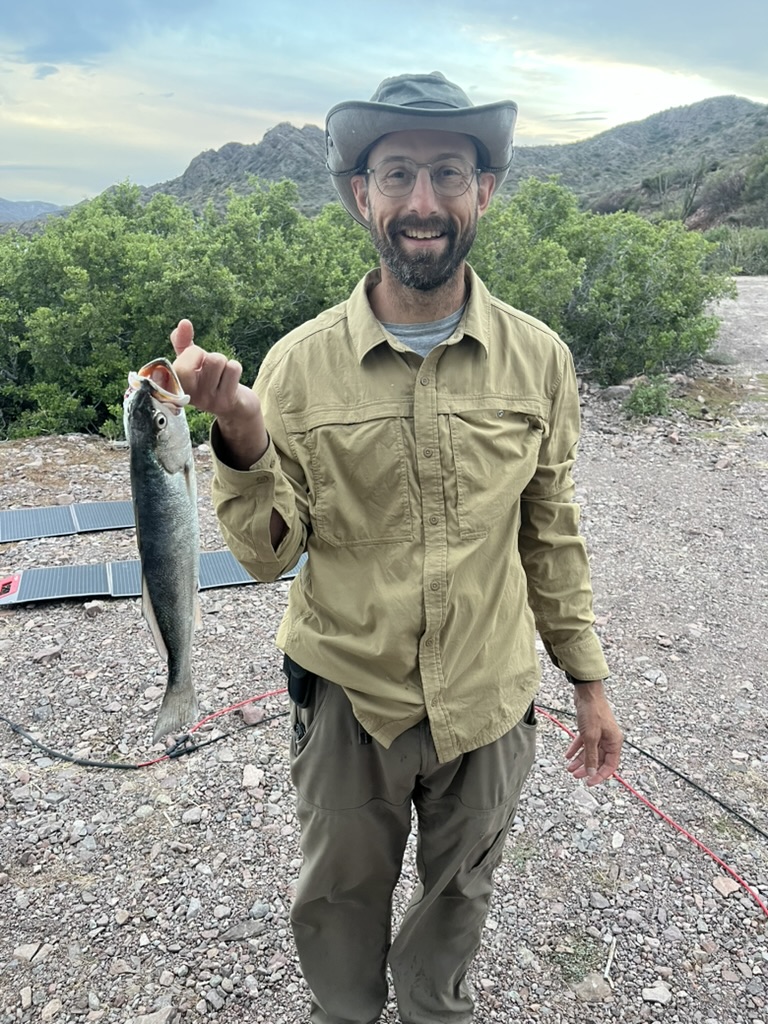
As has been my experience so far everywhere we’ve been in the Sea of Cortez, the fishing at Santa Ines is also excellent. The abundance of these waters is on a scale I have never experienced. I haven’t been skunked once (yet). If we want to eat fish, I simply walk down to the water and throw my line in for a couple hours in the evening and we have fresh fish. I caught the biggest fish of my life off the shore here, some sort of Cabrilla that made delicious fillets, and a beautiful silver and blue Corvina that was excellent steamed in the Instant Pot. I am thankful for these fish and these waters for showing me that there are still places in our world that are thriving and full of life, against all odds it seems sometimes, and for allowing me to feel this connection to my food and to the sea in a world where disconnection from those fundamental processes of life is the unfortunate norm.
Thanks Baja, and thanks for reading!
 The Crooked Trail
Leave a comment