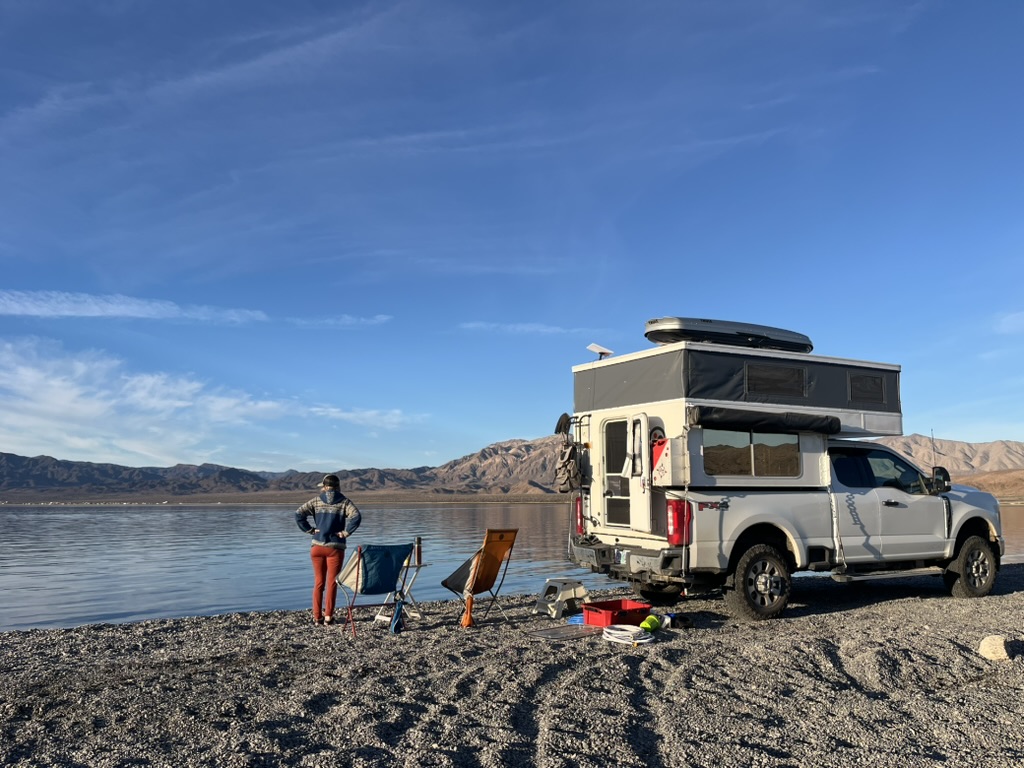
We’ve now been in Mexico for a bit over a week, but it seems like we’ve been here longer. I mean that in the best way. The people have been warm and welcoming, the weather perfect, the food incredible, and the scenery beautiful. We’ve settled in easily and felt comfortable quickly.
We spent our last night in the states in Yuma, opting for a hotel room, our first of this trip, so we could get on the road and get to the border early. This is our first time driving across the border and we didn’t know quite what to expect. With the short winter days, we wanted to have as much daylight as possible to get across the border and get to our destination in San Felipe. One of the most frequent tips about driving in Mexico is to avoid driving at night at all costs. We didn’t want to make that mistake on our first day.
We chose the Mexicali East border crossing even though there are a couple that are closer to Yuma. From what I could gather online the Mexicali East crossing has a couple of things going for it over the others. There is plenty or parking to go into the immigration office, and it’s easy to get onto highway 5 heading South without dealing with toll roads or driving through the center of Mexicali.
We arrived at the border around 7:30 AM and there was virtually no line, just a few other vehicles ahead of us. The first agent waved us through and into the secondary check area. We parked in a nice, big, covered parking area and were directed to get out of the car. The agent had us open the camper, she briefly looked inside, asked if we had any guns, gave me one more look over and then said, “OK”. And that was that. I told her we needed to get a tourist visa, known as an FMM (Forma Migratoria Múltiple) and she directed us to another nearby building. We headed over, past a soldier in full fatigues holding an assault rifle, and in the mirrored door.
Inside was a large empty room that smelled of bleach from the mopping the floor had just received, and a single counter manned by a single immigration agent who didn’t seem to be in much of a hurry to do anything. Luckily the line was short with just a couple of people ahead of us. With our FMMs secured, we were on our way. The entire crossing took about an hour.
The drive from Mexicali to San Felipe was about 200 kilometers, which took us around 3 hours on highway 5. The road was 4 lanes in some places, but mostly two lane and in pretty good shape. I noticed a couple things pretty quickly. First, driving speeds are much slower than in the U.S. There are long stretches where the speed limit is 60 or even 40 kilometers per hour, which is about 40 and 25 miles per hour respectively. The maximum I’ve seen so far is 80 km/h, or about 50 miles per hour. Not everyone sticks to those speed limits, but even the people who pass us I would guess aren’t going any more than maybe 90 or 100 km/h, or 55-60 MPH. It’s a far cry from U.S. interstates where people are going 80 or 90 MPH. It’s kind of a microcosm of the Baja vs. U.S. culture in general. Baja just has a much slower, more laid back pace and feel. I like the slower driving speeds. It feels safer, I get a lot better gas mileage, and the slower pace of things in general is refreshing. The second, kind of unfortunate thing, is that there doesn’t seem to be the same kind of roadside tidiness culture that we have in the U.S. There are some beautful, pristine places in Baja that we’ve seen so far, but in general, along the roads, there is a lot of trash.
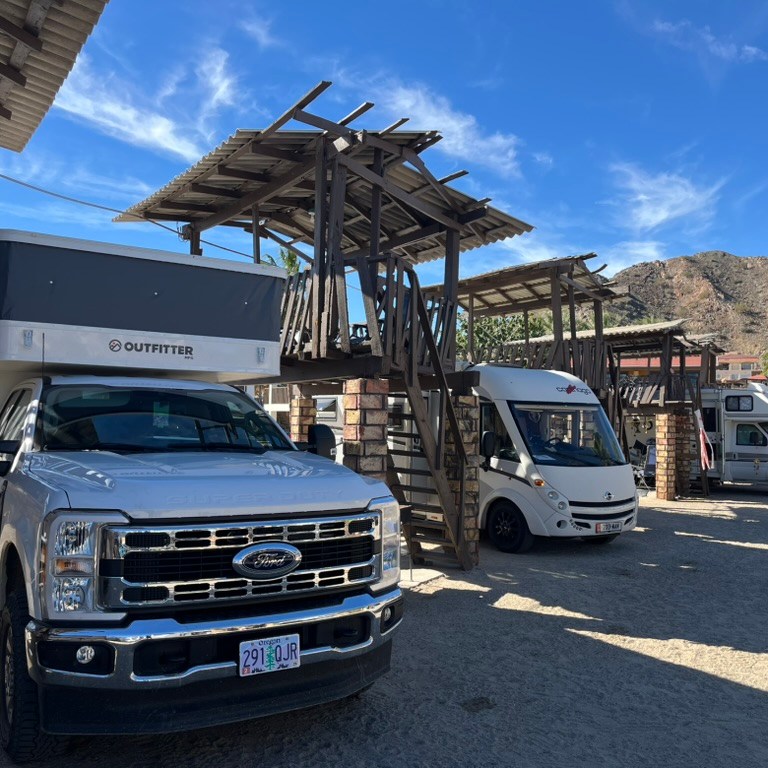
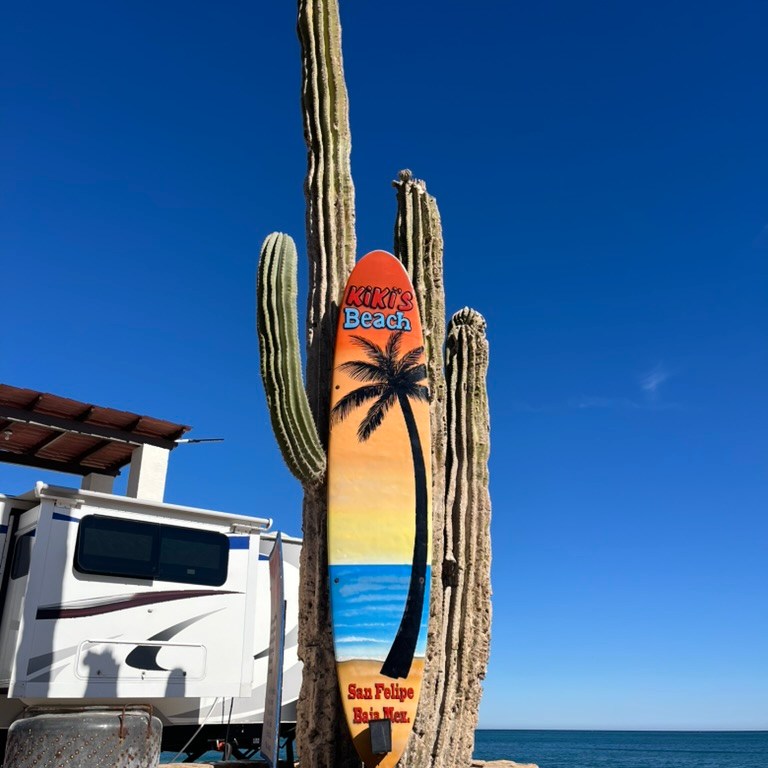
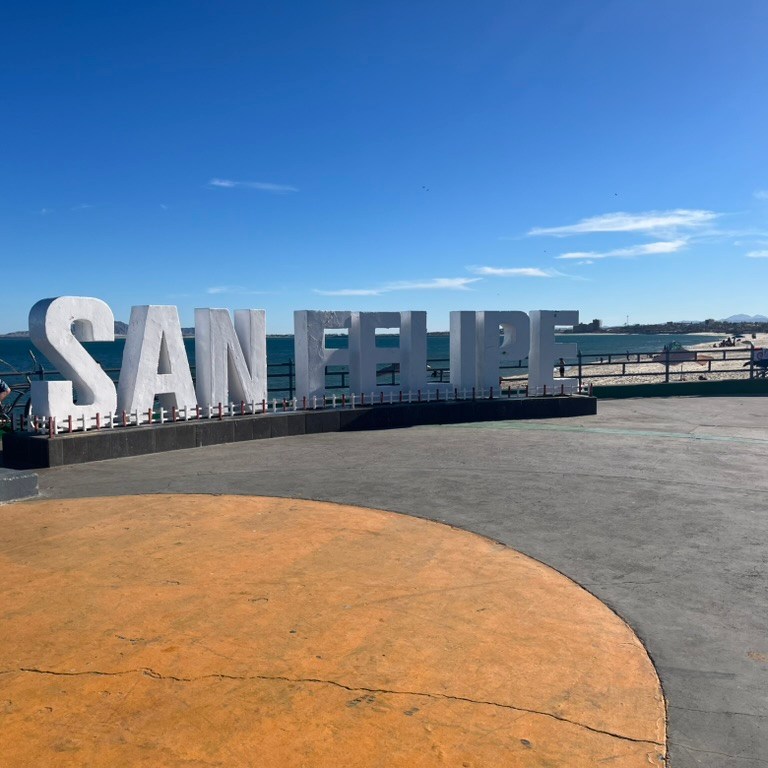
We spent the night at a campground called Kiki’s in San Felipe that had good reviews on Google and iOverlander. It was definitely more crowded than where we usually like to stay, but it was right on the beach on the Sea of Cortez, had hot showers, and was within walking distance to the main drag in town. All in all, it made for a good first night in Baja.
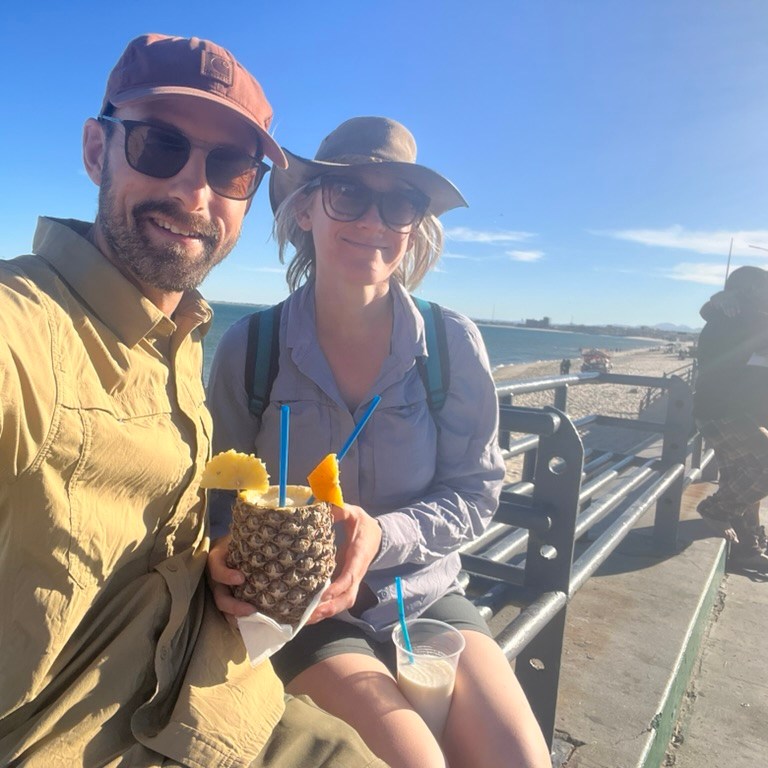
After getting settled in, we walked into town and mingled with the locals on the water front boardwalk who were out for their Saturday night paseo. Families with kids, a pick-up Mariachi band, people cruising in their cars up and down the street blasting Tejano music from the speakers. It was a lively scene indeed, even in this small fishing town. We had our first fish and shrimp tacos from a place called Brenda’s. Baja is famous for it’s seafood tacos and our first sampling did not disappoint. We also had piña coladas and churros from street vendors to round out the gastronomic experience.
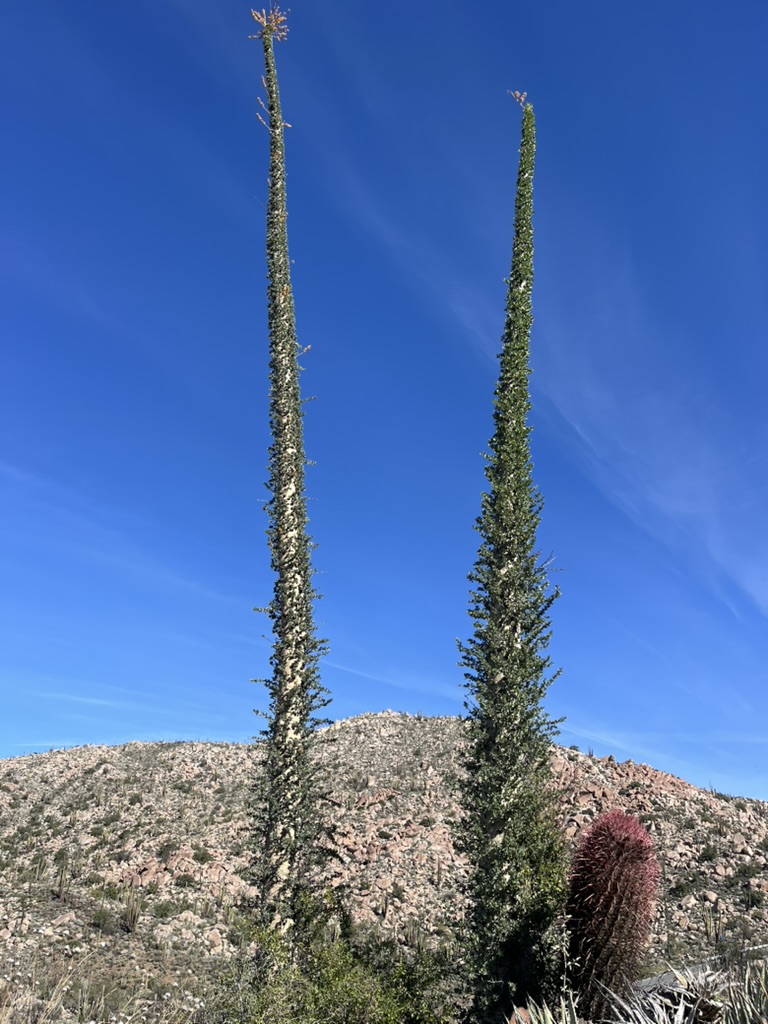
We left Kiki’s on Sunday morning and got back onto highway 5 heading South. Our destination was Bahia de Los Angeles where we intended to spend the work week. The highway left the coastline eventually and started climbing a bit into the central mountains. It was then that we got our first view of the cirio or Boojum Tree. We exclaimed with wonder and excitement at our first glimpses of the tall tapered trunks with short leaves making them look almost furry. A plant rivaling the Joshua Tree in its whimsical appearance, as if it had jumped straight from a Dr. Seuss book. It’s such moments that travel affords. It allows me to experience that kind of wonder and jaw-dropping excitement at seeing something so new and strange in this world even after having been on this planet for almost half a century.
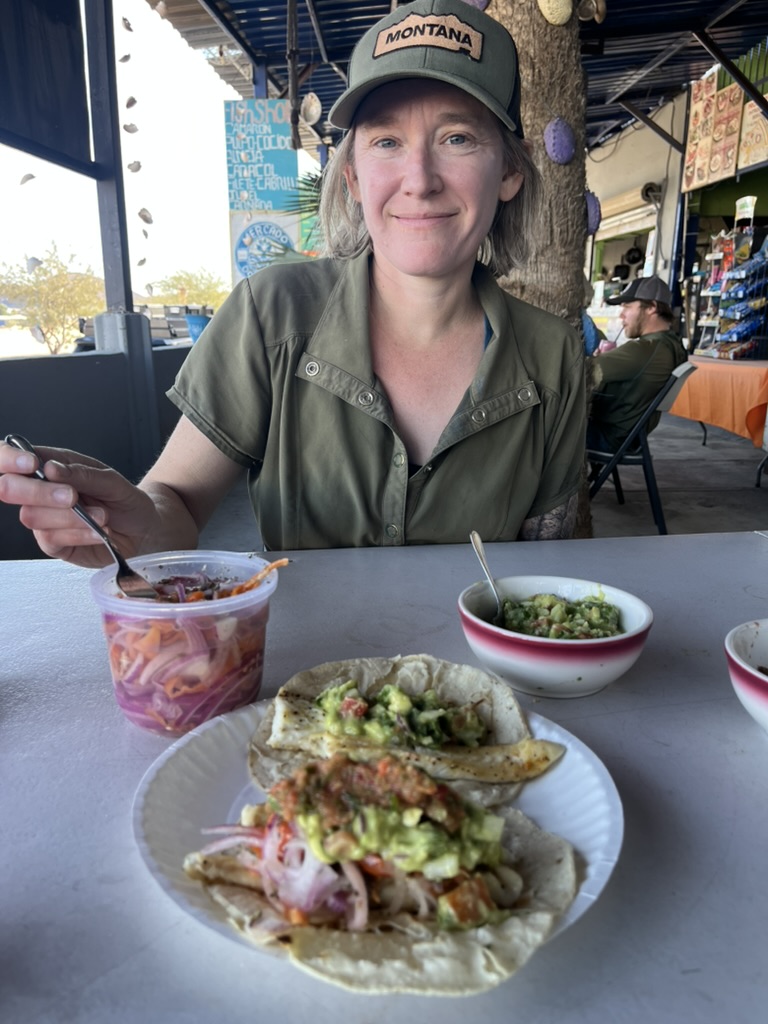
Highway 5 eventually intersected with highway 1, which was much narrower with no shoulder for the most part. The first few semis passing in the opposite lane were a bit nerve wracking as I wondered if there was actually going to be enough room for both of us to pass. From highway 1, we turned onto highway 12 toward Bahia de Los Angeles or “Bay of LA” as the gringos say. There was a fair amount of construction on this stretch, which slowed us down some, but also a lot of new pavement which made for nice driving. I heard later from some other travelers that this road was in pretty bad shape in prior years. It looks like they are making some significant investment in improving it. We arrived in the tiny fishing village of Bahia de Los Angeles and found one of the few restaurants open on a Sunday to get lunch. We had another round of fish tacos and fresh squeezed fruit juice drinks. These were even better than the first that we’d had in San Felipe.
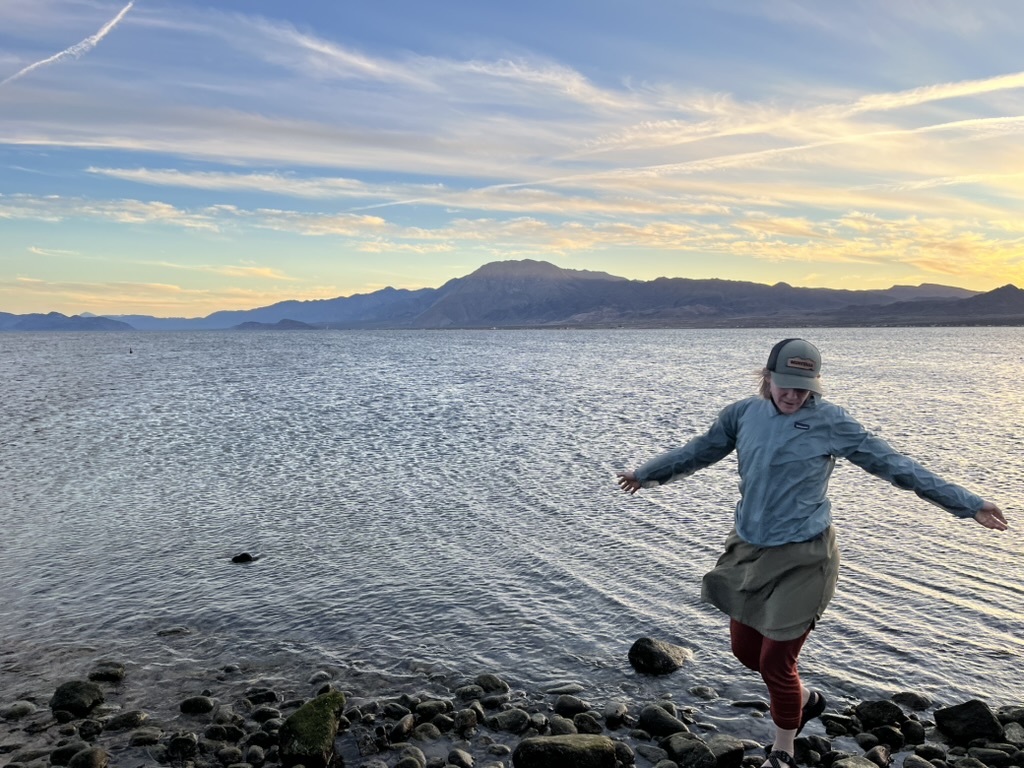
We drove just North of town to a beach called La Gringa. This isn’t a paid campground, but it’s a popular spot and there are other campers around. It’s on a narrow spit of gravel that curves around a little bay jutting out into the main bay. People generally park on this gravel spit, but leave plenty of space between camps. There’s no amenities like water, garbage service, toilets or showers, so campers need to be self contained and self-sufficient. This brings up a point about how we’ve chosen to approach camping in Mexico versus how we approach it in the U.S. In the U.S. we generally prefer to get away from other people and maximize our solitude. Solitude, silence, dark skies, and wild places are a big part of traveling and camping for us in the States. However, we know the rules there around land ownership, where camping is allowed, and we generally know how to assess safety of any given place. In Mexico, we have none of that knowledge or instinct. Therefore, at least so far, we’ve preferred either paid camping, or places such as La Gringa where there are other people around. It’s also good to see what the locals do and so far from what I’ve learned, the locals don’t just go out and boondock in the middle of nowhere by themselves. That’s a good indication that it may not be a great idea.
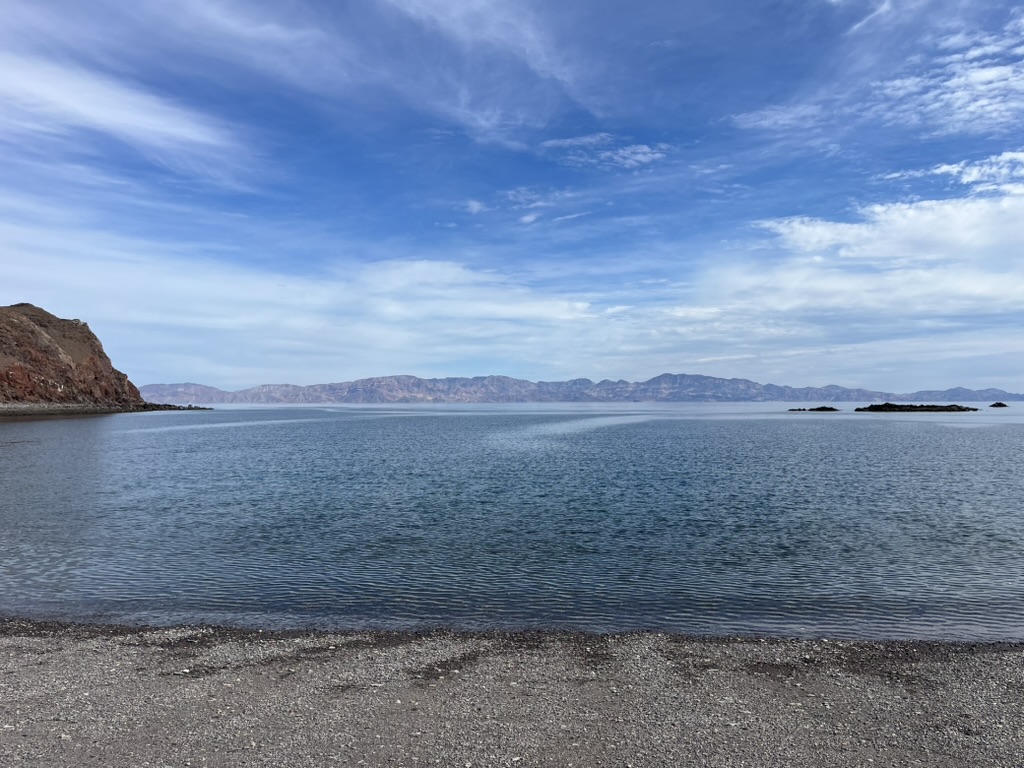
Bahia de Los Angeles and Playa La Gringa are beautiful. Clear blue water contrasted against the red and brown desert landscape of the surrounding mountains and offshore islands. Our first night we arrived to a feeding frenzy of brown pelicans. They would fly up about 20 feet and then tuck their wings and point their huge long beaks straight down and plunge into the water like a missile, gulping down their catch as they came back up. It was quite a welcoming party. I’ve since learned that brown pelicans are the only pelican species that dive like that.

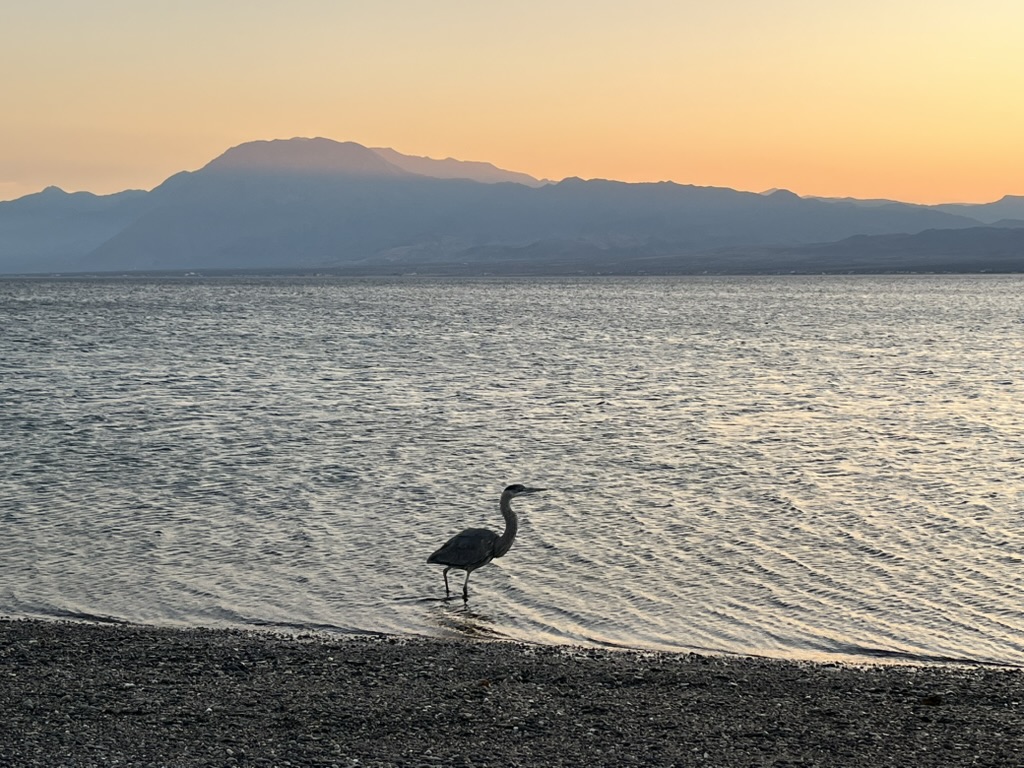
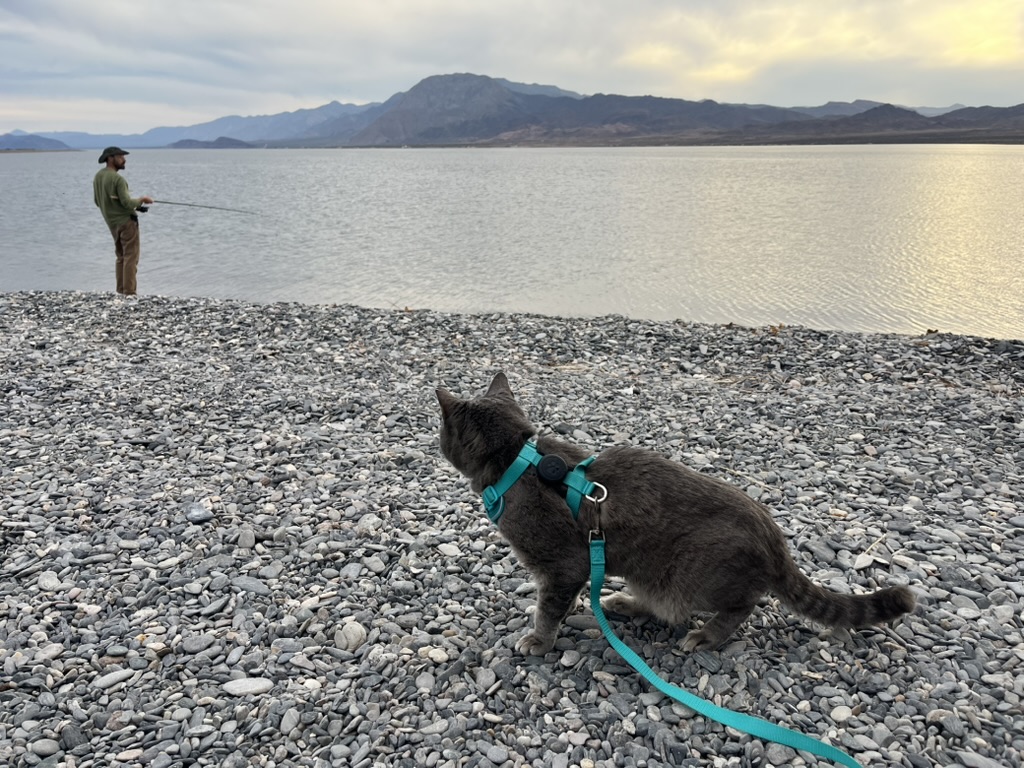
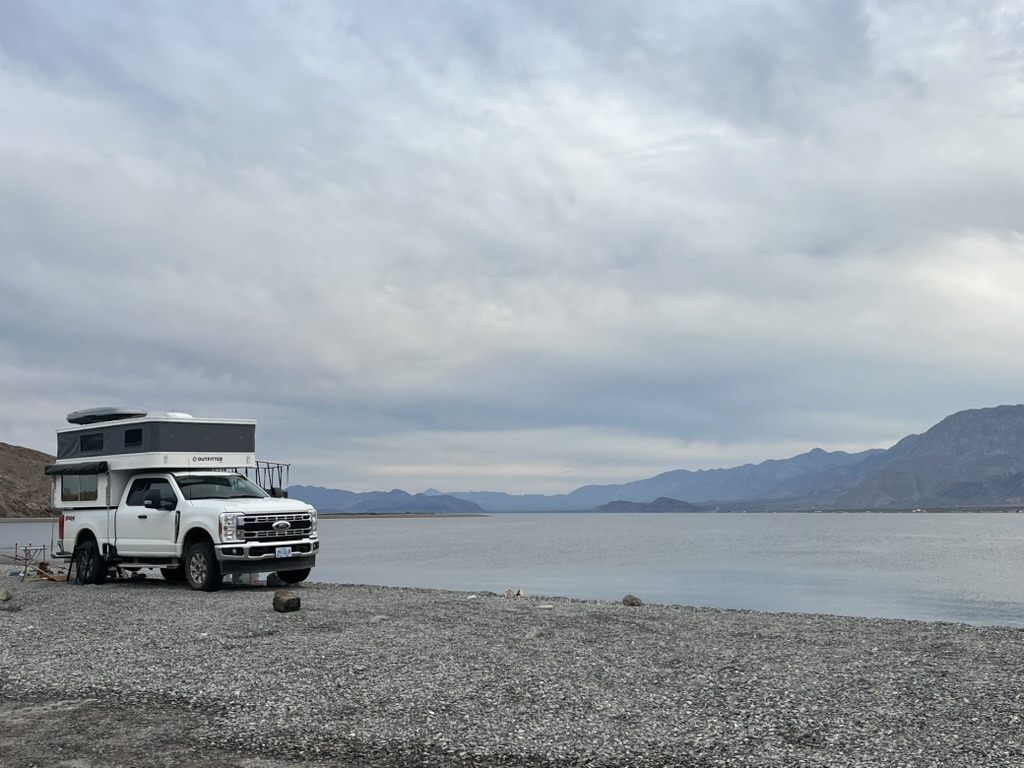
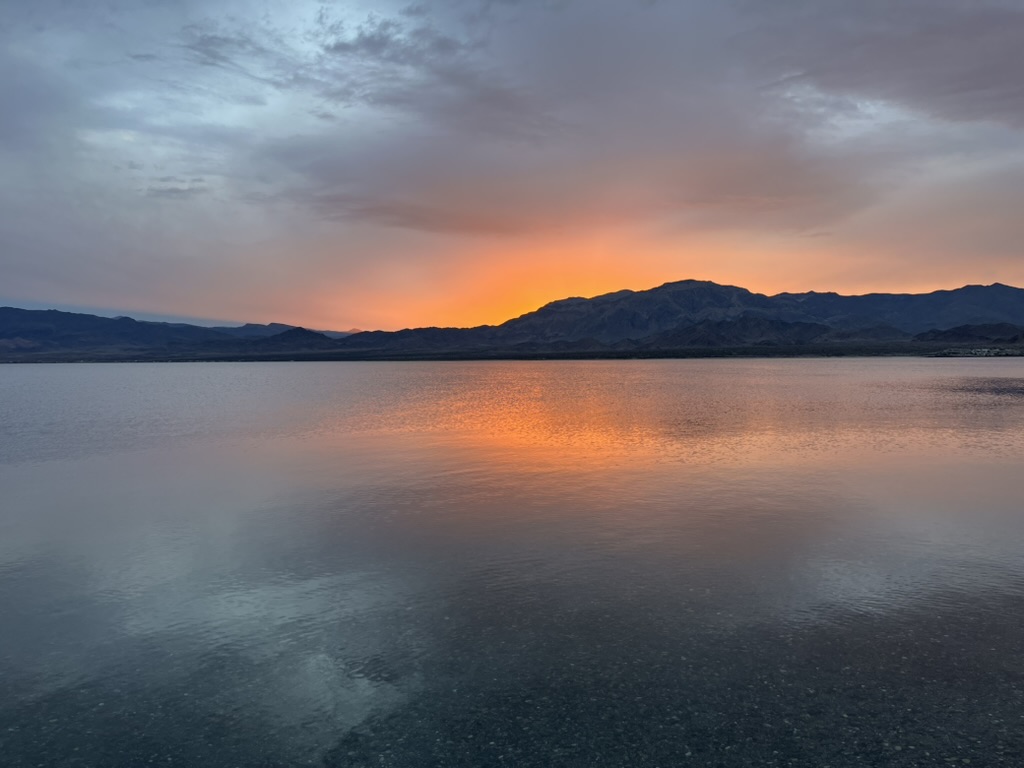
We took a walk out to the end of the spit and I talked to a guy named Andy and his son who were down from Ensenada for a fishing trip. I asked what kind of lures they were using and chatted a bit about their background. His English was perfect and I learned that he had lived in San Diego, and most of his family was still there, but that they had recently moved back to Mexico. When we got back to the truck, they were parked next to us processing a nice-sized halibut that the son had caught. He was beaming with excitement as I congratulated him on his catch. We chatted some more and I explained that I was a total novice to Baja fishing. They said they’d be back the next day and offered to help me out if I needed it. It was an example of the typical friendliness and helpfulness of the people we’ve met here.
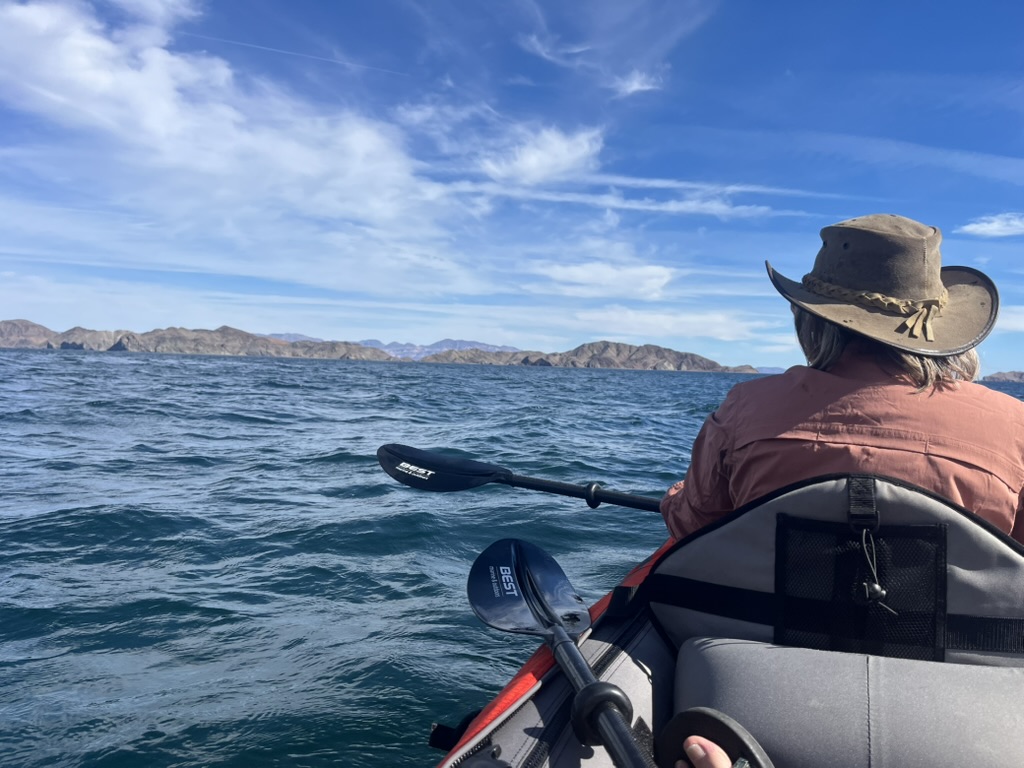
The next day was a Sunday so we started out with our customary pancake breakfast. As I was airing up our kayak for a paddle around the bay, a whale and calf surfaced out in the water not 30 feet from me. We watched them circle the bay for a good half hour. There was also a seal that was occasionally surfacing as he made his own rounds. We paddled the kayak around the bay a bit and managed to get back before the usual afternoon winds kicked up.
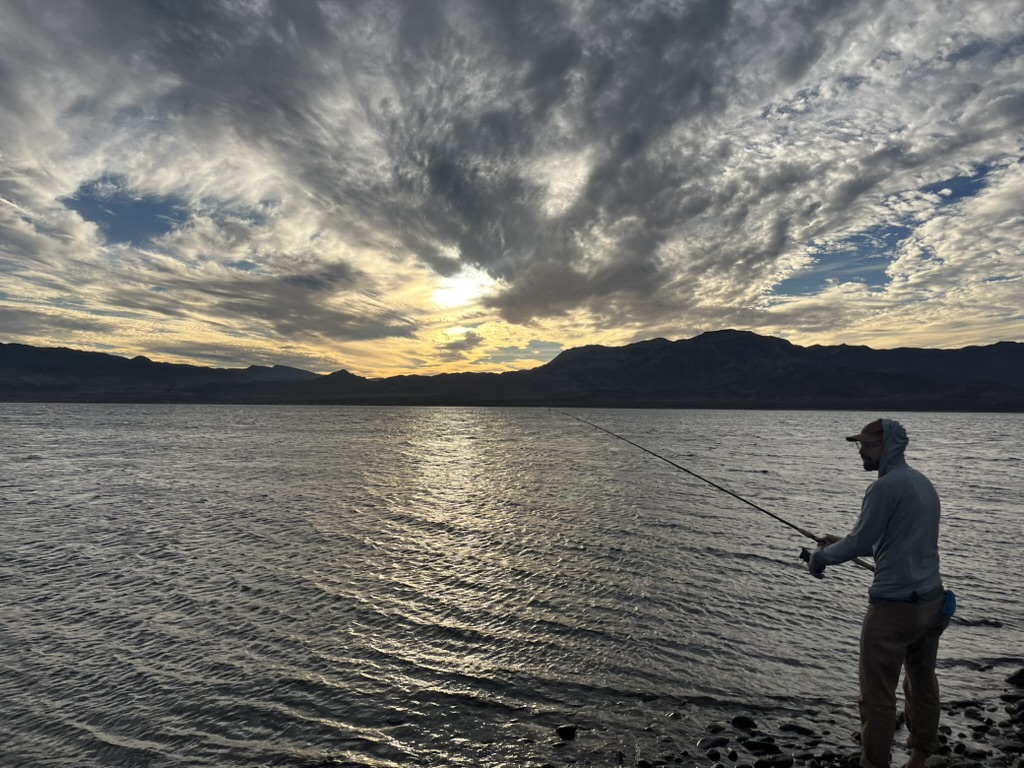
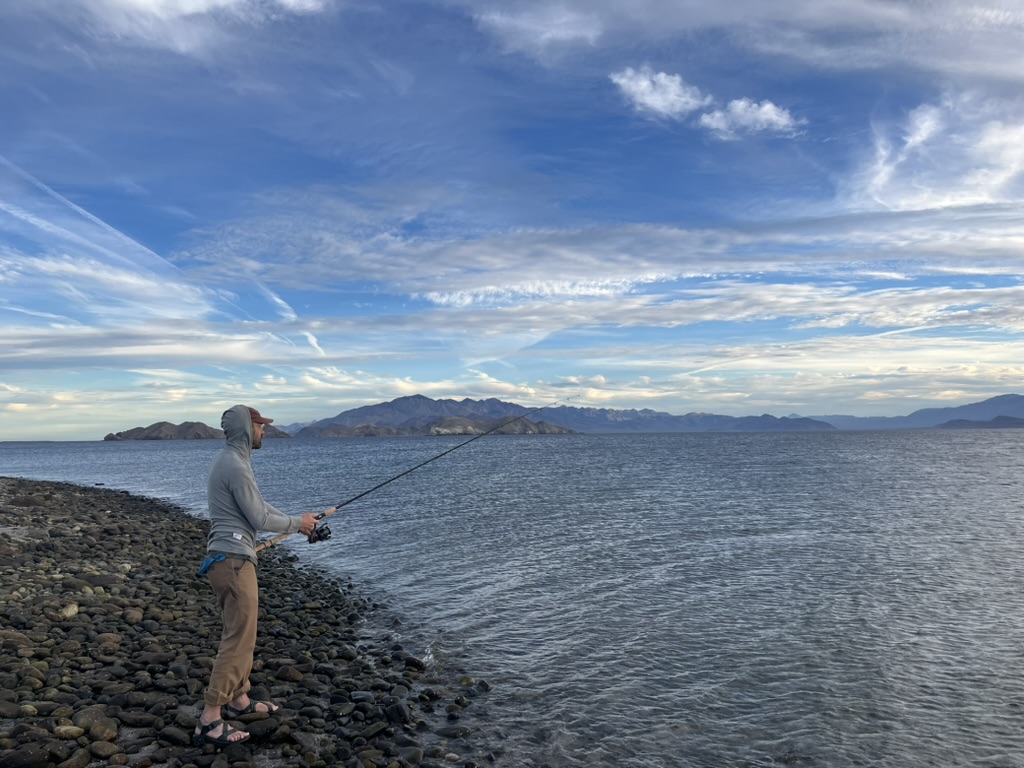
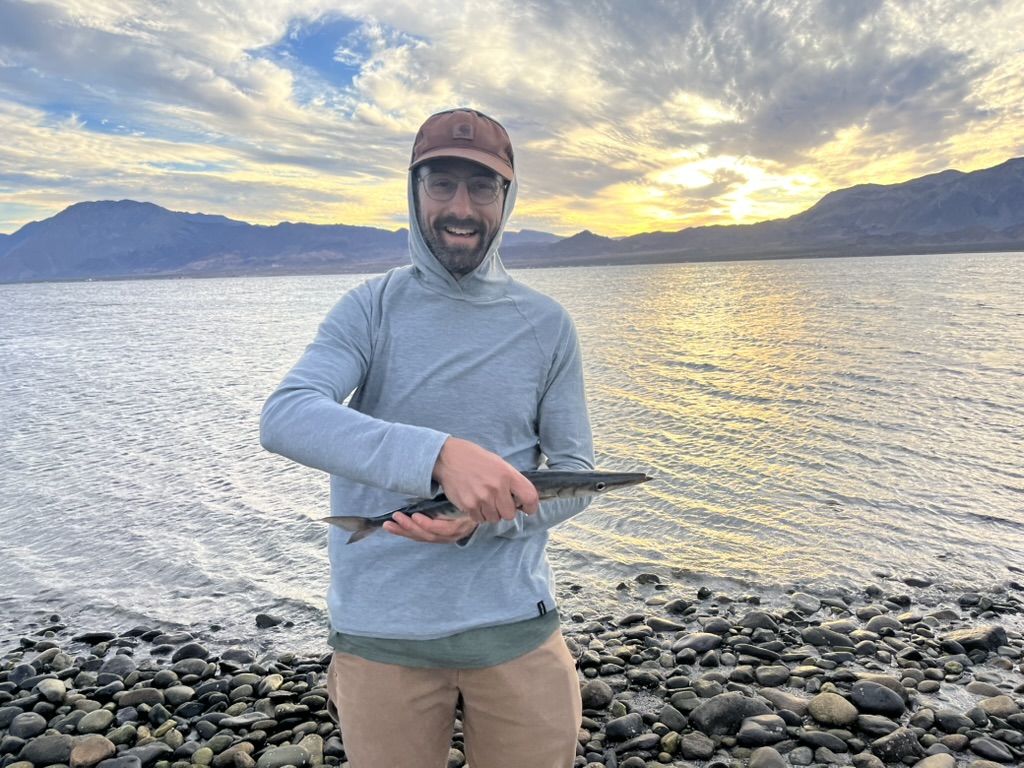
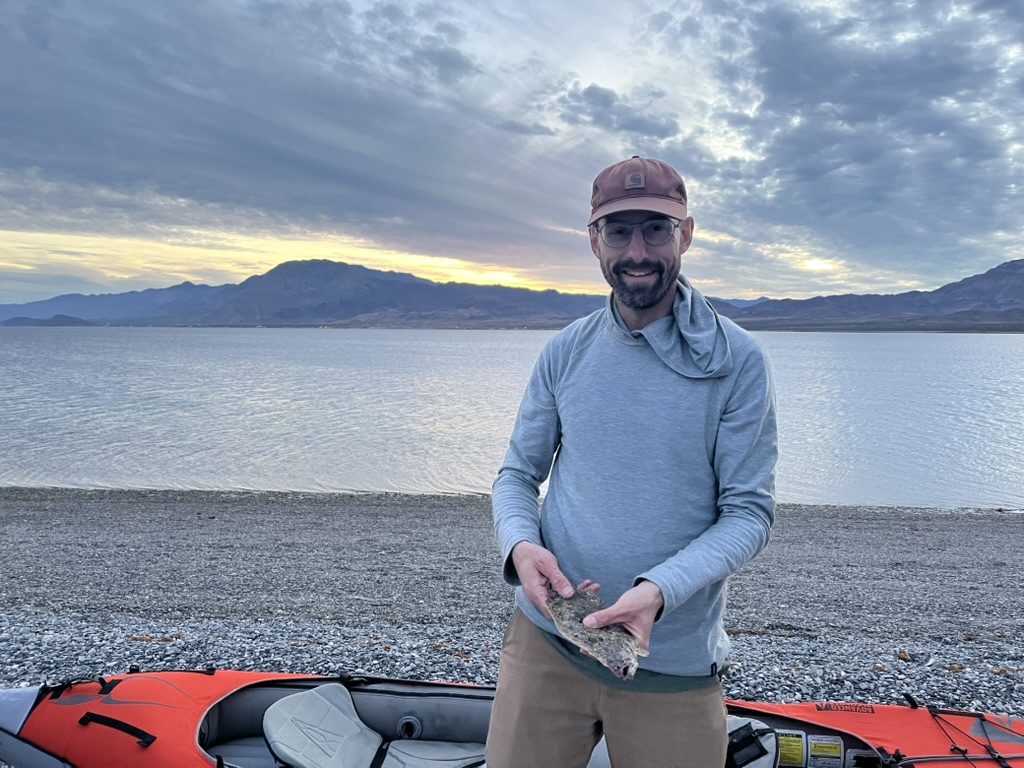
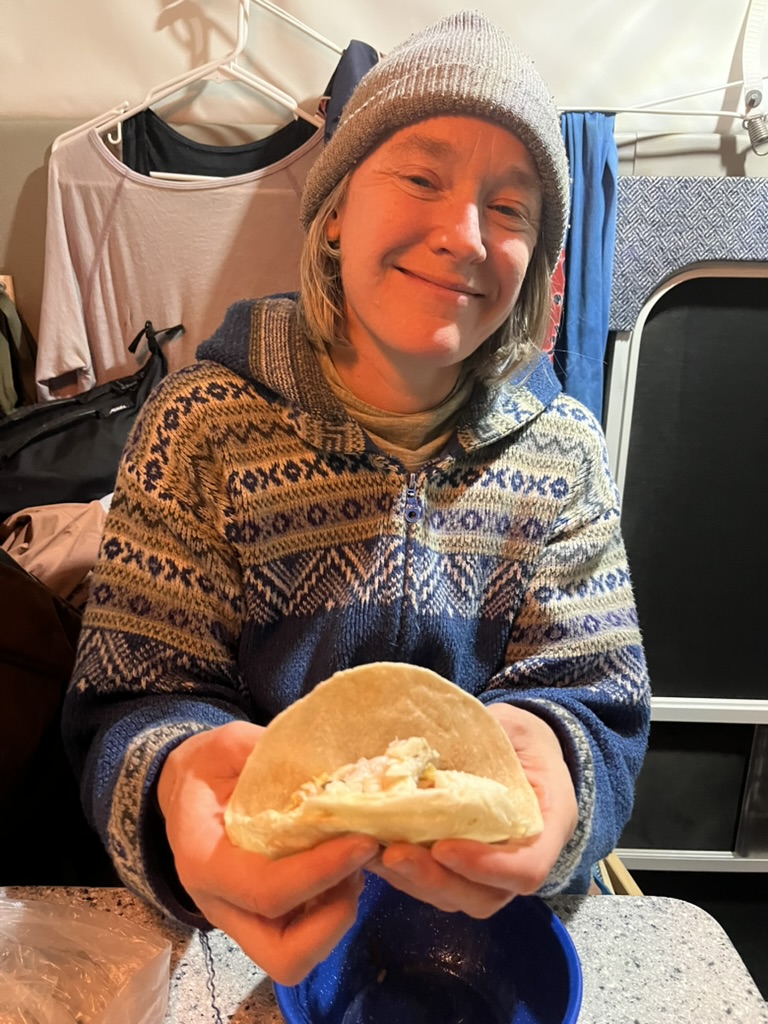
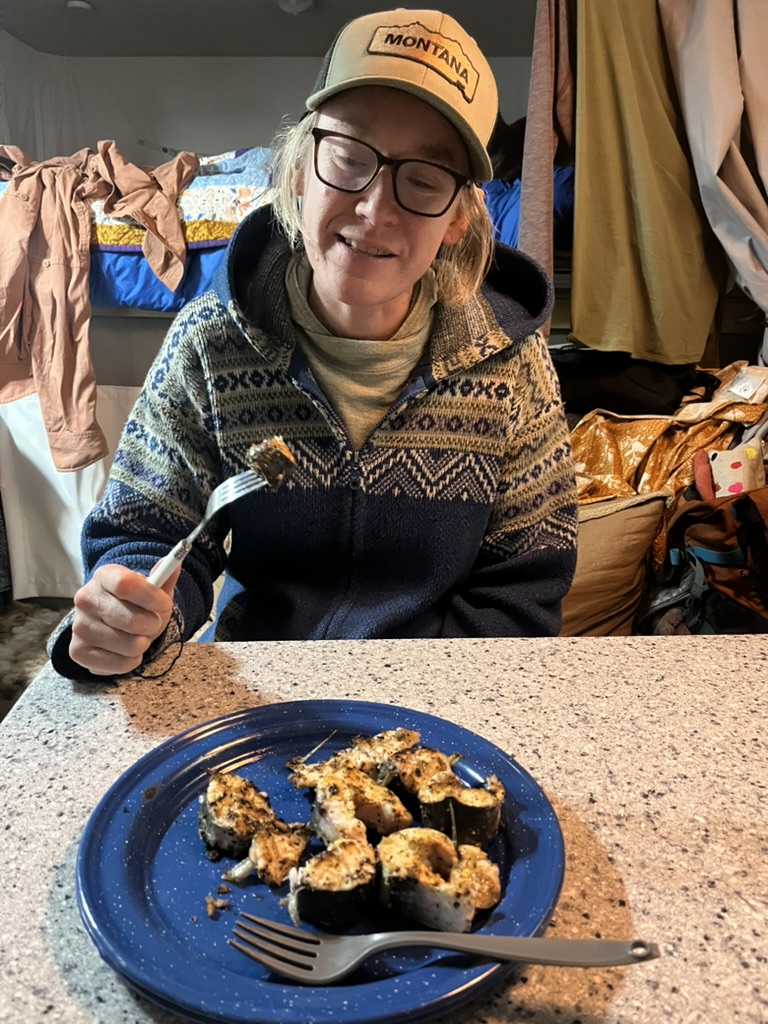
Once back in camp I got my fishing rod rigged up and headed out to try my luck. I saw Andy who I’d met the day before and showed him my setup asking if my lure was too big or too small, or completely wrong. I’d just grabbed a couple of lures from a Sportmen’s Warehouse based on some reading I had done and really had no idea if they were anywhere close to what’s needed. He told me it looked good and that the Krocodile spoon I had on there was similar to what they’d used to catch the halibut the day before. I walked down the beach from them a ways and threw my line in. Soon after, I had my first fish on and landed what I learned later from Andy was a barracuda. I caught another one in short order, but threw them both back not really knowing what they were. He also informed me thy were good eating just cut into steaks and grilled. Luckily I caught many more over the course of the next few days so we got to eat plenty of it. That first evening I ended up catching my own small halibut. It was the perfect size to steam in our Instant Pot, also a preparation suggestion from Andy, and we made our very own fish tacos. We ate fresh fish 3 of our 5 nights in Bahia de Los Angeles, all caught a few feet from the camper door. Absolutely spectacular fishing, even for a complete novice like me.
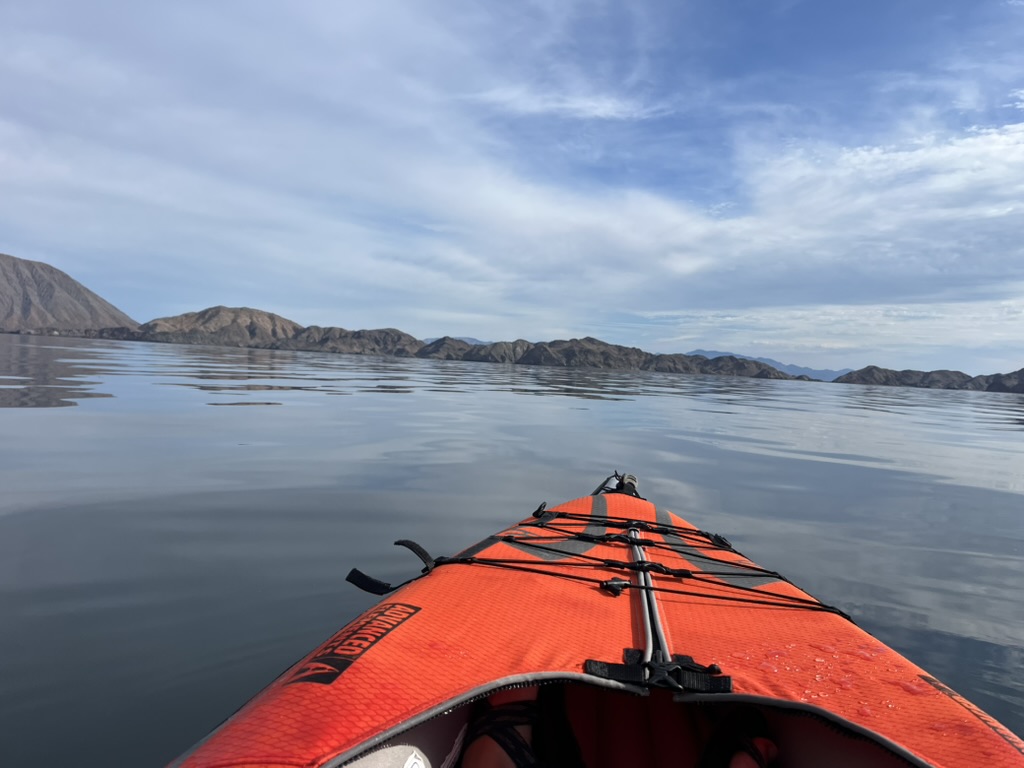
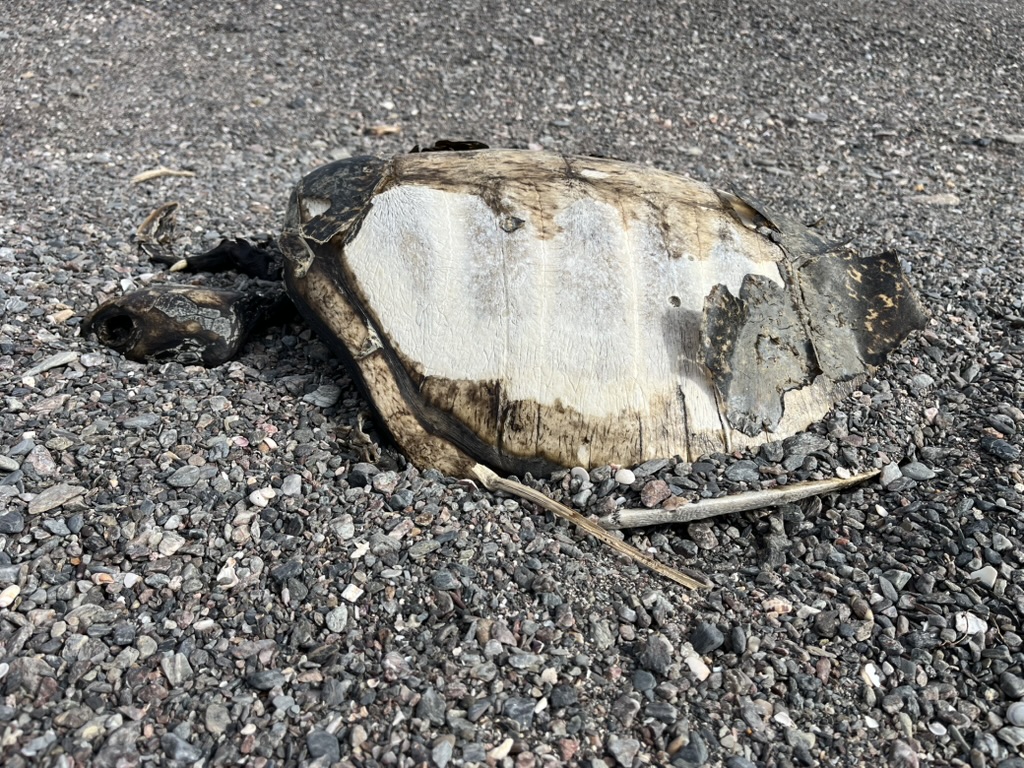
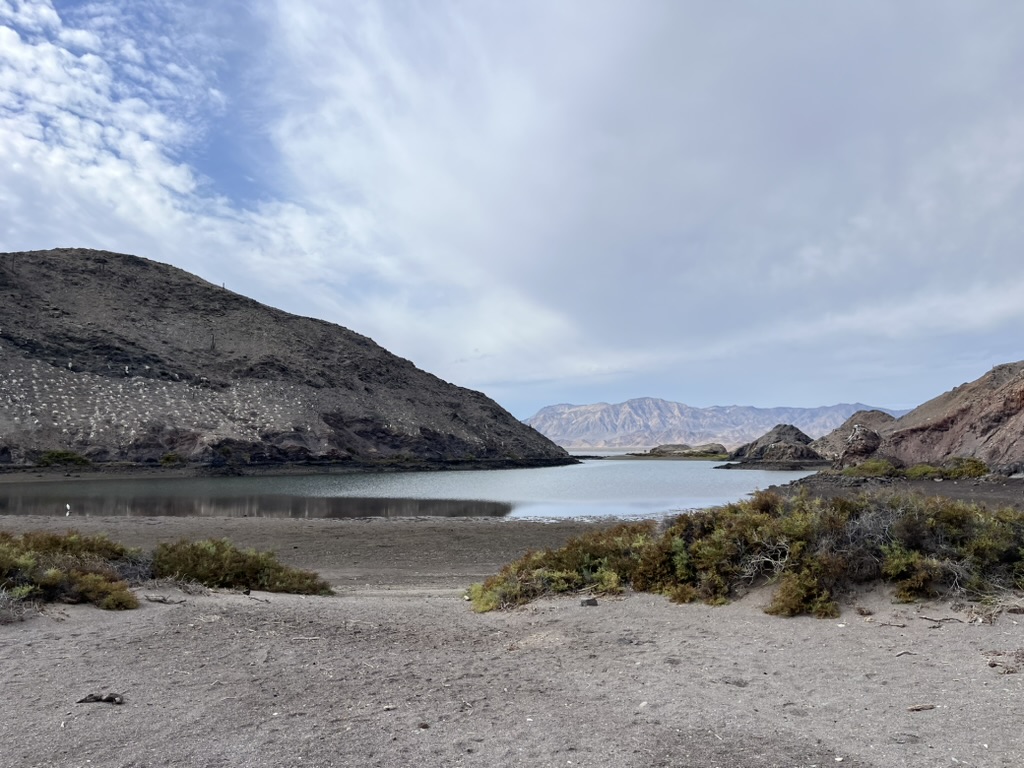
One morning I paddled the kayak out to Coronado Island about 2 miles offshore. The island is uninhabited and has the 1500 foot Coronado Volcano on one end and Tortuga Bay on the other. I landed near Tortuga Bay and walked around it checking out the oyster beds, birds, and starfish that lined it’s banks. I found the remains of a sea turtle on the beach and some of the prettiest shells I’ve found so far.
Our first week in Baja has been everything we could have hoped for. While there’s definitely a period of adjustment, we’re in a foreign country after all, everything has been fairly smooth. Let’s hope that continues. The people have been friendly, helpful, and kind. The food has been delicious, and the scenery has been spectacular. Next week we’ll continue heading South toward Mulege and Bahia Concepcion.
I want to mention the events happening in our home country while we’re traveling, particularly in Minnesota with the ICE crackdown, the protests, and the murder of Alex Pretti and Renee Good. What has happened to them is an unmitigated tragedy and my heart goes out to their families. I realize it’s an extreme privilege to be doing what we’re doing, to freely cross the border when so many others don’t have that privilege and are living in fear. But I think by being here we can show the people of Mexico a different face—that not all of America and not all Americans are unwelcoming and cruel. We’ve done our best to show our appreciation for Mexico, its people, and its incredible landscapes. The people have been welcoming and kind, a reminder that for the most part, people can separate the people of a country from the actions of its government. I hope my own countrymen can find it in themselves to have the same welcoming spirit we’ve encountered here. I also think it’s a subtle form of resistance to go about living our lives. This administration wants to make our entire lives about it, to take over our public discourse and our entire psyches if they can. Donald Trump wants nothing more than undivided attention from everyone all the time, and when we refuse to give that to him, we are resisting. We could have cancelled this trip out of guilt or some sense of duty, but that wouldn’t have helped anyone and it would just feed that desire to have us all construct our lives around them and whatever the latest outrage is. I refuse to do that. It doesn’t mean we shouldn’t know what’s going on and do what we can to help our neighbors and resist what’s happening, but we should also continue to live our lives and find joy, love, and wonder in this big, beautiful, messy world.
Thanks for reading!


 The Crooked Trail
Leave a comment