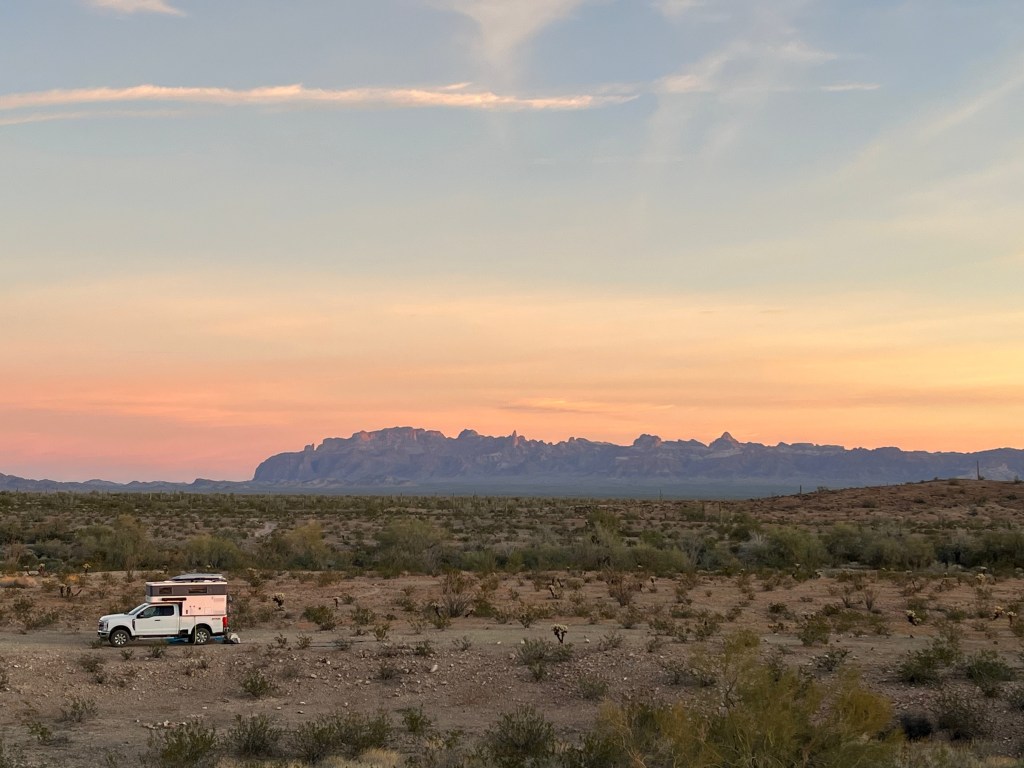
Our second and third weeks on this trip saw us returning to work, which necessitated slowing down and staying in one spot for the week. We spent a week each in Anza Borrego State Park in Southern California and Kofa Wildlife Refuge in Southern Arizona.
From Joshua Tree, we pushed South on Highway 86 leaving the Mojave Desert and entering the Sonoran just North of the Salton Sea. We turned West onto Highway 78 and entered Anza Borrego Desert Park, California’s largest state park at 650,000 acres, a few miles later. This was our second time there, the first being in 2024. That first time we camped in the lower elevations among the multicolored, eroded badlands in Fish Wash. This time we decided to explore the Southern end of the park around Blair Valley, a little higher up in elevation.
As we turned off of Highway 78 at the community of Shelter Valley, the first thing that struck me was just how green everything was. The atmospheric river events that had caused widespread flooding in much of California the previous weeks had also brought a brief burst of green to the desert.
We turned off the pavement outside of Shelter Valley and onto a sandy two track. The heavy truck sank in as I engaged four wheel drive and switched off traction control pushing through the soft sand. We continued out across the flats and into Little Blair Valley just to the East of the main Blair Valley, separated by some rocky hills. The valley floor was a deep green meadow surrounded by granite boulder hills covered in Ocotillo, Yucca, and Cholla cactus. We scoped out a few potential camp sites and continued on to the Pictograph Trailhead.
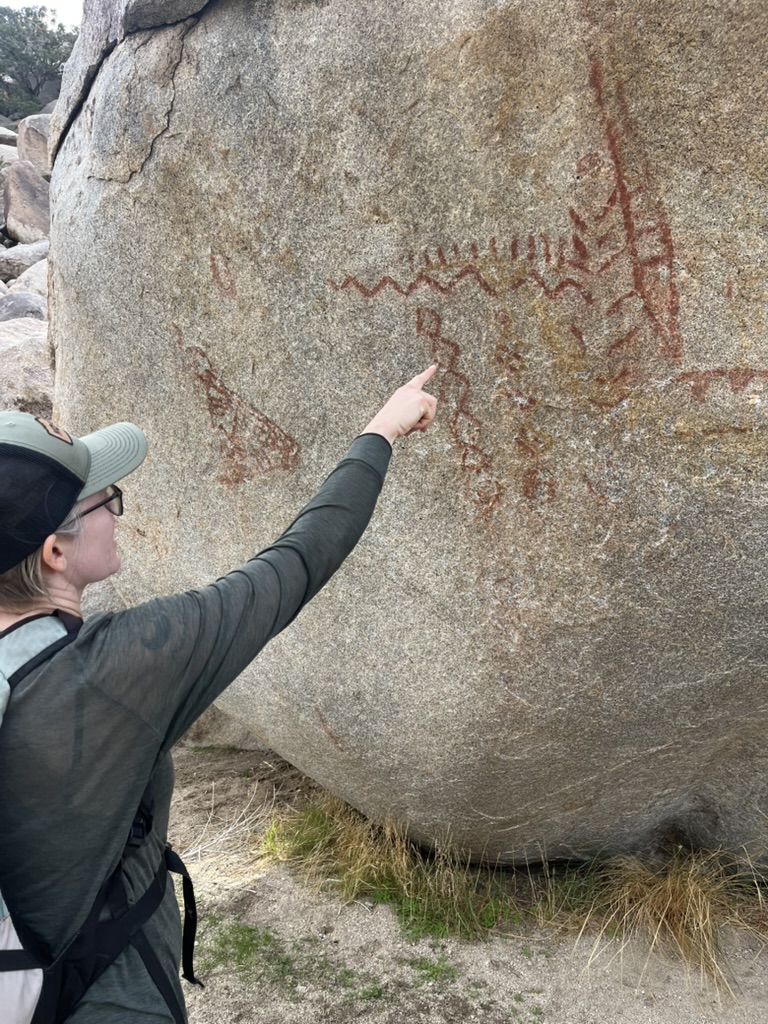
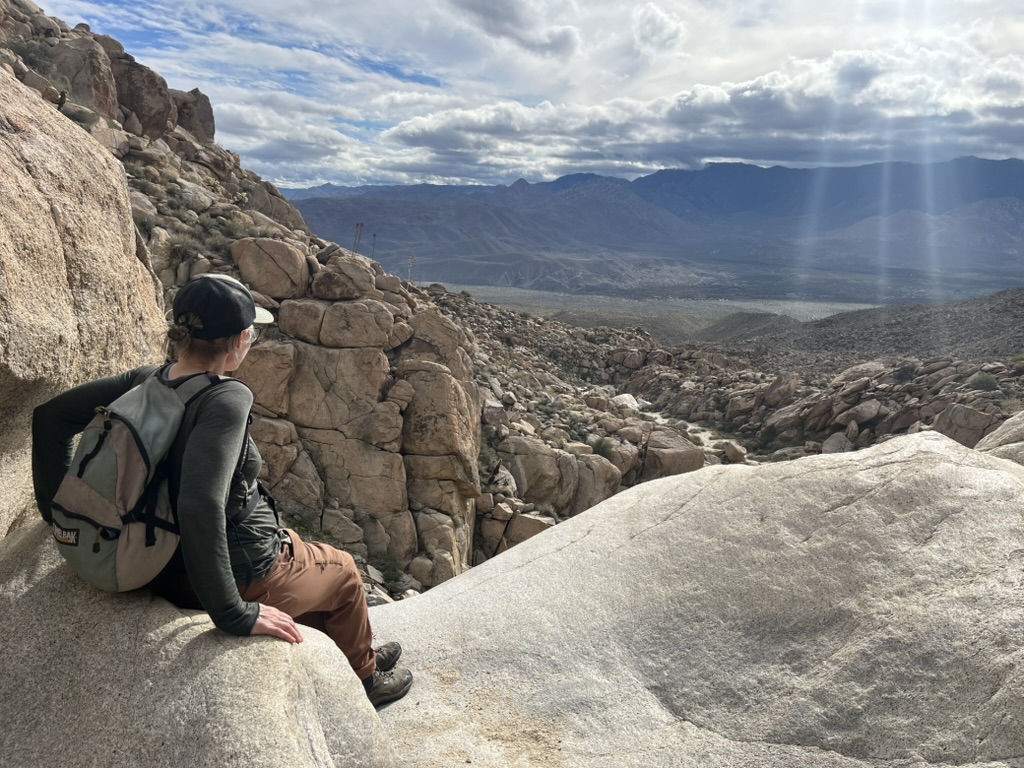
The Pictograph Trail is a short 1.6 mile round trip to some very well preserved pictographs from the Kumeyaay people. The Kumeyaay used the area as a seasonal gathering ground for Yucca and other plants. A little further past the pictographs was a dry waterfall or “pouroff” with stunning views down into the Carrizo Valley below.
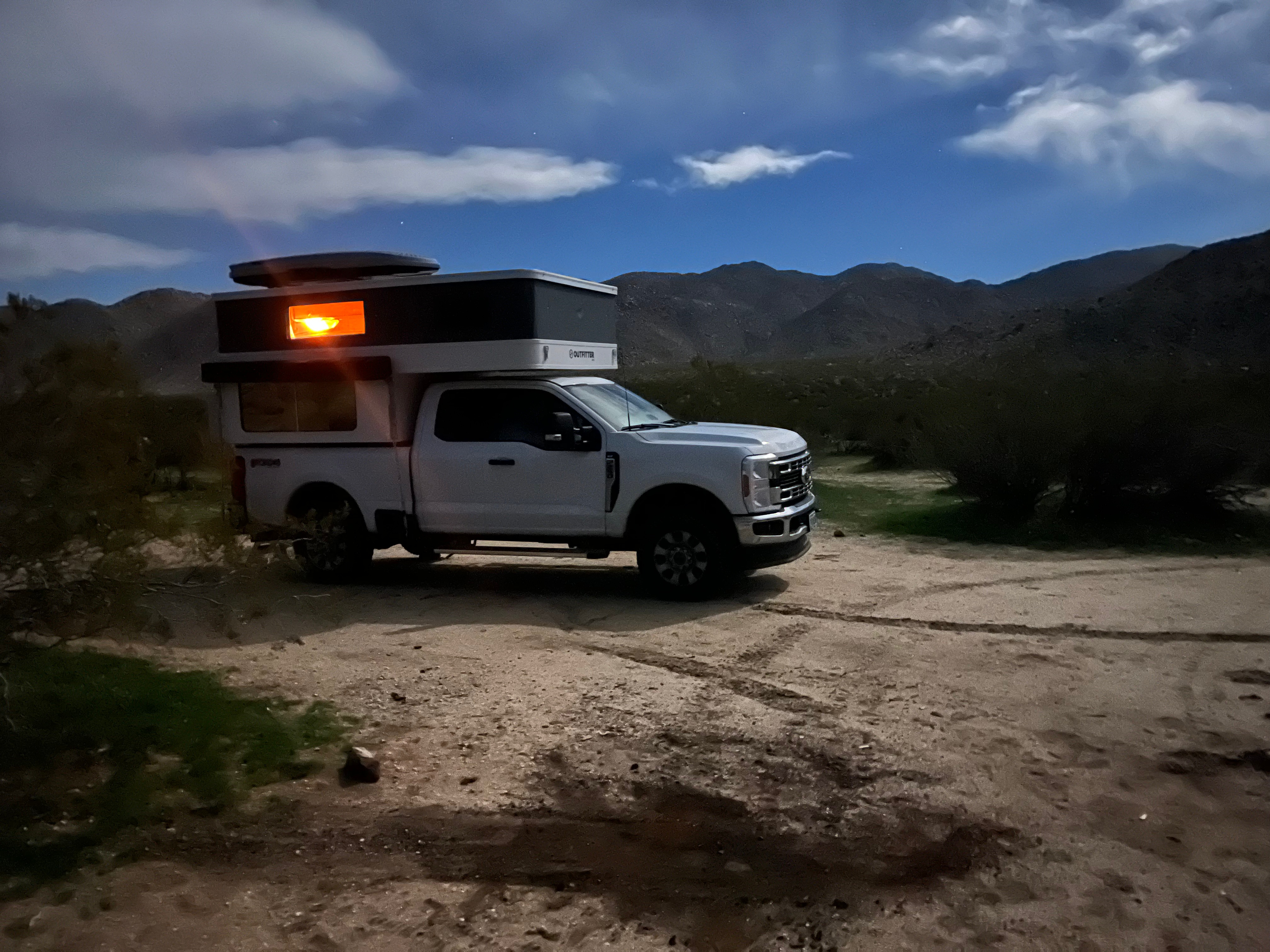
After finishing up the trail we backtracked to one of the campsites we’d identified earlier and set up for the week. As we were doing that, a couple of park employees stopped by, which at first had me worried we might be in a disallowed spot. They said we were fine and that they were simply cleaning up campfire remnants to discourage people from having ground fires, which are prohibited here. We chatted about Oregon, the Columbia River, and the merits of various Patagonia fleeces.
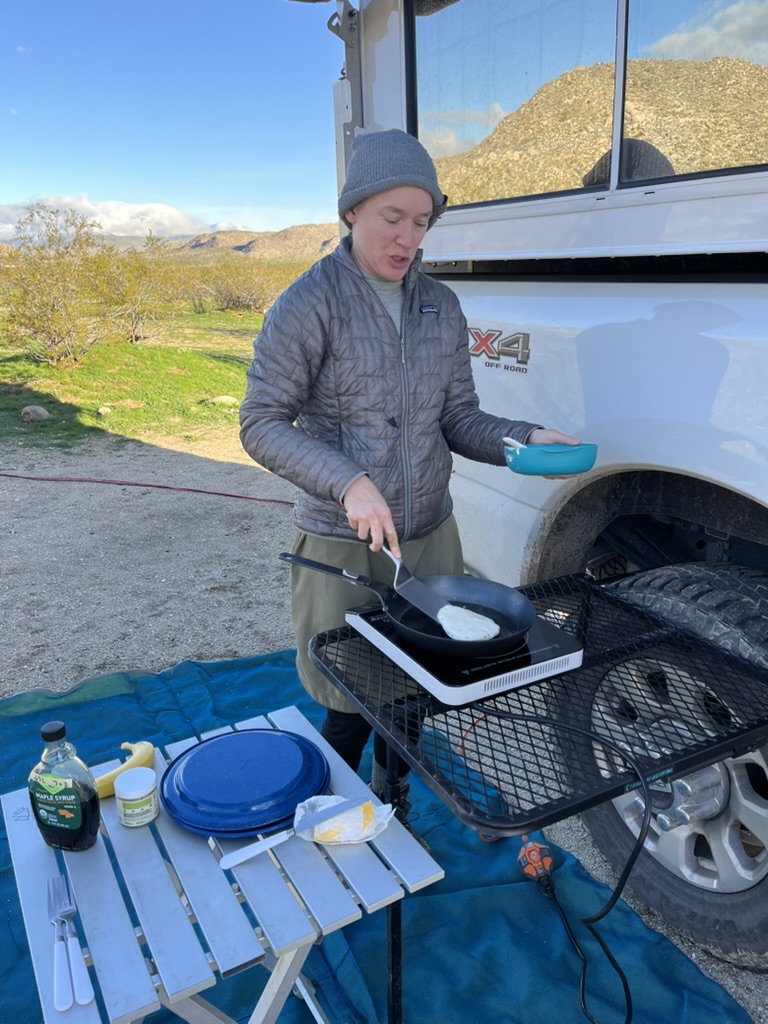
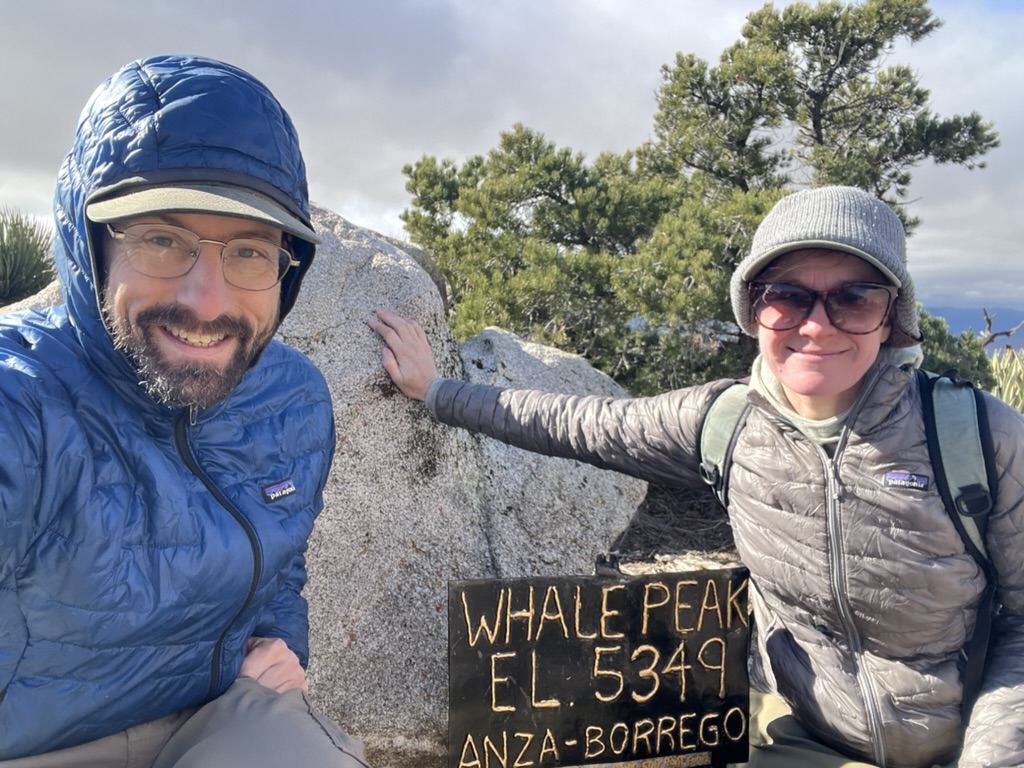
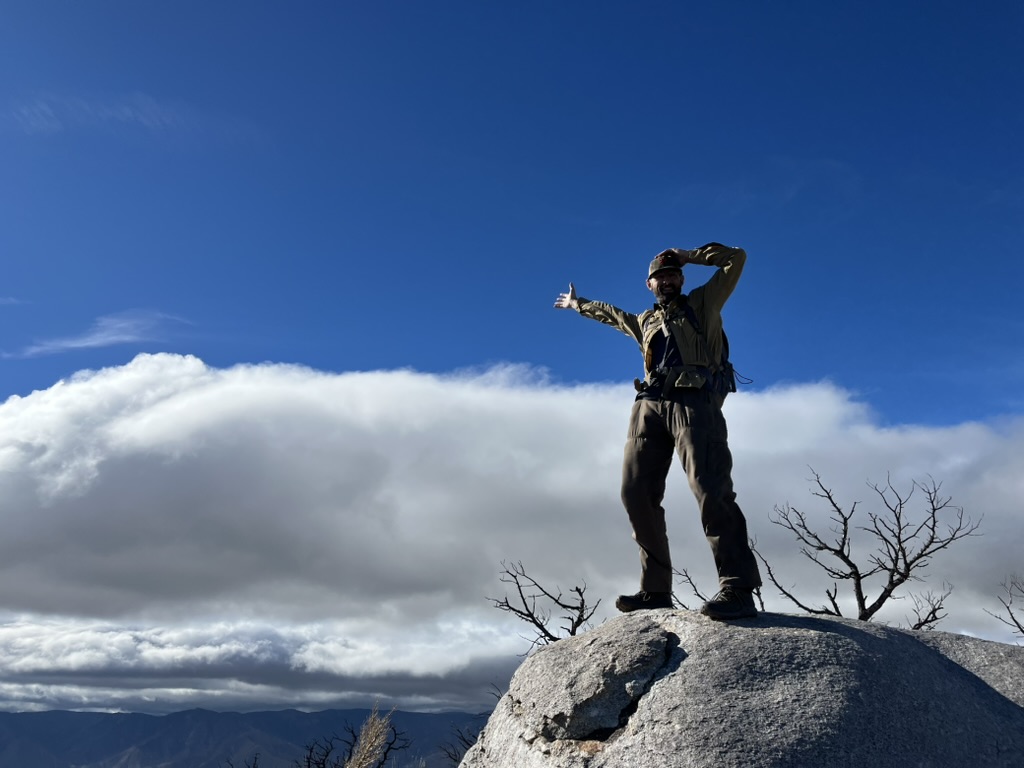
We had arrived on Saturday and so had an entire Sunday to do what we pleased. We decided to spend it hiking nearby Whale Peak. We started with a pancake breakfast to fuel us for the 12 mile round trip hike with over 2800 feet of elevation gain. The top of the peak yielded incredible 360 degree views all the way to the Salton Sea to the Northeast and probably to Mexico to the South.
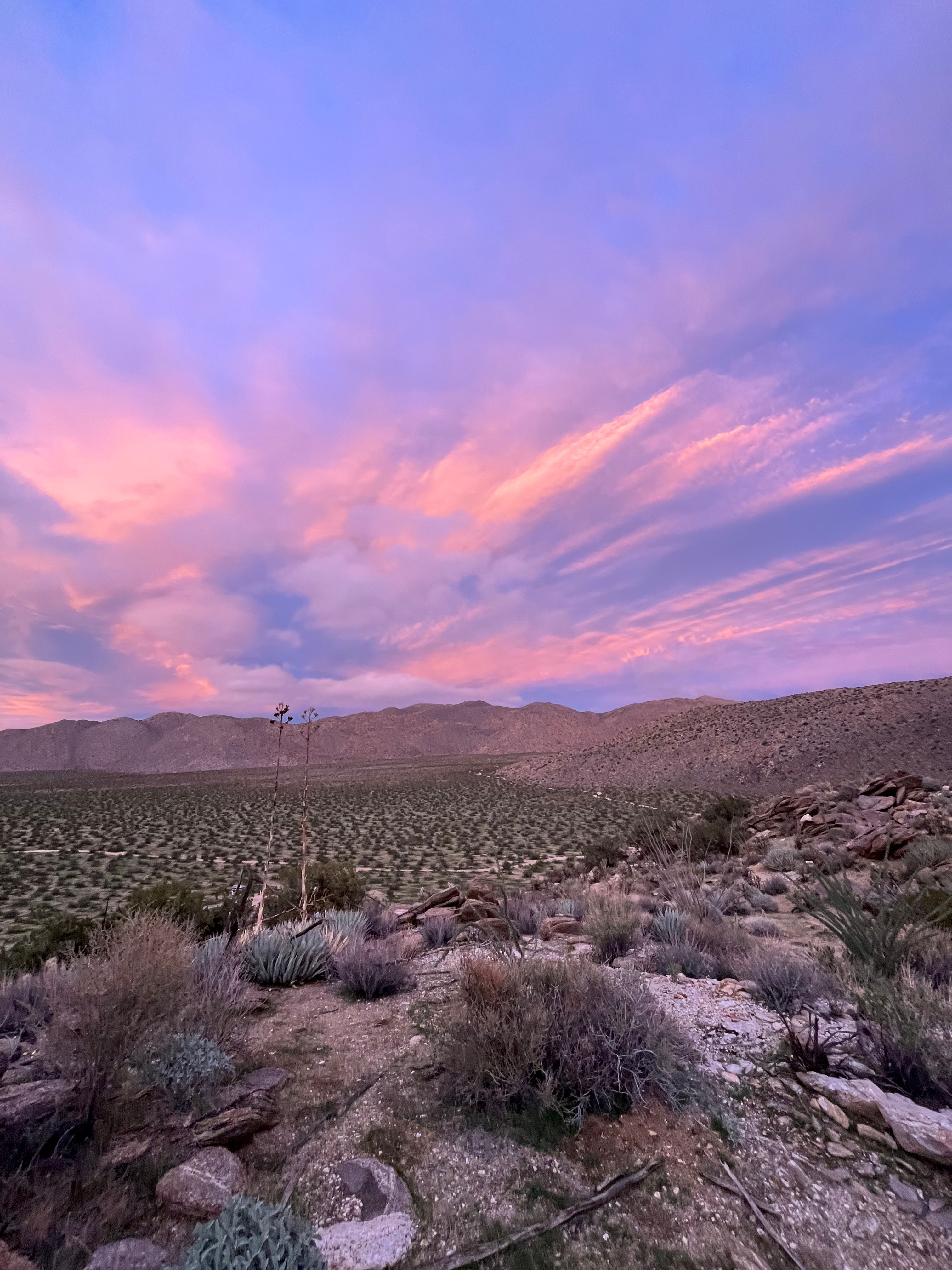
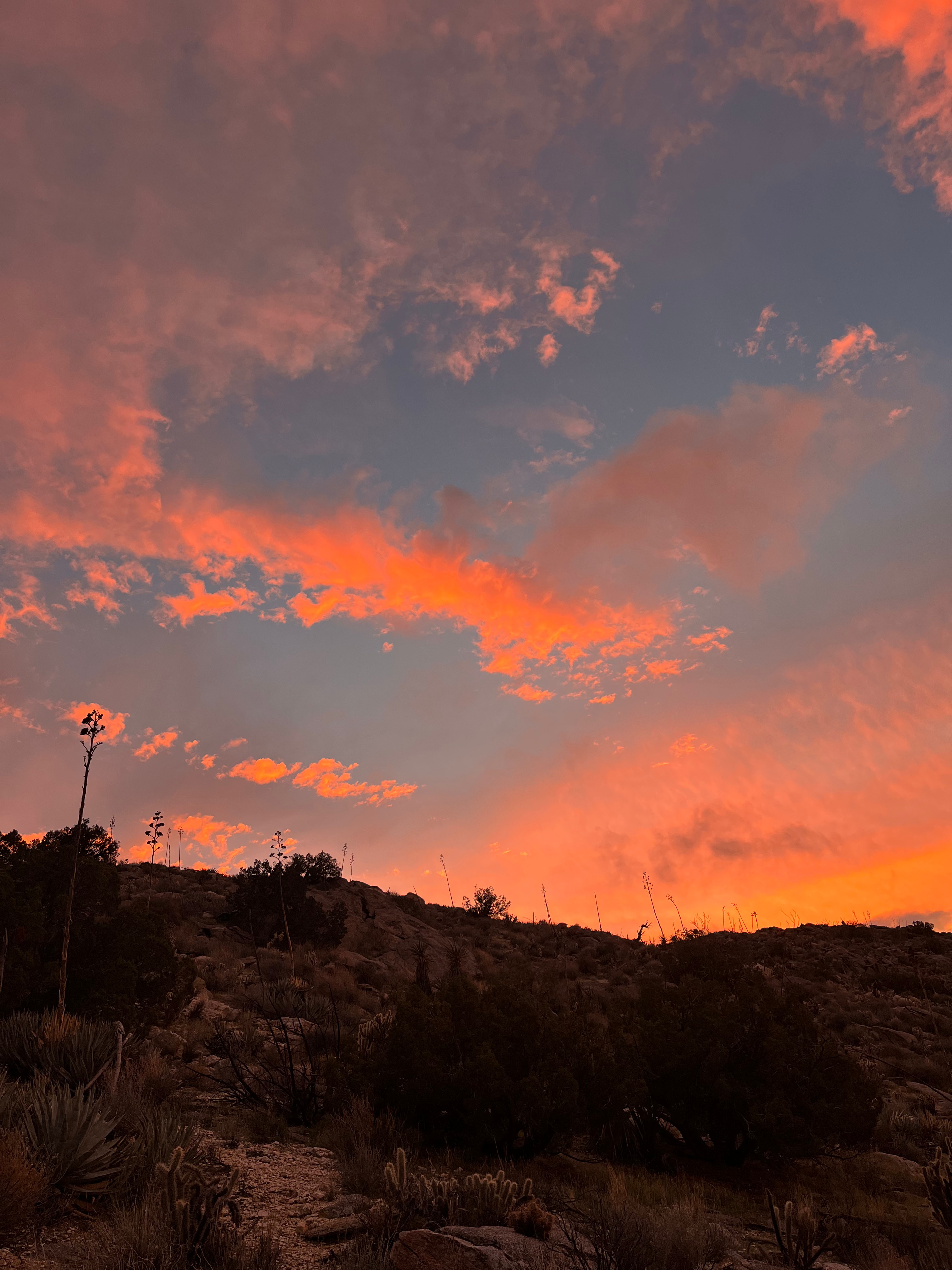
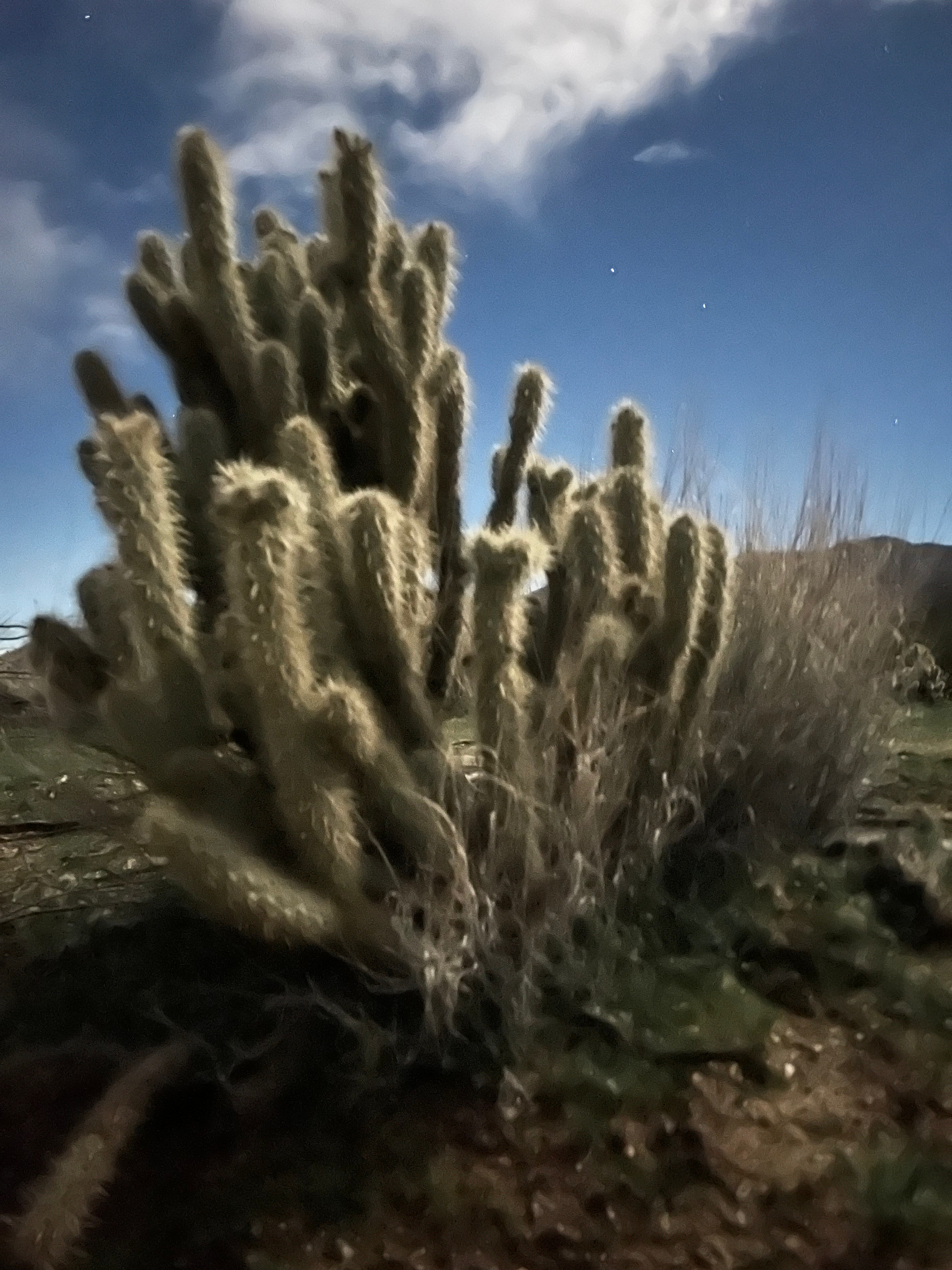
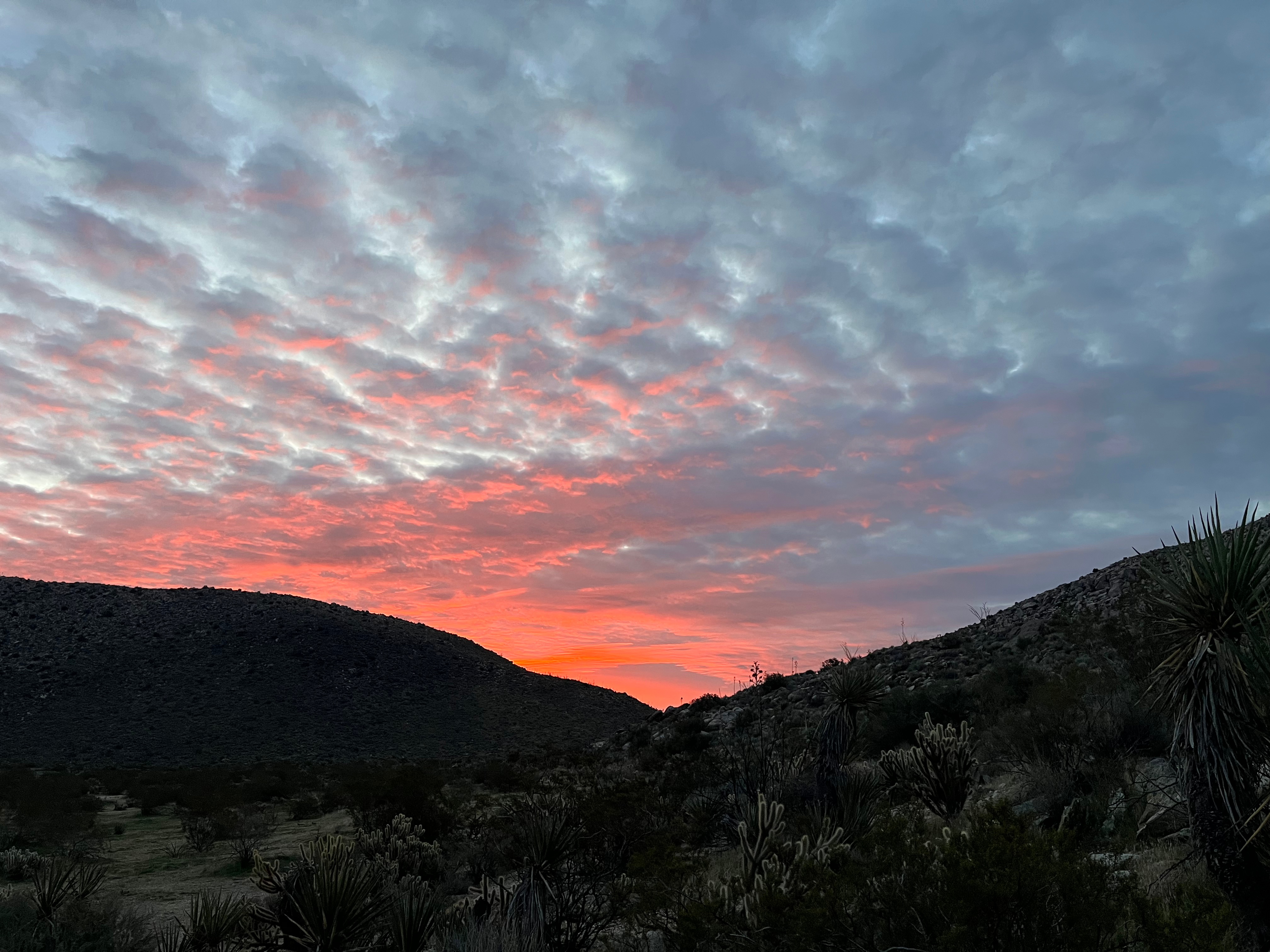
The rest of the week treated us to more incredible sunrises and sunsets. The moon was full while we were there so we had a magical moonlit walk, Chollas glowing in the silver light. When we stay somewhere for a while, I often find a rock that I go back to each morning to drink my coffee and do my morning meditation. This particular one had a pair of jackrabbits that came be most mornings, picking their way through the Creosote and Agave.
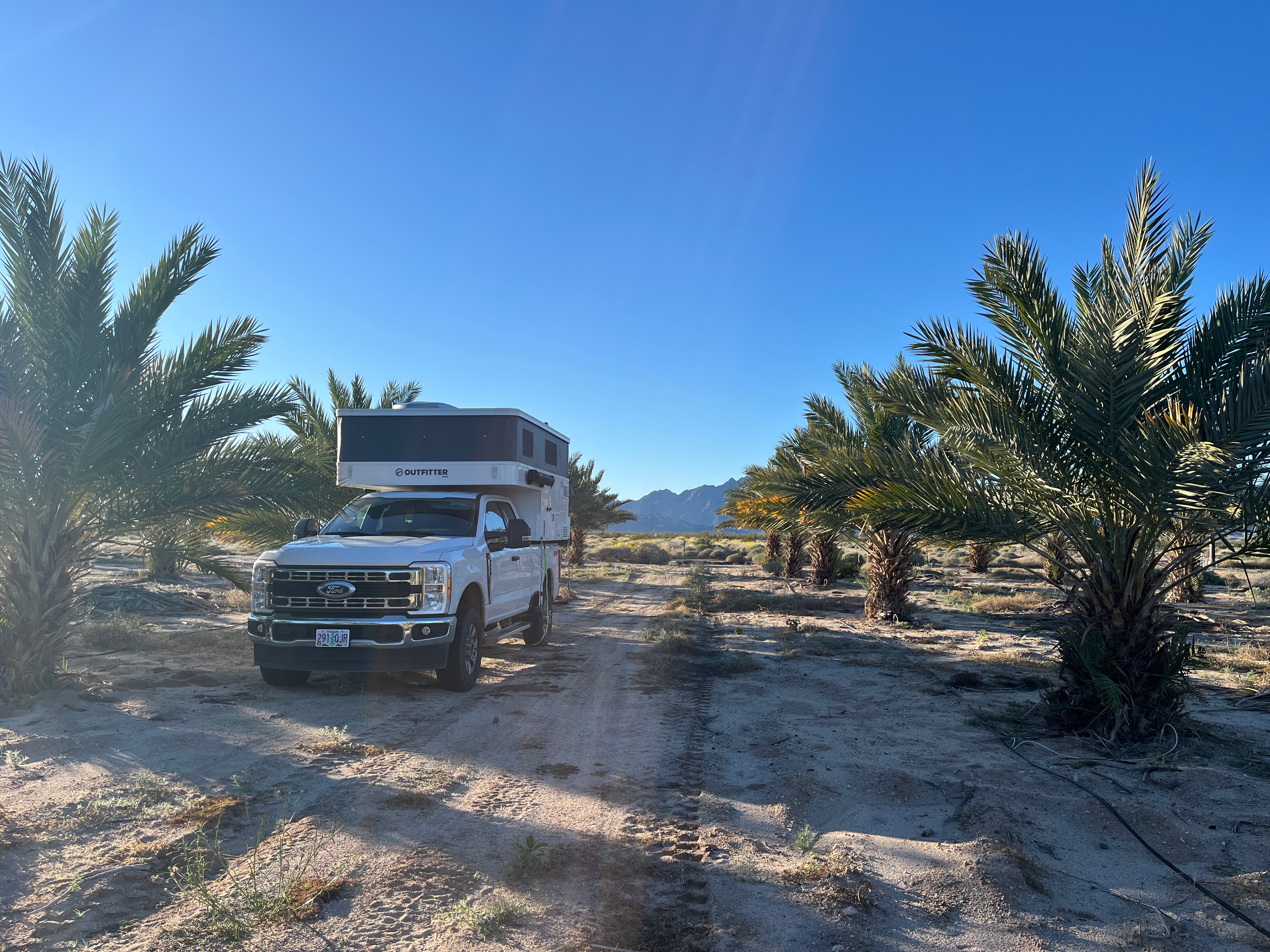
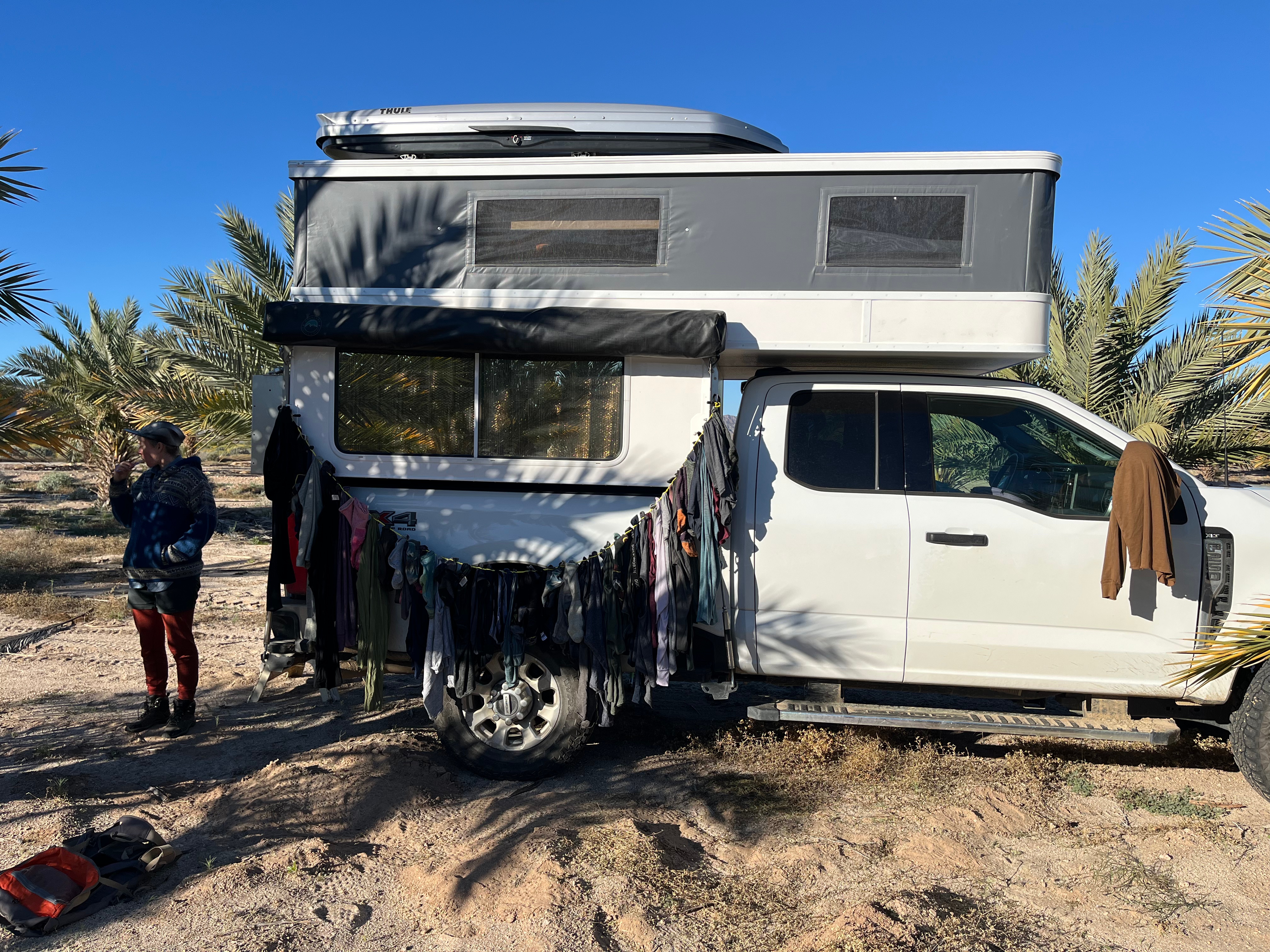
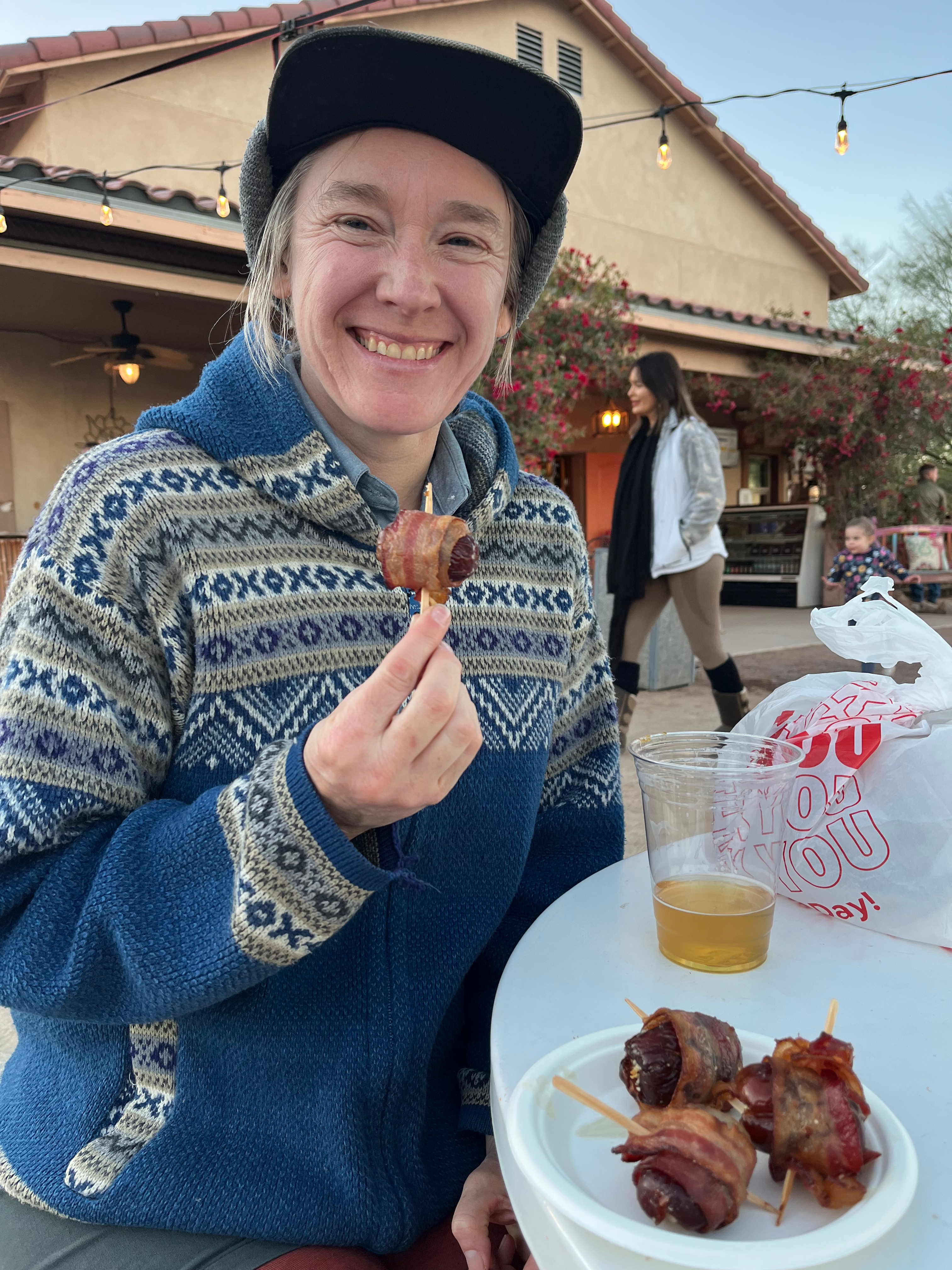
In between Anza Borrego and Kofa, we stayed at a Hipcamp on a date farm outside of Yuma named Naked Dates. We restocked on food and water in Yuma and were able to do laundry and take long hot showers at the farm. They also had a brewery, restaurant, and even morning yoga. The highlight in my book was the bacon wrapped dates stuffed with bleu cheese.
After two nights at the date farm, we headed back North from Yuma toward Kofa Wildlife refuge. First though, we made a stop in Quartzite, Arizona to see what the scene was like there. Quartzite is a fascinating place that has a year round population of just 2500, but sees between 1.5 and 2 million people pass through each year, primarily in the winter months, as nomads and snowbirds flock to it’s warm temperatures and nomad friendly atmosphere. We stopped in at the famous swap meet and it was indeed a sight to see. Acres of booths with people selling everything from kitchen gadgets to RV parts, antiques to art. We grabbed some caramel corn from a snow bird couple in their 8th season at the swap meet and a couple of notebooks along with 5 pens for a dollar from a huge tent with a little bit of everything including power tools and craft supplies.
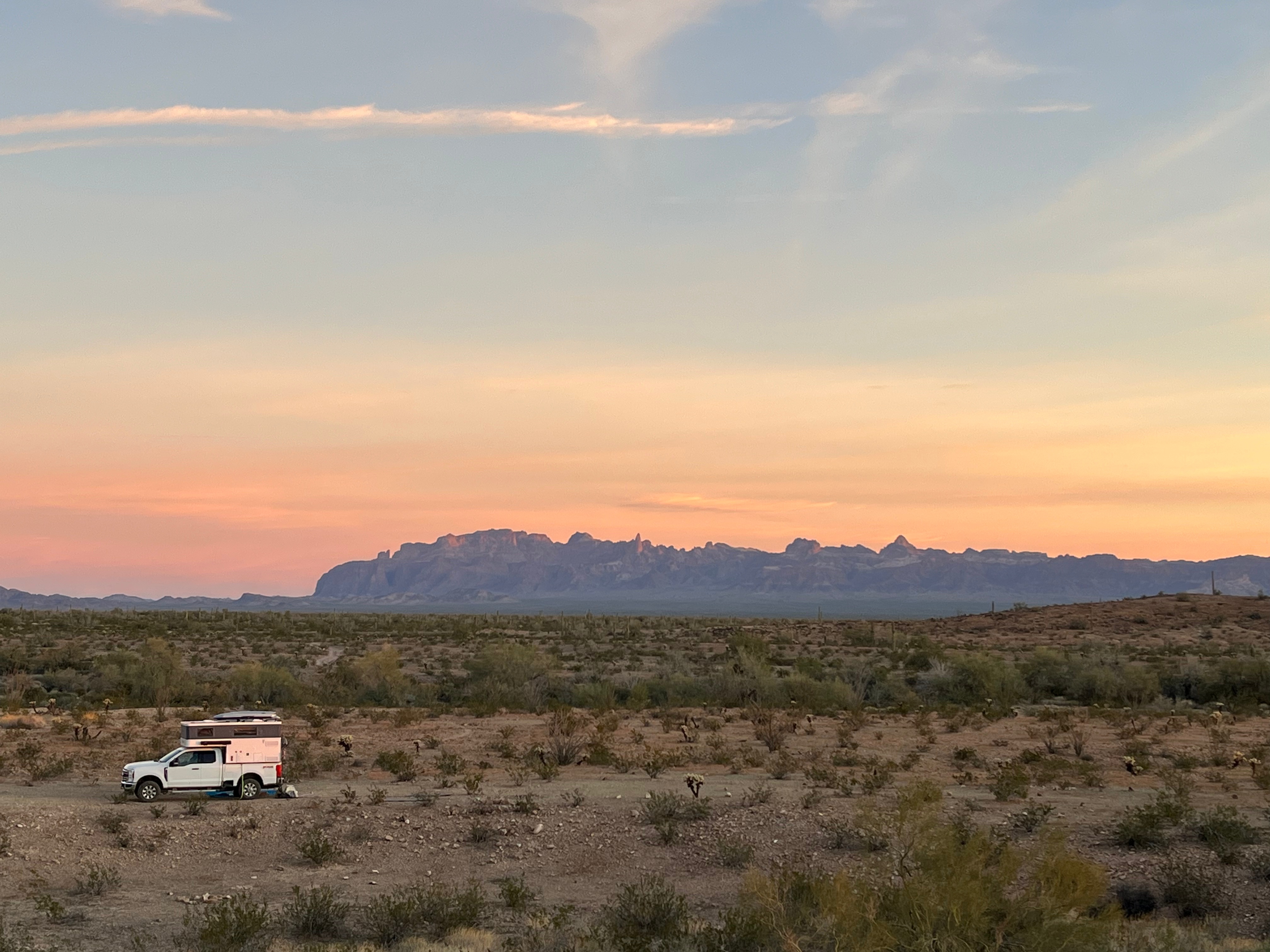
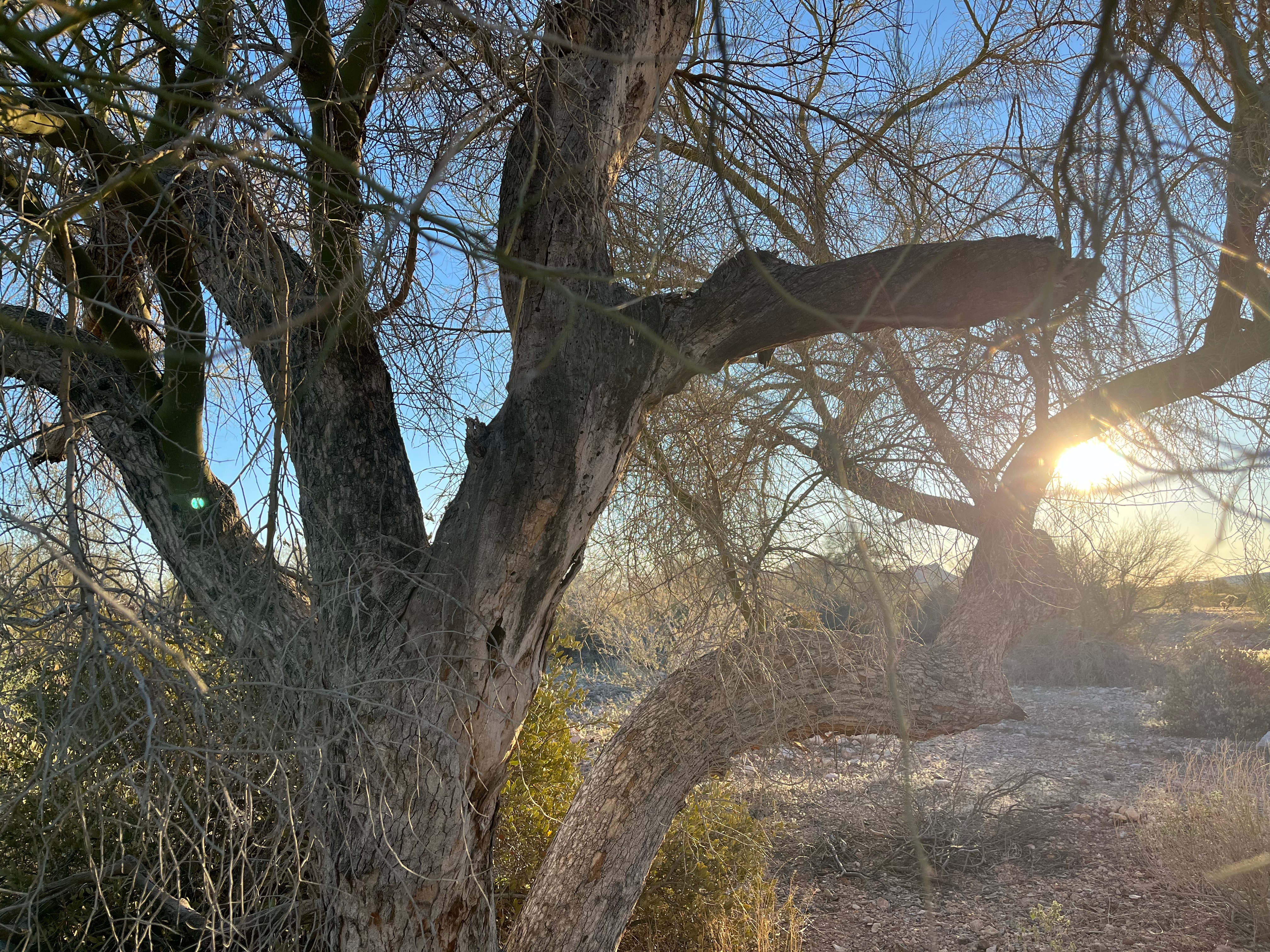
In Kofa we returned to the same spot we spent a week at in 2024. It’s a big world out there with a lot to see and seeing new places is a big reason why we travel. But, it’s also nice to have places you love and want to go back to again an again. Something about this spot nestled against Castle Dome to the South and and then a vast plain to the North puncuated by Saguara sentinels at regular intervals and the Kofa mountains to the North, speaks to us. There’s a nearby wash with mesquite and Palo Verde, teaming with birdsong even in winter. We were here in the Spring last time so there’s no flowers now like there were then, but the place still feels quite alive. We decided to christen it Camp Colibri (hummingbird in Spanish) due to the rare Costa’s Hummingbird that Jocelyn spotted one morning.
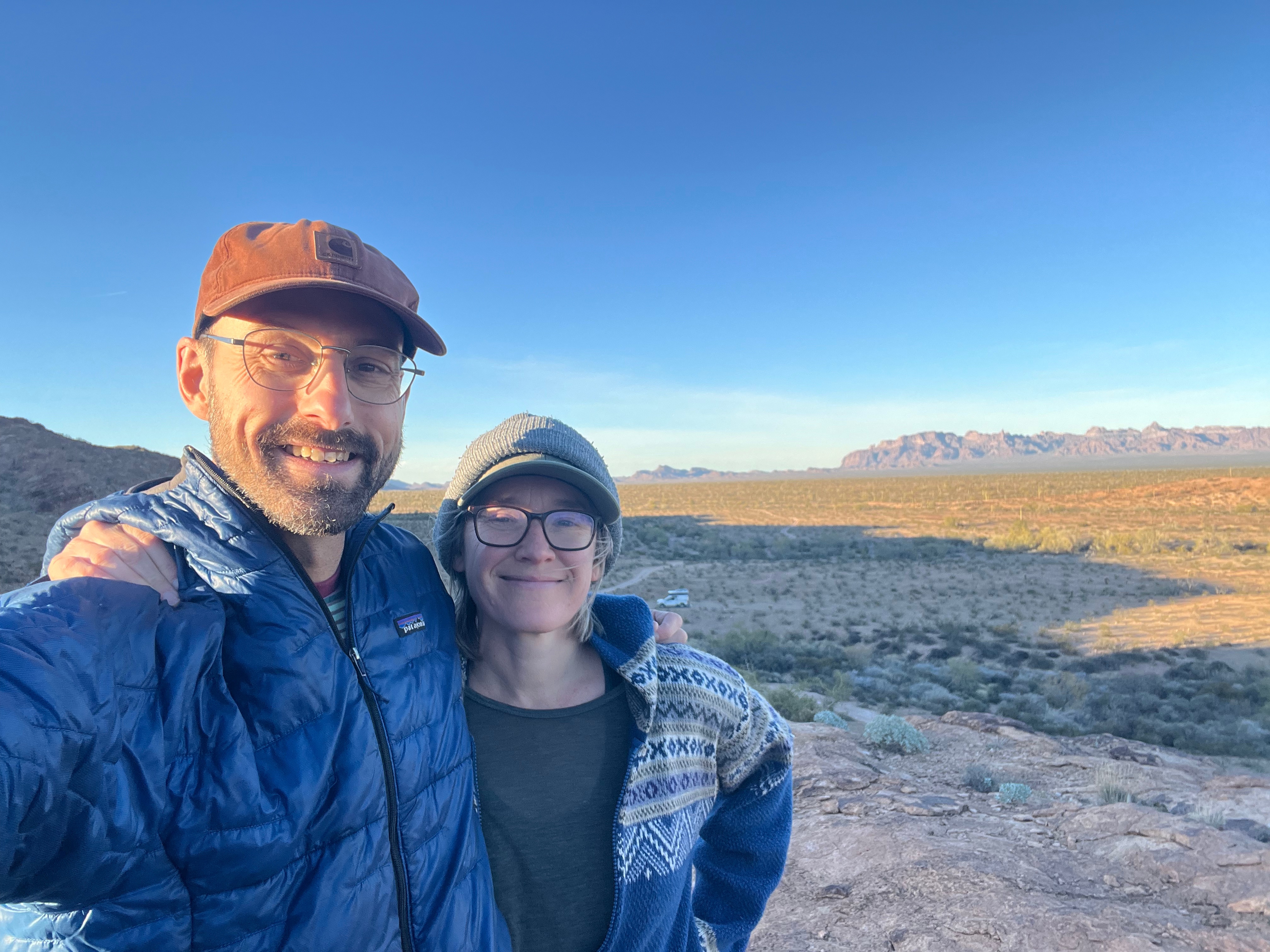
Our last day in Kofa also happened to be my last day of work in my current job as a Software Engineer. I’m leaving the corporate tech world for at least a year, in what I’m calling a sabbatical. I’ve found myself at midlife ready for a change and wanting to spend more time in nature and away from screens helping to protect wild places and things. I’m really excited, a little scared, and most of all thankful to be in a place and have the support to take such a leap. More to come on this.
We’ve enjoyed our time in the American corner of the Sonoran Desert, but now we’re off to explore the Mexican side on the Baja Peninsula.
 The Crooked Trail
Leave a comment