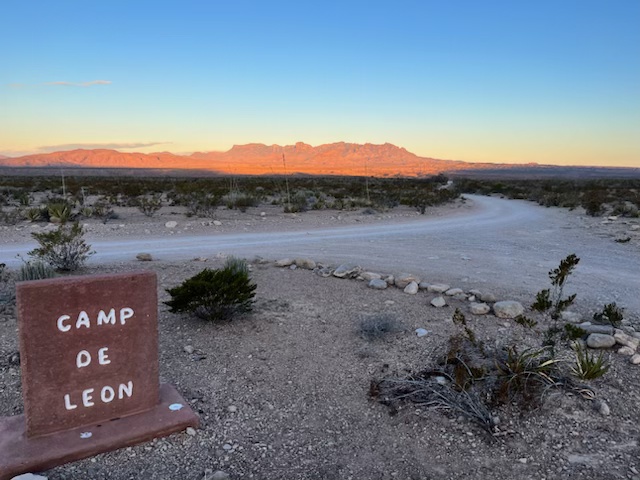
Our introduction to Camp De Leon came with an unexpected welcoming committee: relentless winds that howled across the desert at 25-30 MPH, punctuated by gusts hitting 55 MPH. I retreated to the truck cab for the day’s work, a mobile office that quickly turned into a sweltering box under the Texas sun. Not ideal, but we persevered. The GFC weathered the gale without complaint. The dust kicked up a hazy curtain so thick it nearly erased the western mountains from existence, turning them into ghostly outlines in a beige sky.
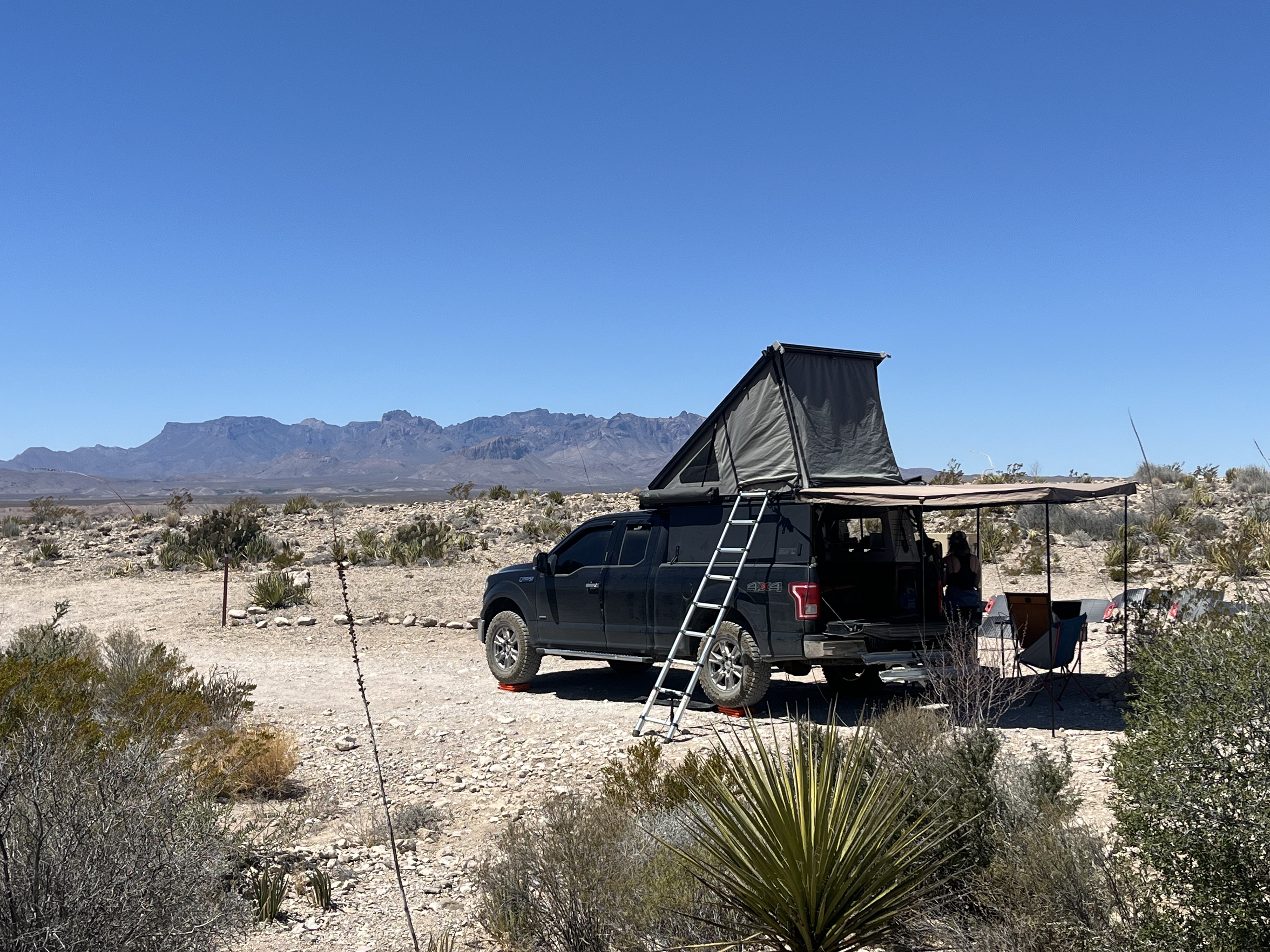
Tuesday brought more of the same wind symphony, though with slightly less enthusiasm. By evening, the desert seemed to catch its breath, offering us a chance to stretch our legs. We discovered a cairn-marked trail winding up the eastern hill that beckoned us upward. Following these stone breadcrumbs, we climbed until the landscape unveiled itself in a panoramic reward. The Chisos Mountains stood majestically to the west while the eastern view dropped dramatically into the Rio Grande canyon, with Mexico sprawling beyond. Standing at this natural crossroads between two countries, I felt the unique magic that only borderlands possess.
The skies cleared for Wednesday and Thursday, treating us to clear skies and the stargazing this dark sky park is known for. The calmer weather let me establish a proper outdoor office—second monitor and all—a luxury that felt almost decadent after those first confined workdays.
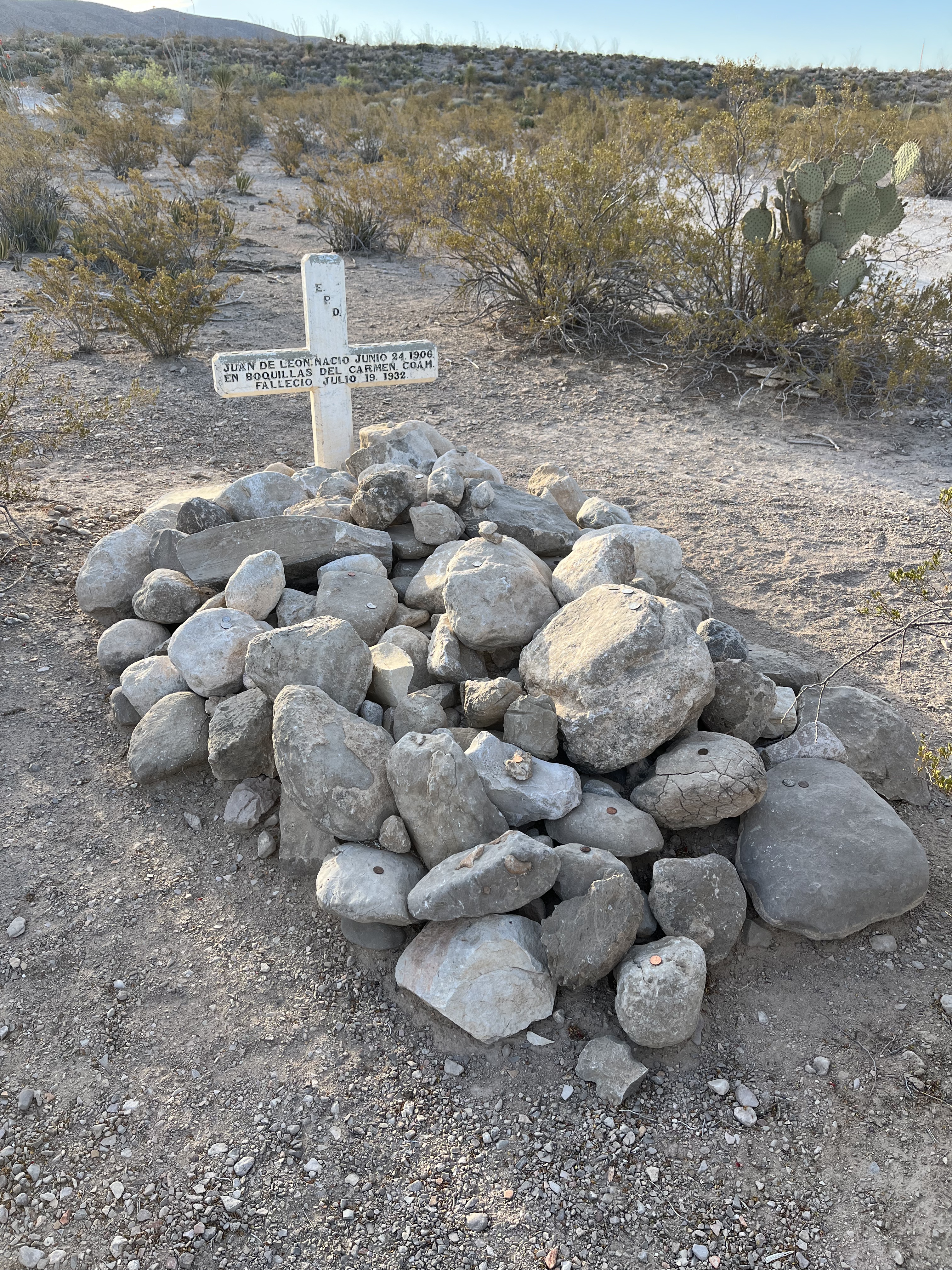
Friday morning, we decided to beat the heat with an early adventure to Ernst Tinaja. We set out on bikes around 8:00, pedaling the short half-mile down to the trailhead where the real journey began. On our way, we stopped at a small grave site marked by a simple cross and cairn—the final resting place of Juan De Leon himself, our campsite’s namesake. The modest marker bears witness to an unsolved frontier mystery. In 1932, De Leon was shot while riding his horse through this remote terrain, but the circumstances of his death remain shrouded in mystery. No one knows who pulled the trigger or why.
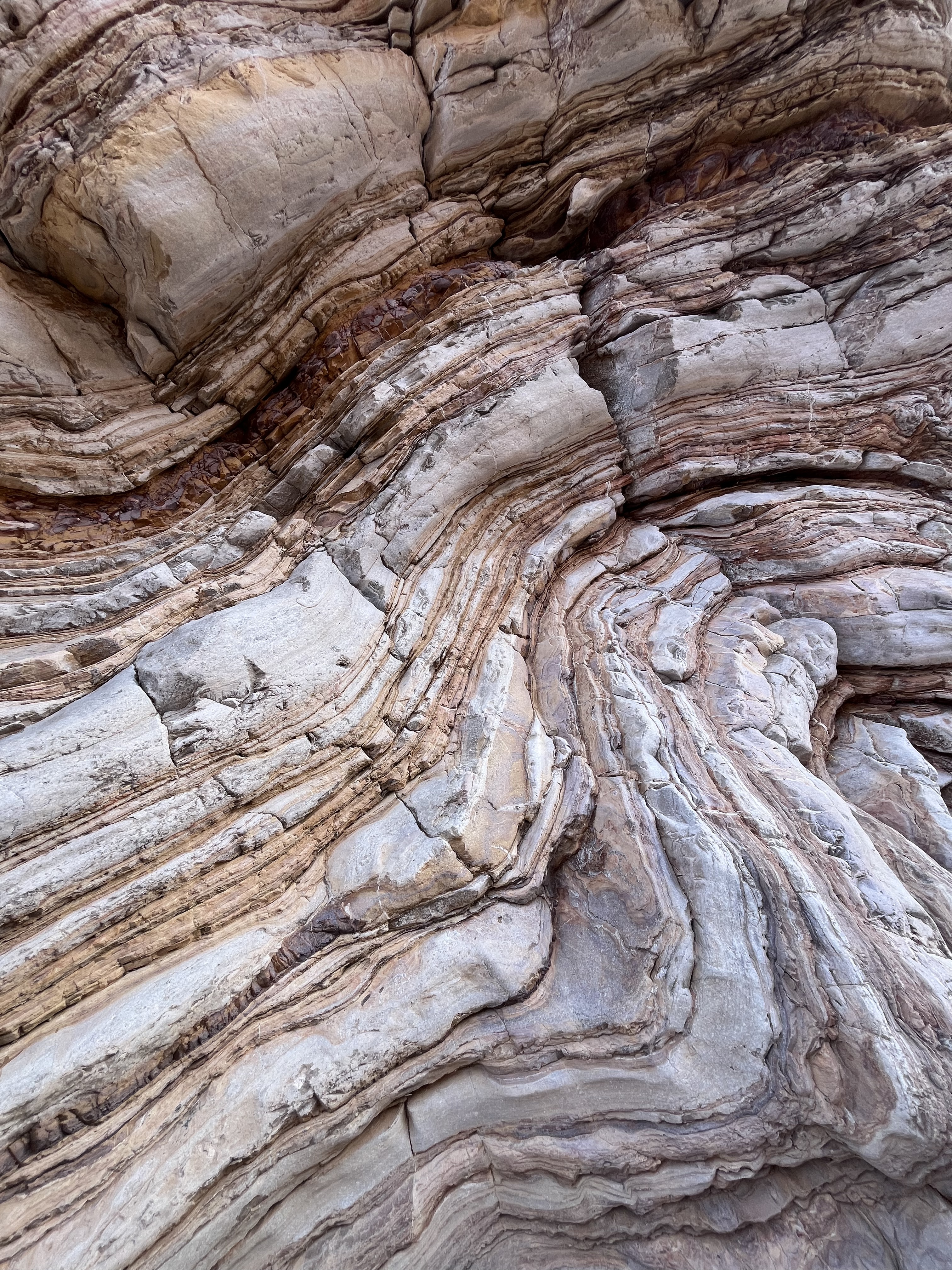
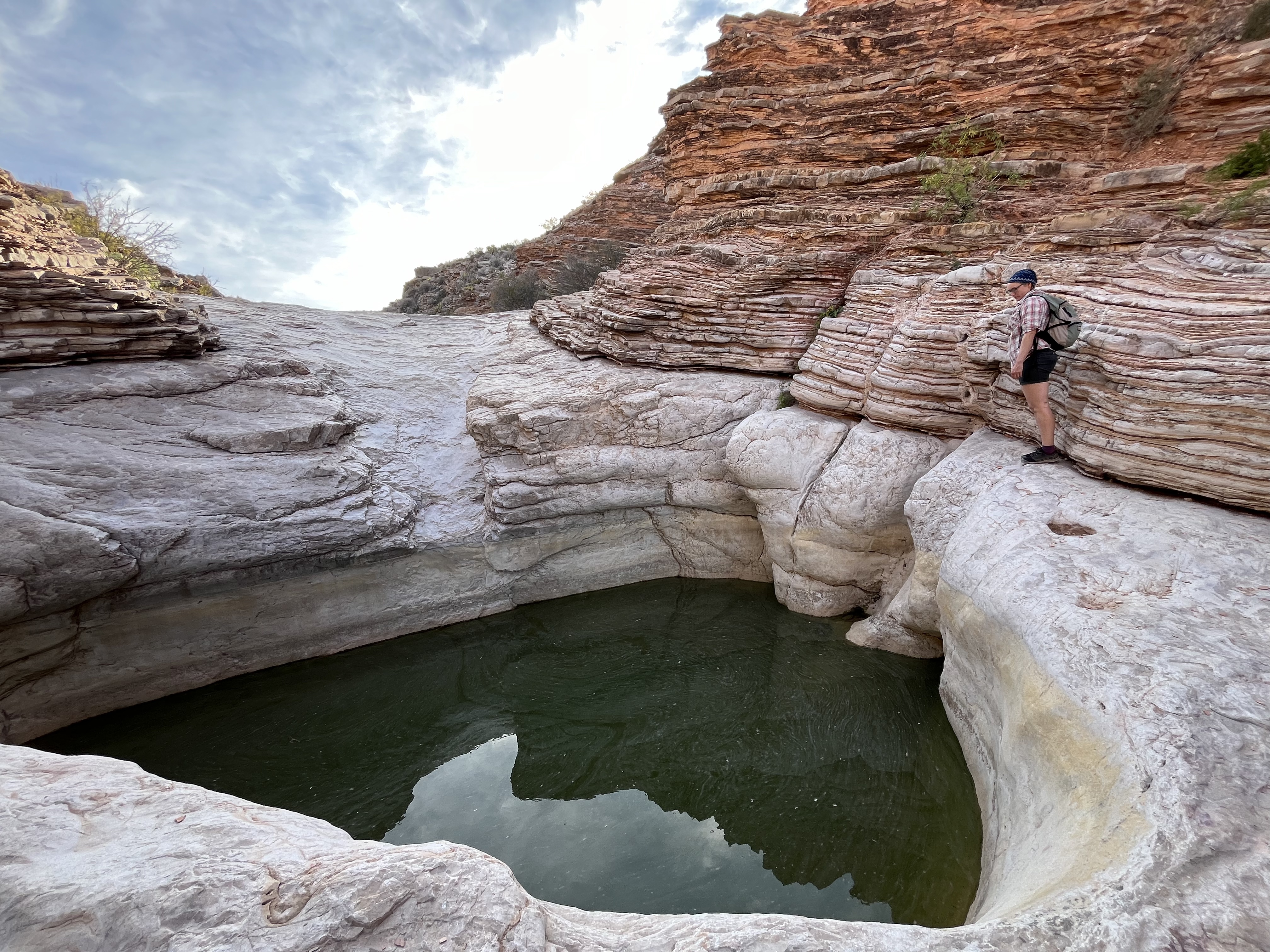
The trail led us through a wash and into a sandstone canyon that seemed designed by a geological artist. The rock formations defied simple description—rippling, curving layers in a palette of earth tones that reminded me of pulled taffy in those old-fashioned candy store displays. Nature’s confectionery, millions of years in the making.
The tinaja itself was worth every bit of the journey—a deep, permanent pool cradled in stone and protected from the harsh desert sun. What captivated me most was the hypnotic slow circular current on its surface, spinning gentle ripples that seemed to whisper ancient secrets. I found myself staring, half-convinced that with patience, one might see visions in those waters, a glimpse into the future perhaps. We had the place entirely to ourselves, a private audience with this desert marvel.
Our timing proved perfect. As we returned to our bikes, the first waves of visitors were arriving in cars and on foot. And as if offering a parting gift, a canyon wren—whose distinctive calls had teased us on previous hikes—finally revealed itself among the rocks. A fleeting glimpse, but a satisfying conclusion to our morning expedition.
 The Crooked Trail
Leave a comment