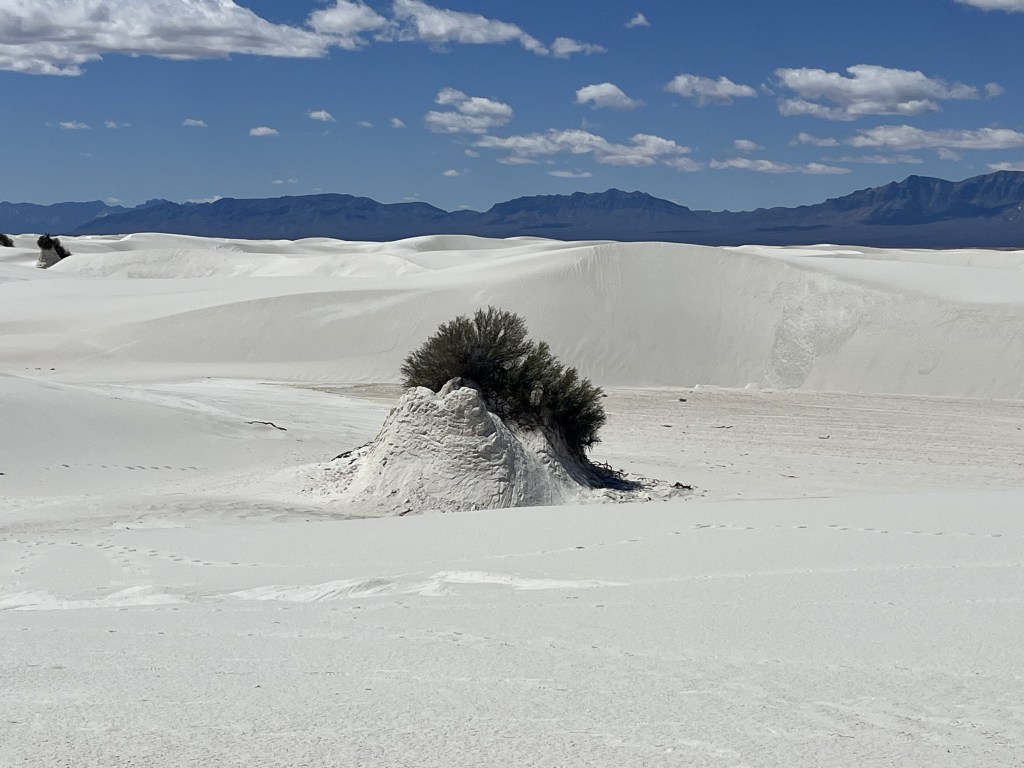
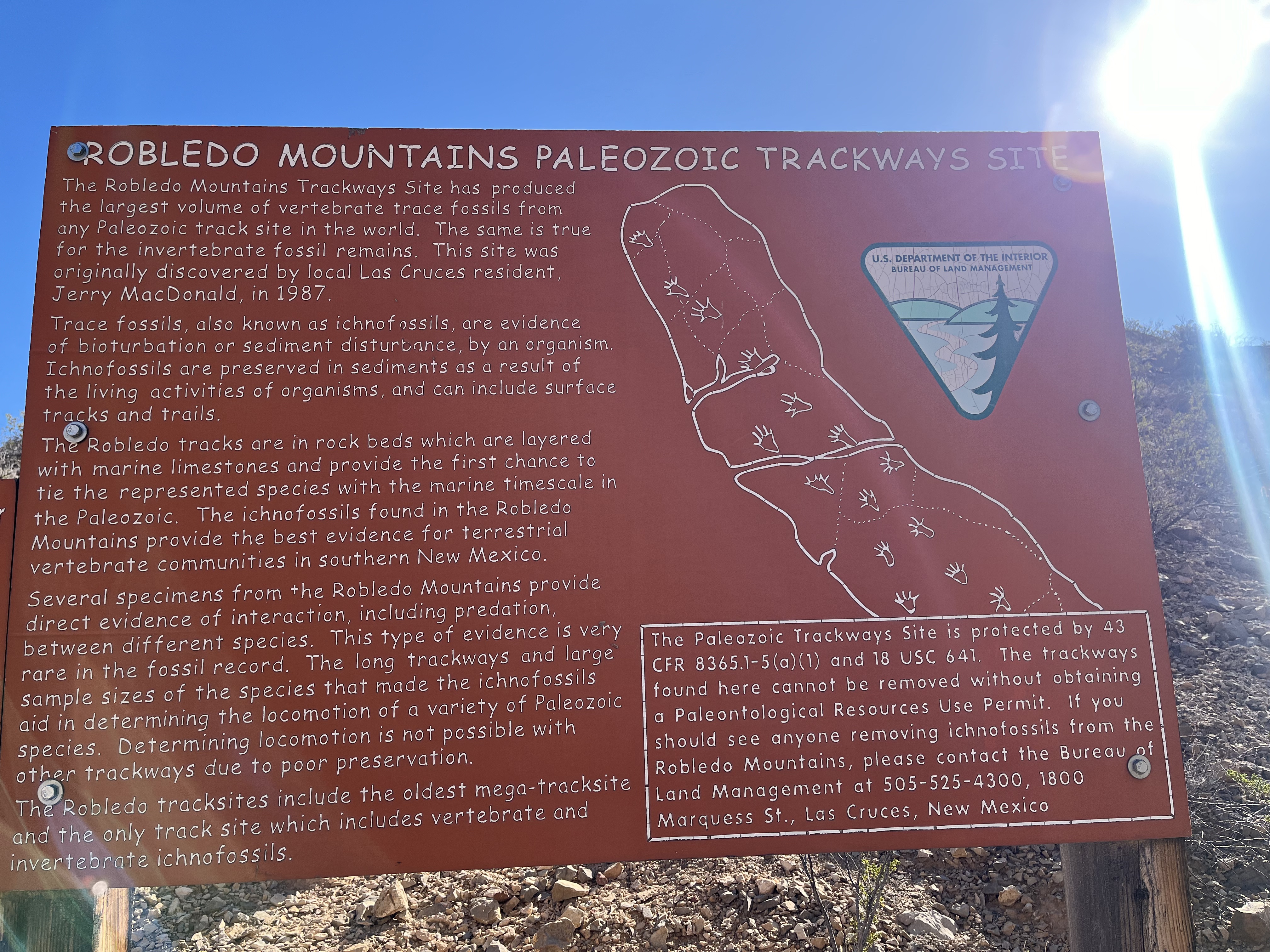
We stayed another cold, windy night outside of Las Cruces, New Mexico at the Preshistoric Trackways National Monument and so the day started out with a short hike there. This monument is quite different from others we’ve visited. It isn’t made up of stunning vistas or untouched wilderness. Rather, it’s only a few miles from downtown Las Cruces and it actually borders a working gravel pit. What makes this place special though is that it contains a high density of fossilized animal tracks, petrified wood, even fossilized raindrops from millions of years ago. As the BLM describes it, “The site contains one of the most scientifically-significant Early Permian track sites in the world.” Even our untrained eyes could pick out shell fossils and petrified wood as we walked along the trail.
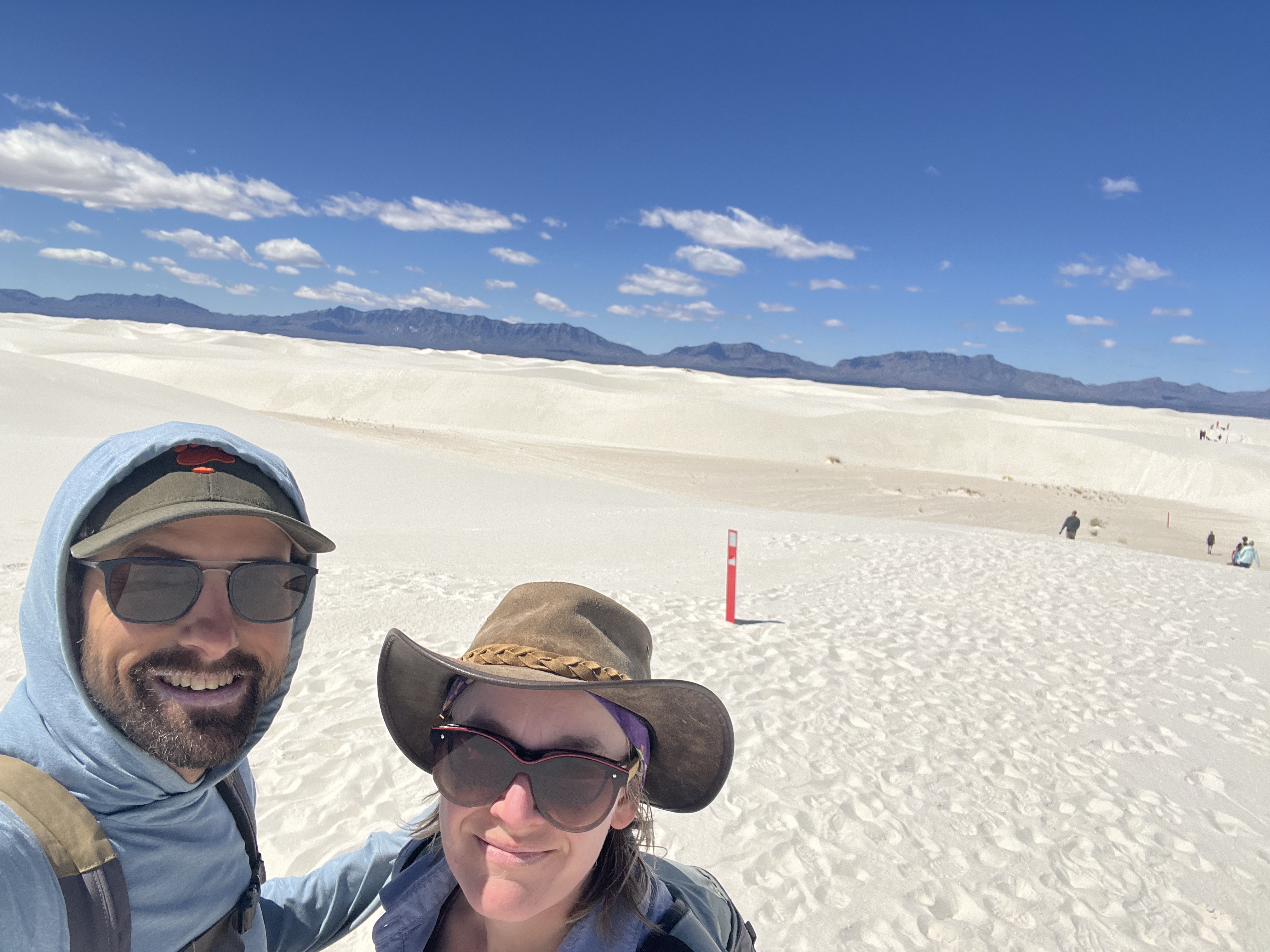
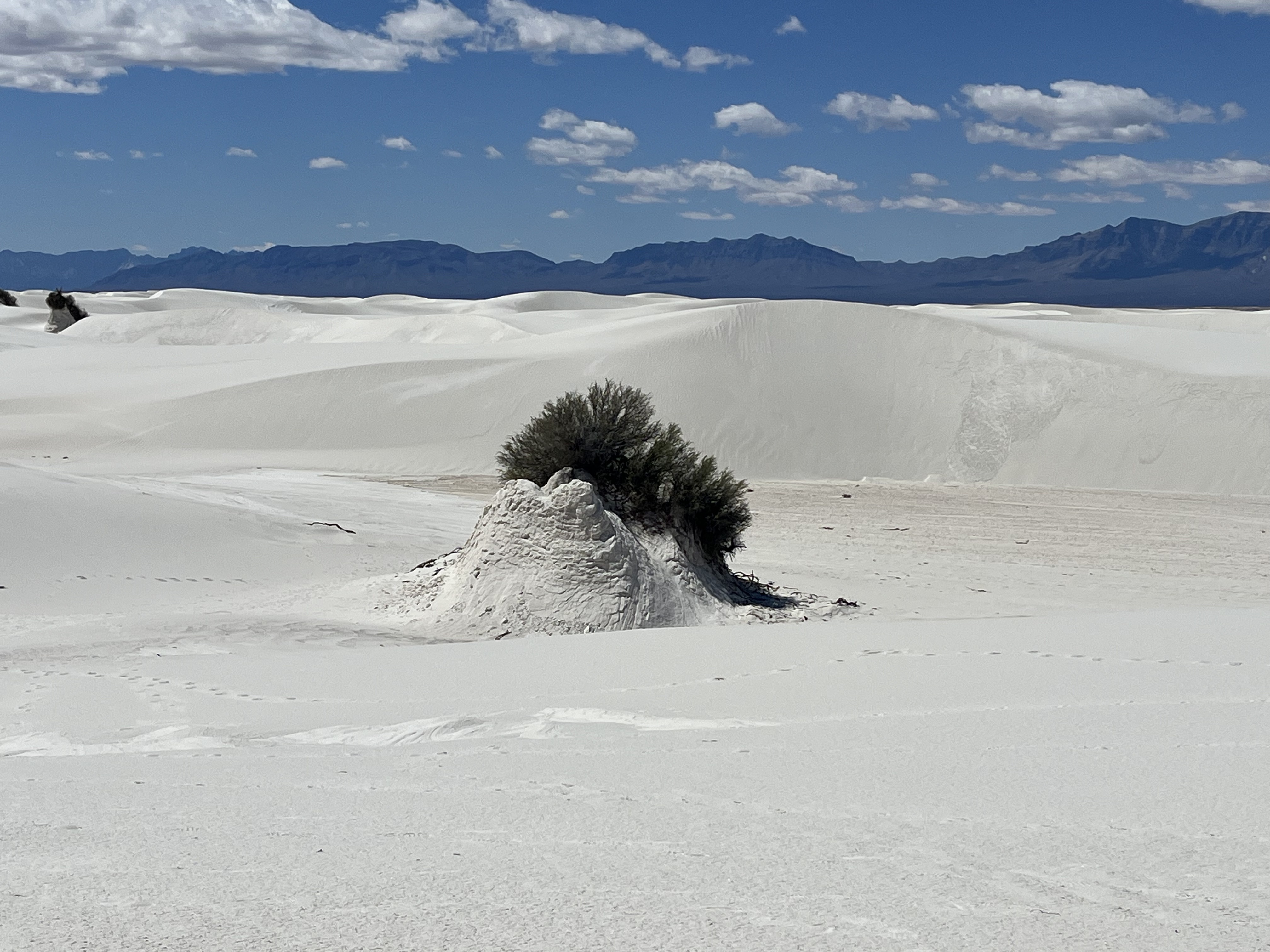
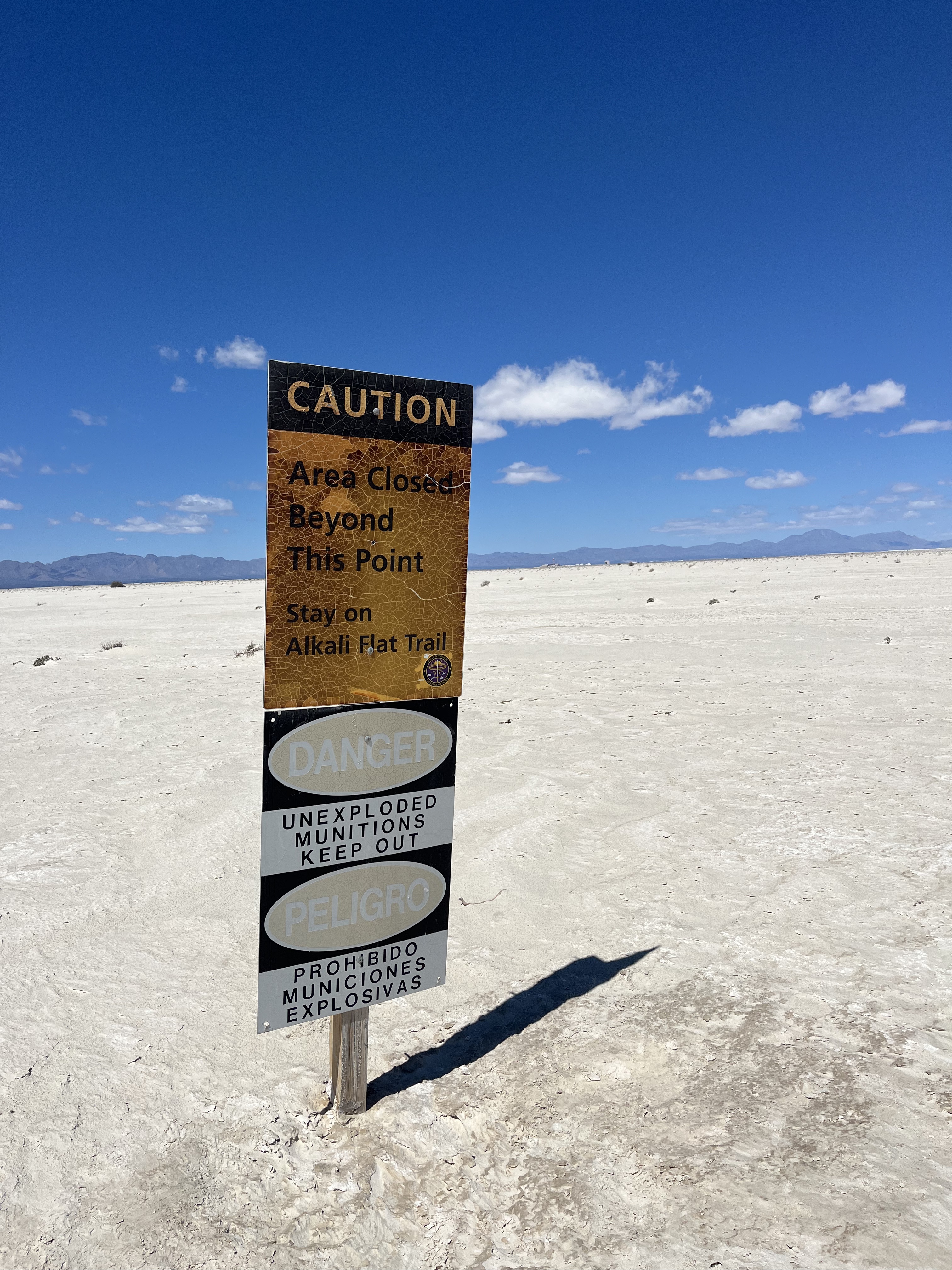
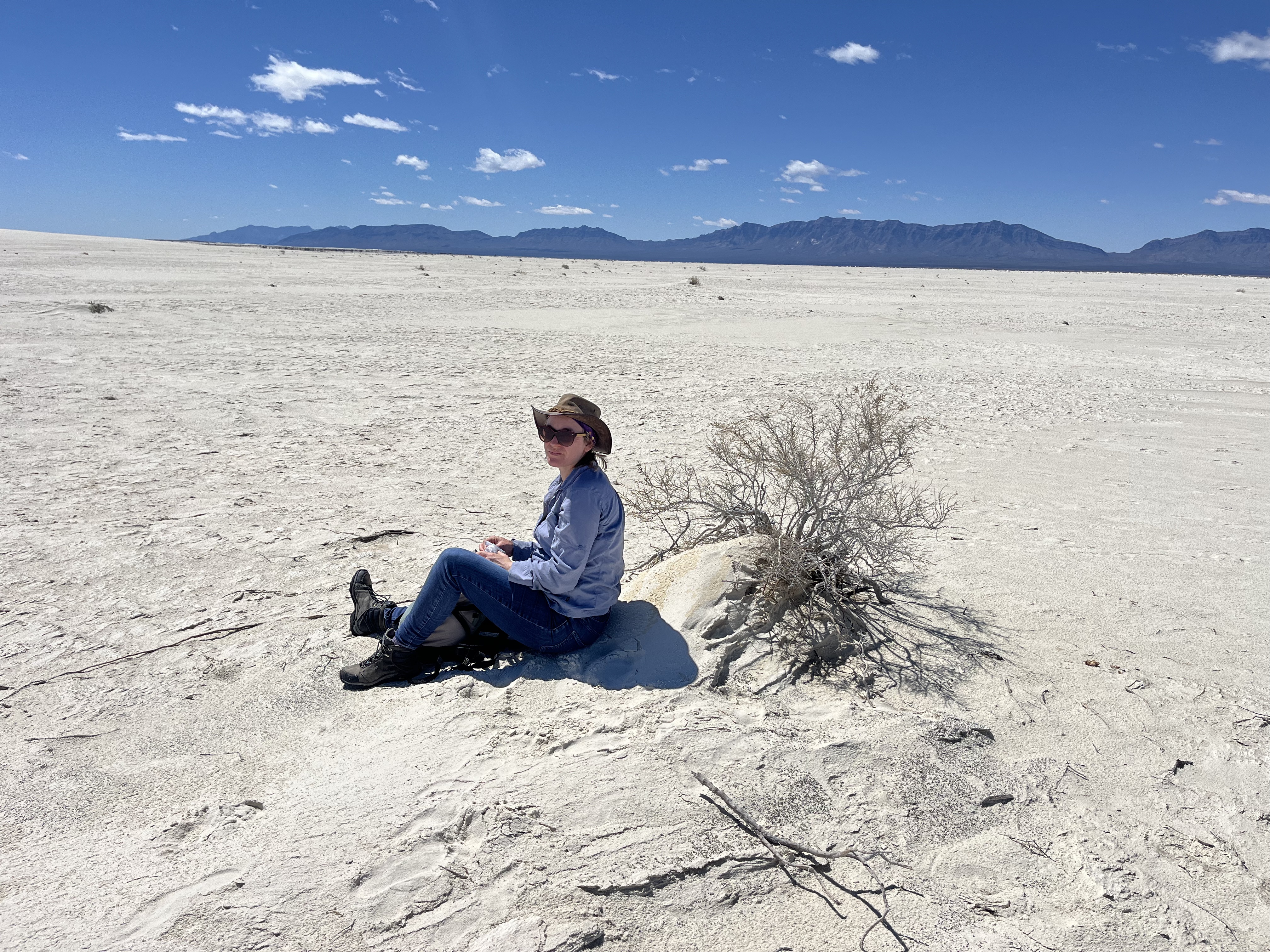
Our next stop of the day was White Sands National Park about an hour from Las Cruces. This park is exactly as the name implies, 275 square miles of brilliant white gypsum sand dunes. As the tagline says, it really is like nowhere else on earth. We opted for the 5 mile “Alkali Flats” loop hike. As the sign at the start of the hike emphasizes, the hike is not flat. It’s walking up and down large dunes in loose sand, which as a result, makes it feel like much longer than five miles. The park is also close to several Air Force bases and missile testing facilities, as well as being where the first atomic bomb was tested. The park is sometimes closed due to missile testing and there were signs warning not to pick anything up that you might find as it could be unexploded munitions, yikes. All in all, it’s a unique place, beautiful in it’s own way and worth a visit.
After White Sands, we started up and over the Southern Rocky Mountains. The high desert of Eastern New Mexico gave way to mountain forests of Pine and Juniper and precious, clear, flowing water. Snow was still lingering as we went through the small town of Cloudcroft at around 8,500 feet. The road drops down the Eastern side and into the desolate flats of the Permian Basin. I can usually find some kind of beauty in most landscapes, even seemingly desolate and barren ones, but I have to say Eastern New Mexico and West Texas are tough. A flat, brown, windy, dusty landscape punctuated by oil rigs and dominated by scrubby Creosote. It would be a tough place to live and I have to admire the folks who man those rigs and scratch out crops from the dusty soil. We stayed the night in Carlsbad, New Mexico at a place called the Post Time Inn. It was time for us to do laundry and this place offered an affordable and comfortable room with free laundry facilities.
A word on our clothing choices for this trip. We planned to be close enough to civilization to do laundry about every two weeks. We didn’t want to bring two weeks worth of clothes each with because that would take a lot of the limited space in our camper. Therefore, we mostly wore high quality wool or wool blend items from a company called Duckworth. The wool is American grown and the garments are manufactured in the USA as well. It’s high quality, durable, and comfortable. Wool has many great qualities, but one of them is that it’s antimicrobial. That allows for just hanging clothes up to air out overnight and then being able to wear them for a couple days without bad odors. Wool also insulates when wet unlike cotton, and it dries fast so handwashing is also a possibility if needed.
The next day we headed out toward the two nearby national parks at Carlsbad Caverns and Guadalupe Mountains. It’s a unique area as you can visit two national parks in one day since they are only about 30 miles apart. Carlsbad Caverns has a timed entry system requiring reservations which we had for 8:30 am. We left our hotel around 8:00 for the 30 minute drive to the caverns.
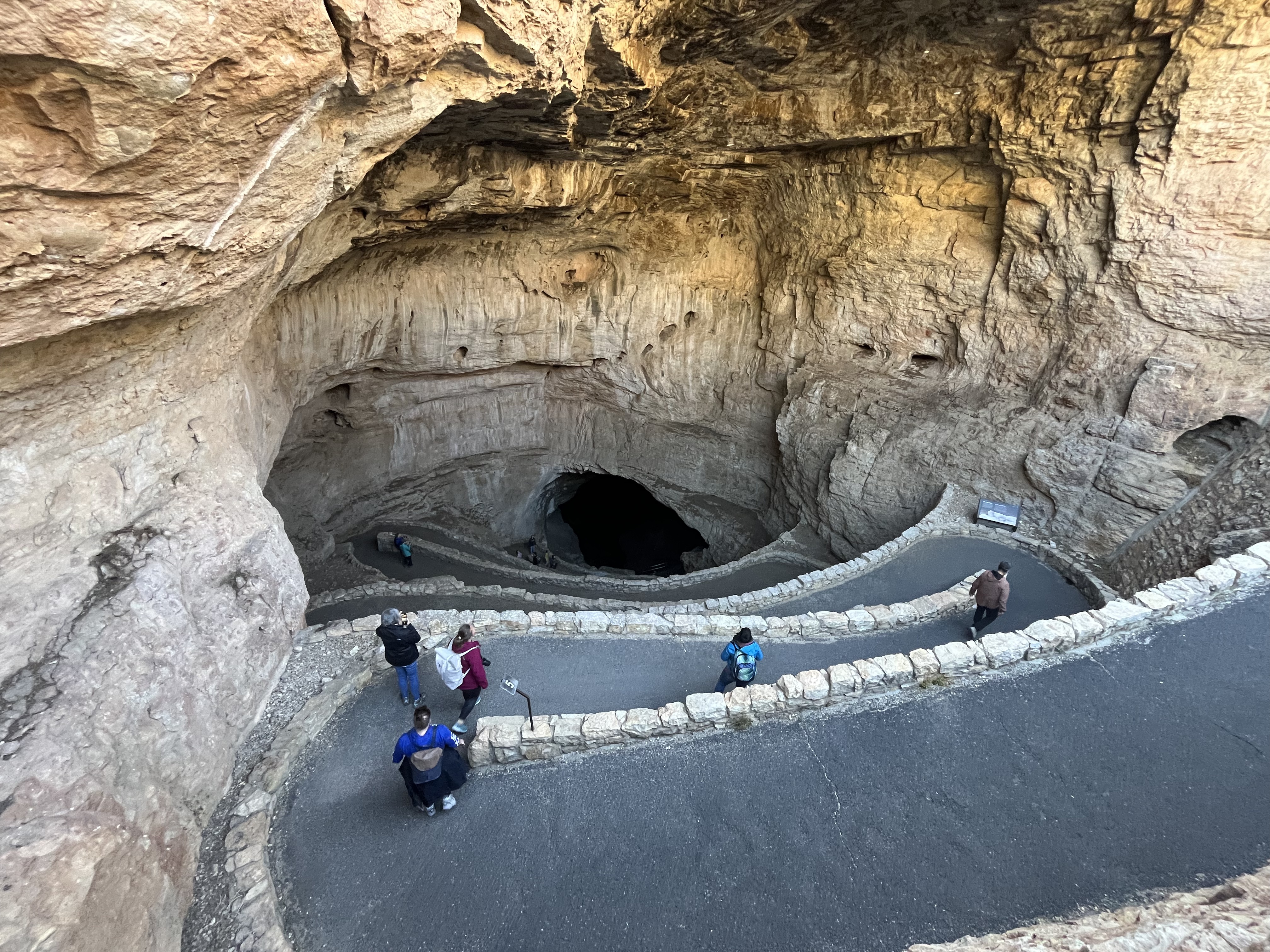
Driving South from Carlsbad, the Permian Basin wasteland continues until the turnoff toward the caverns at the town of White’s City. A small burg with a gas station and grocery store named for Jim White who discovered the caves in 1898. Here the landscape gets a little more interesting as you drive up a canyon and into the foothills of the Guadalupe mountains. We checked in at the visitor’s center and then walked toward the entrance. A park ranger greeted us and after a brief orientation he pointed us toward the entrance as he jokingly said, “the hole in the ground is over there”.
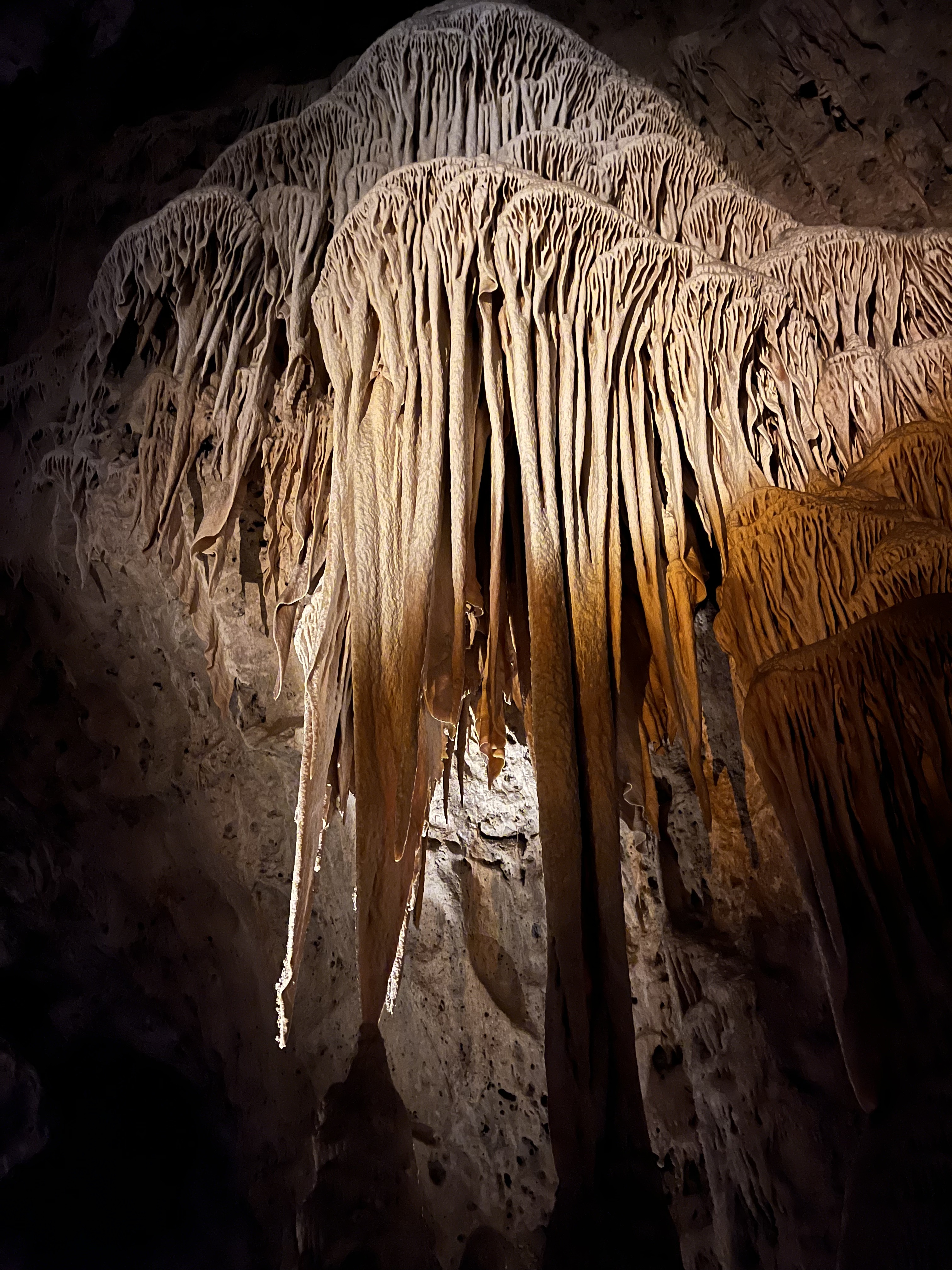
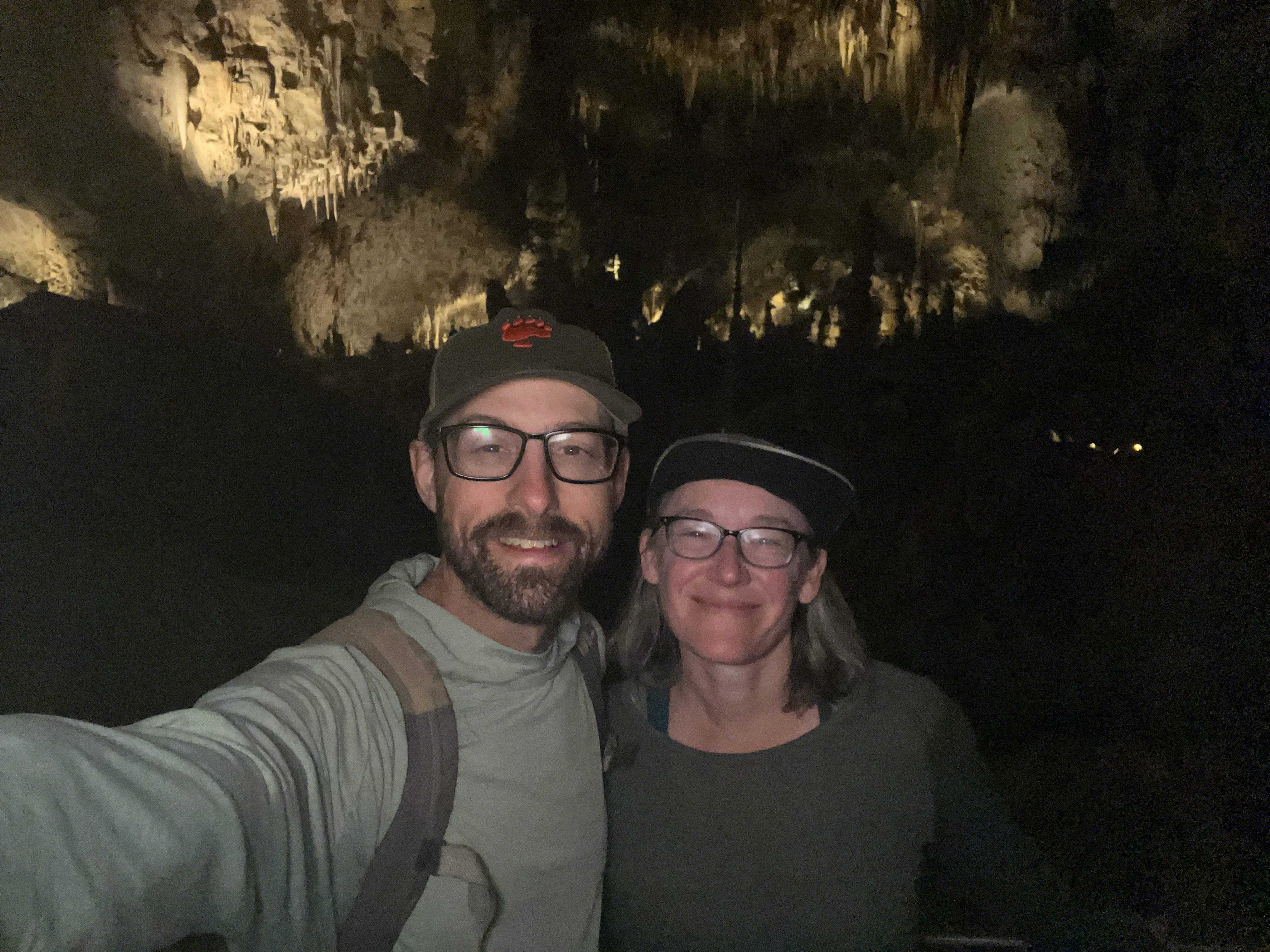
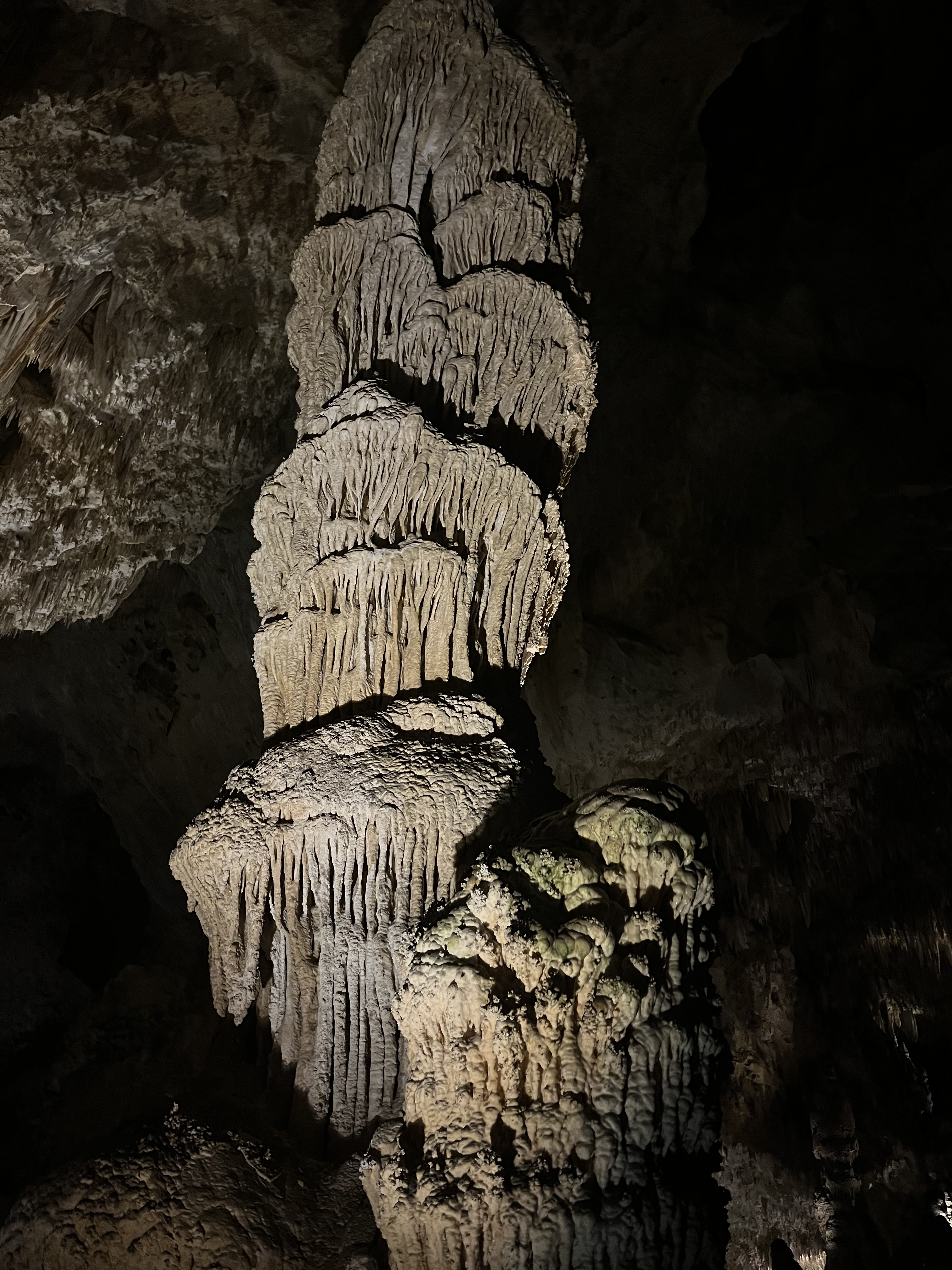
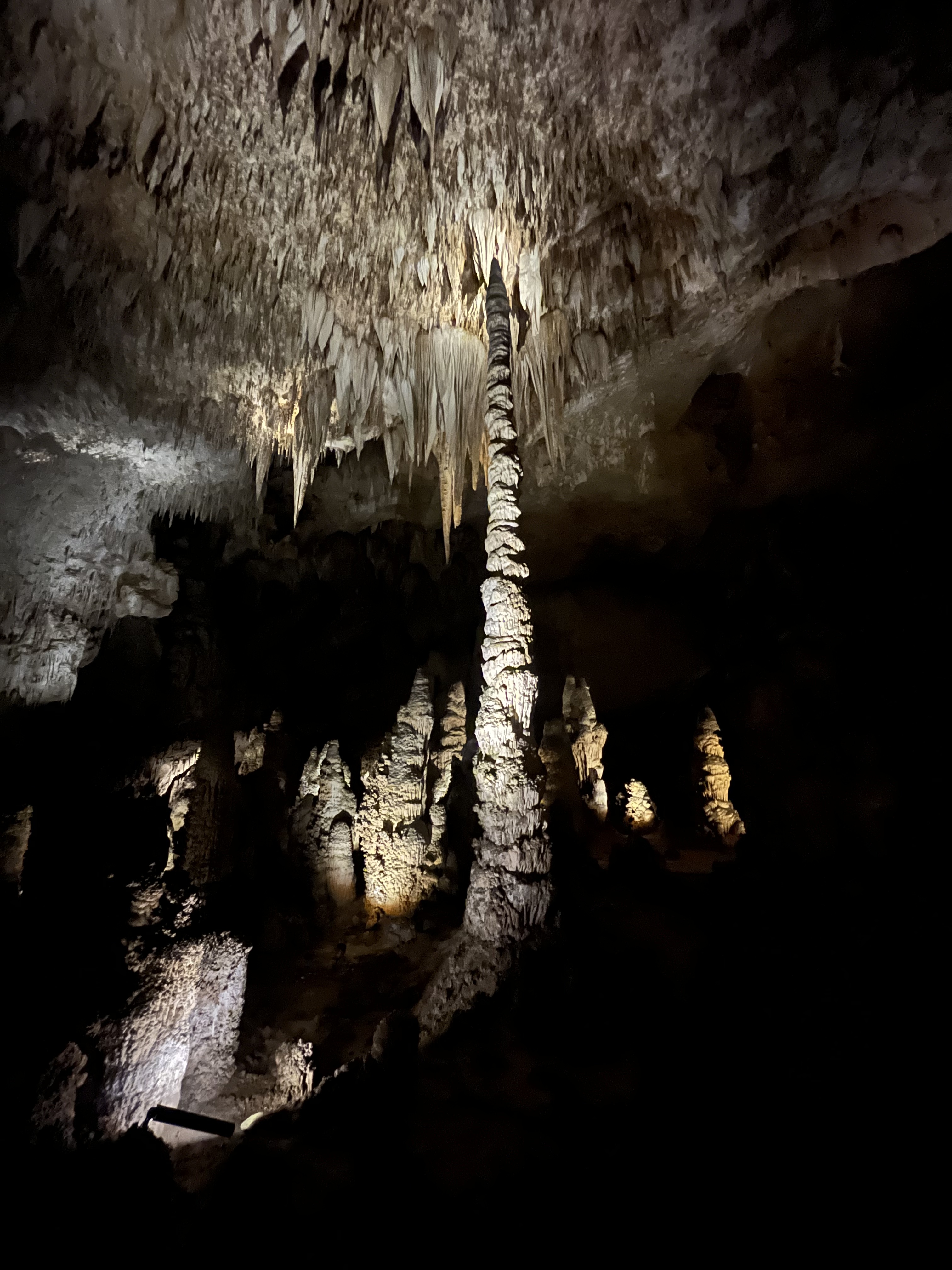
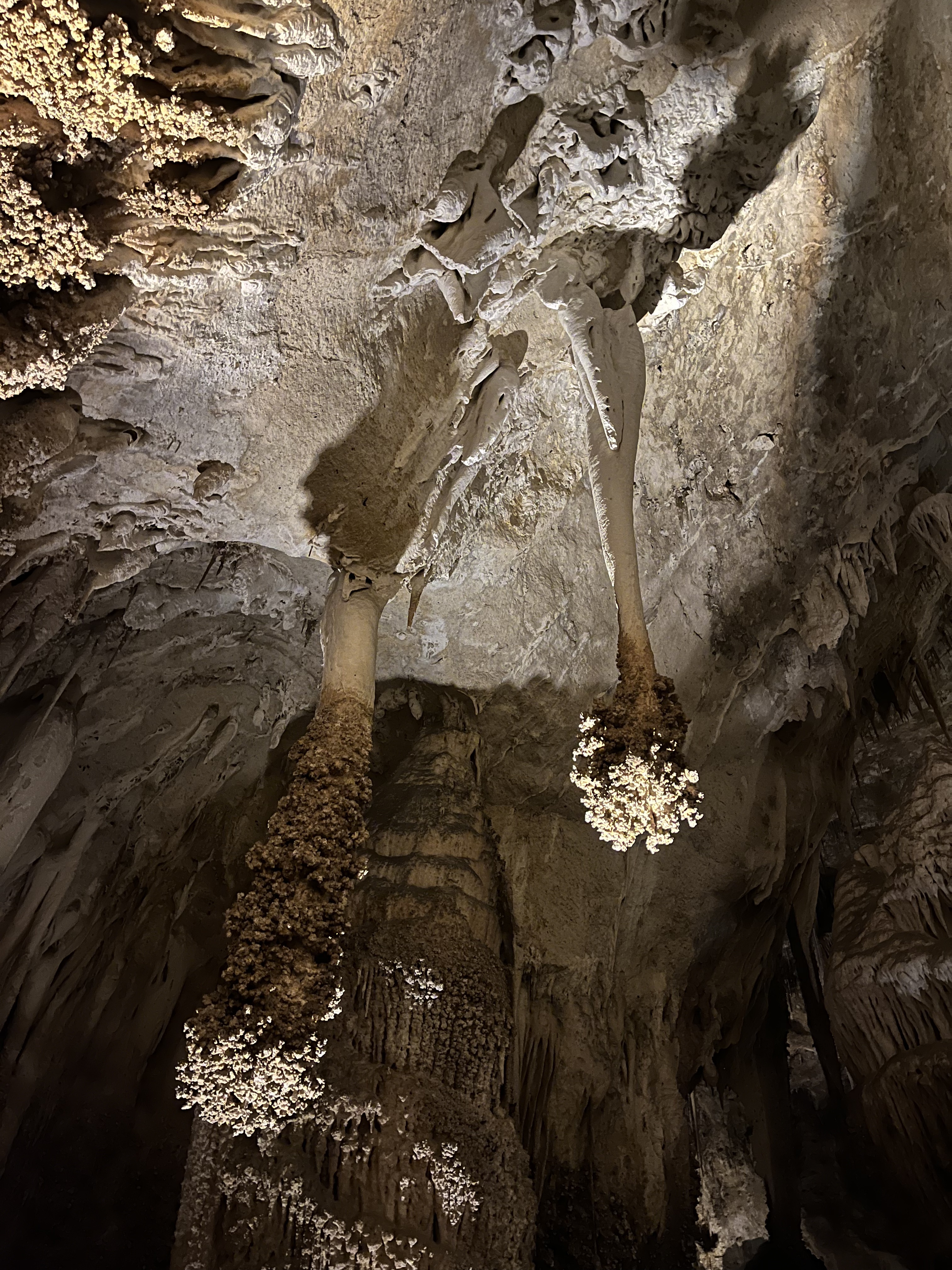
As you approach the entrance, you see that it is in fact a huge, gaping hole in the ground. Cave sparrows fly in and out in synchronized spirals. A steep, switch-backed, but paved trail leads down into the darkness. For quite while, the entrance above stays visible, a bright blue oval diminishing in size as you descend until it’s gone altogether. From there, the wonders are non-stop for the next hour. Massive rock columns, stalactites and stalagmites. Things with names like the “fairy village”, and the “bottomless pit”. My favorite of these formations were the “curtain” formations. Rippling ridges of rock that arch upward forming a canopy, like a stylized forest sculpture, something straight from a Gaudi building. There were pools of clear water and stalagmites still in the process of growing, their surface glistening with the mineral laden liquid that is slowly constructing them, a process that has been under way for millennia.
The scale of the place in both space and across time is immense. The caverns themselves started to form 19 million years ago. They are the result of very specific processes, the ingredients of which came together in just the right quantities and at just the right times over those millions of year. Water mixing with carbon to form a weak acid as it slowly trickled through the rock, dissolving it and carrying it down into the caves. Even biological processes that created rock dissolving sulfuric acid that contributed to the construction. A dance between living and non-living to create this subterranean wonderland.
After riding the elevator 700 feet back up and out of the caverns, we got in the truck and drove the 30 miles up the road to Guadalupe Mountains National Park. We hiked a trail called “Devil’s Hall”. It was mostly up a dry wash with plenty of vegetation. Juniper, Mountain Mahogany, and Madrone. A welcome change from the Creosote dominated plains of the basin. There were Agave, Yucca, and prickly pear on the steep cliffs where there was more sun. At one point, the trail came to a spot called “The Staircase”, and it was exactly that. I steep rock formation in between the canyon walls. An almost vertical climb up 25 feet or so on narrow steps. Nestled in the shade at the top was a pool of water abuzz with honey bees. It was possibly the only water around for miles.
After the Guadalupe Mountains, we headed back to Carlsbad, did our laundry, and caught up on some emails and such. After our second shower in as many days (the luxury!), we went to eat at a little Tex-Mex place down the street. We partook in the New Mexico specialty of Queso and Chips with green chilis and burgers. Greasy, cheesy deliciousness to cap a spectacular day.
Next up is Texas and Big Bend National Park.
 The Crooked Trail
Leave a comment