After leaving Joshua Tree National park we were in for a bit of Interstate driving on I-80 to Qartzite, Arizona where we then headed South to Kofa. Quartzite is a quirky little town in the Arizona desert. It’s a destination for RVers who go there in the winter by the thousands for the mild temperatures. There are all kinds of vendors set up along the main thoroughfare to meet the needs of all of these people selling everything from RV parts to grapefruit spoons. The BLM has even set up “Long Term Visitor’s Areas” that have water and trash service. We drove by these areas on our way down to Kofa and it honestly didn’t look as crowded as I was expecting. It’s a huge expanse of desert so plenty of room to spread out. It looked like some people had form little groups, “circling the wagons” so to speak and others were more off by themselves. Still, our style is more solitude and elbow room, hence why we keep our rig smaller and lighter. It may not have all the amenities and limited space, but it allows us to get far off the beaten path.
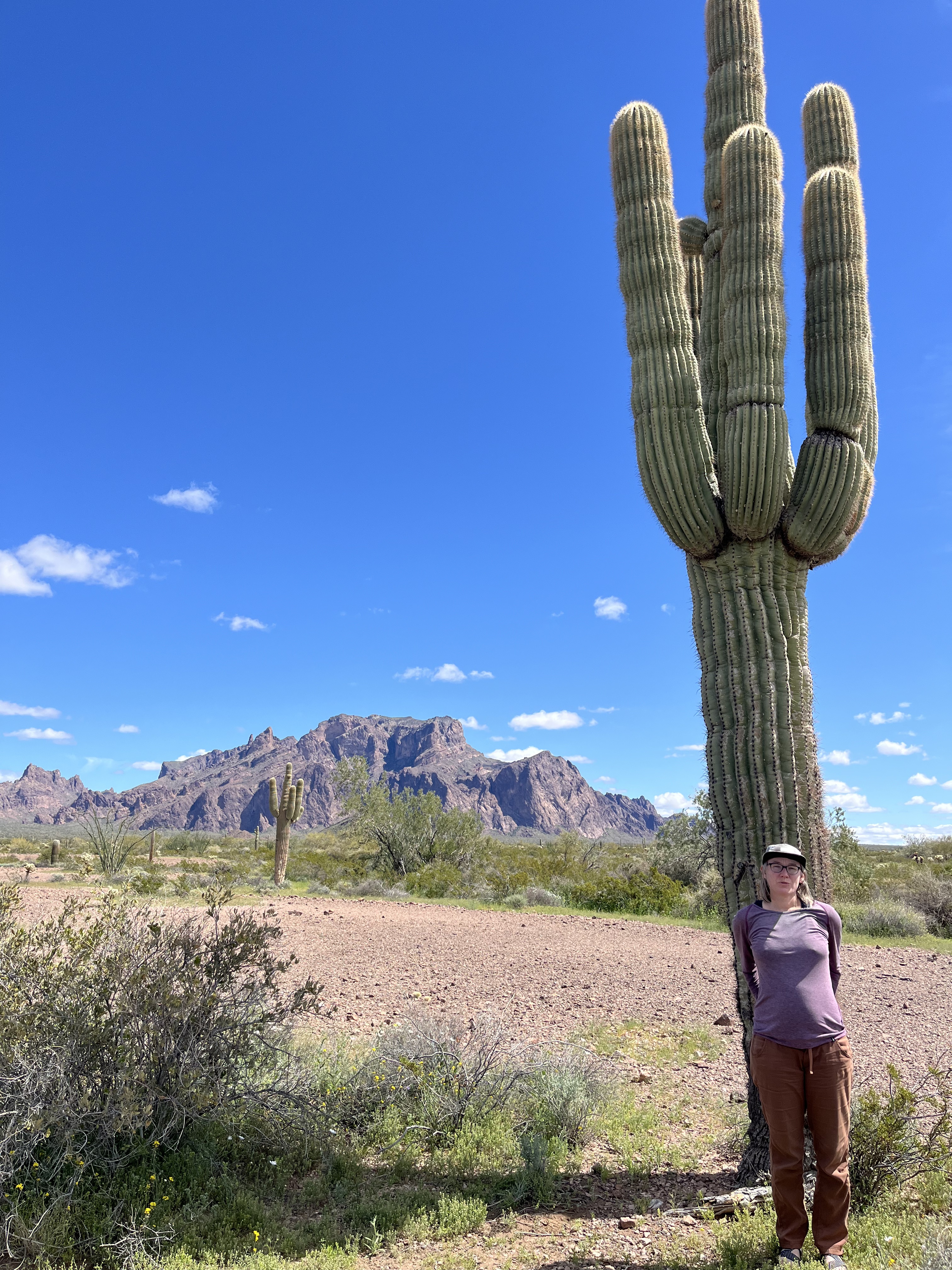
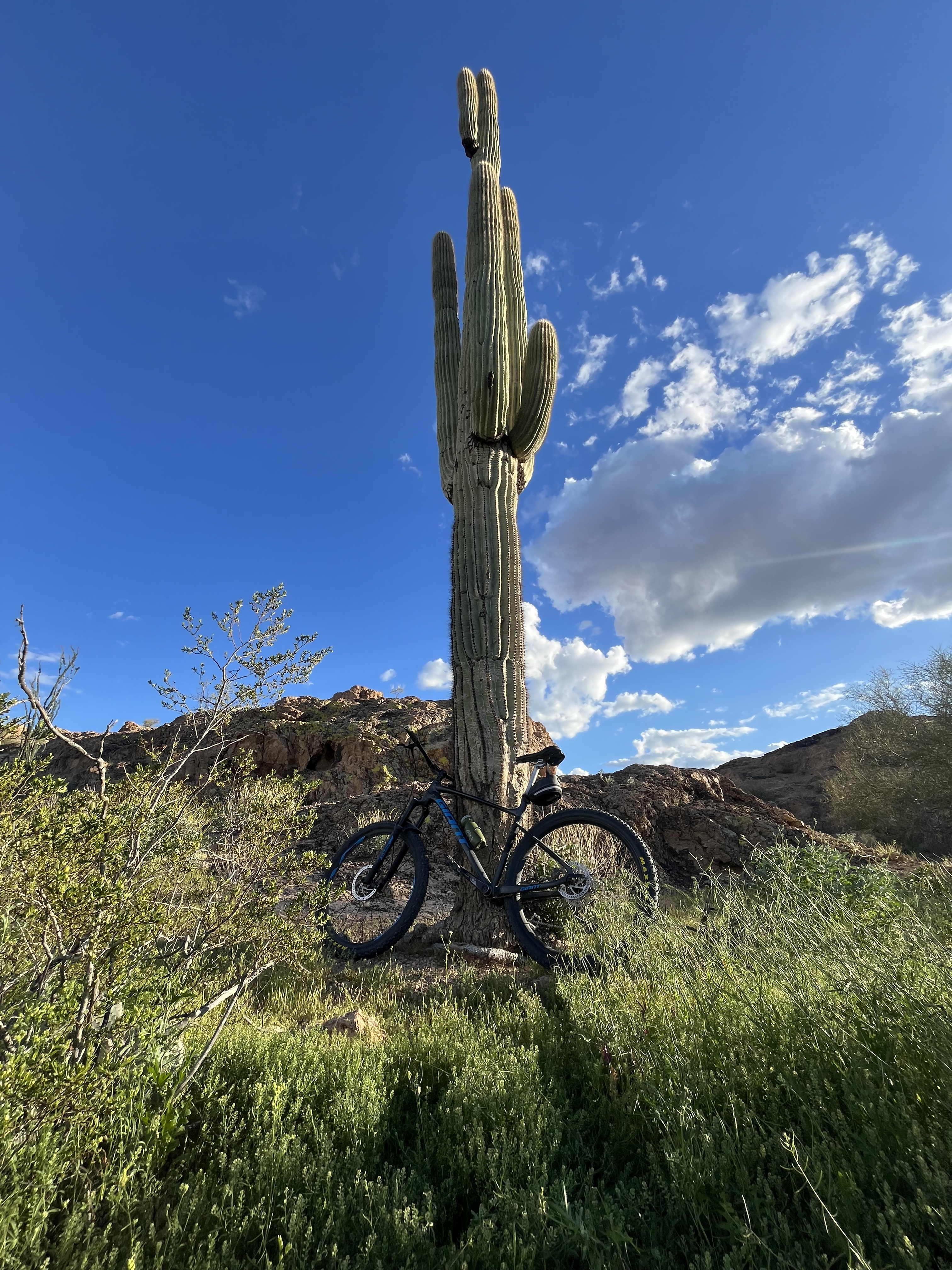
Our first stop in Kofa was at Palm Canyon. This is a few miles East of Highway 95. As we drove down the road we had our first up close encounter with a Saguaro cactus, that iconic symbol of the Sonoran desert. Some of them rising 30 feet at least, covered in spines and arms outstretched in what can be imagined as a gesture of greeting. One almost feels compelled to wave back, as if it would be rude to do otherwise. They are something to behold.
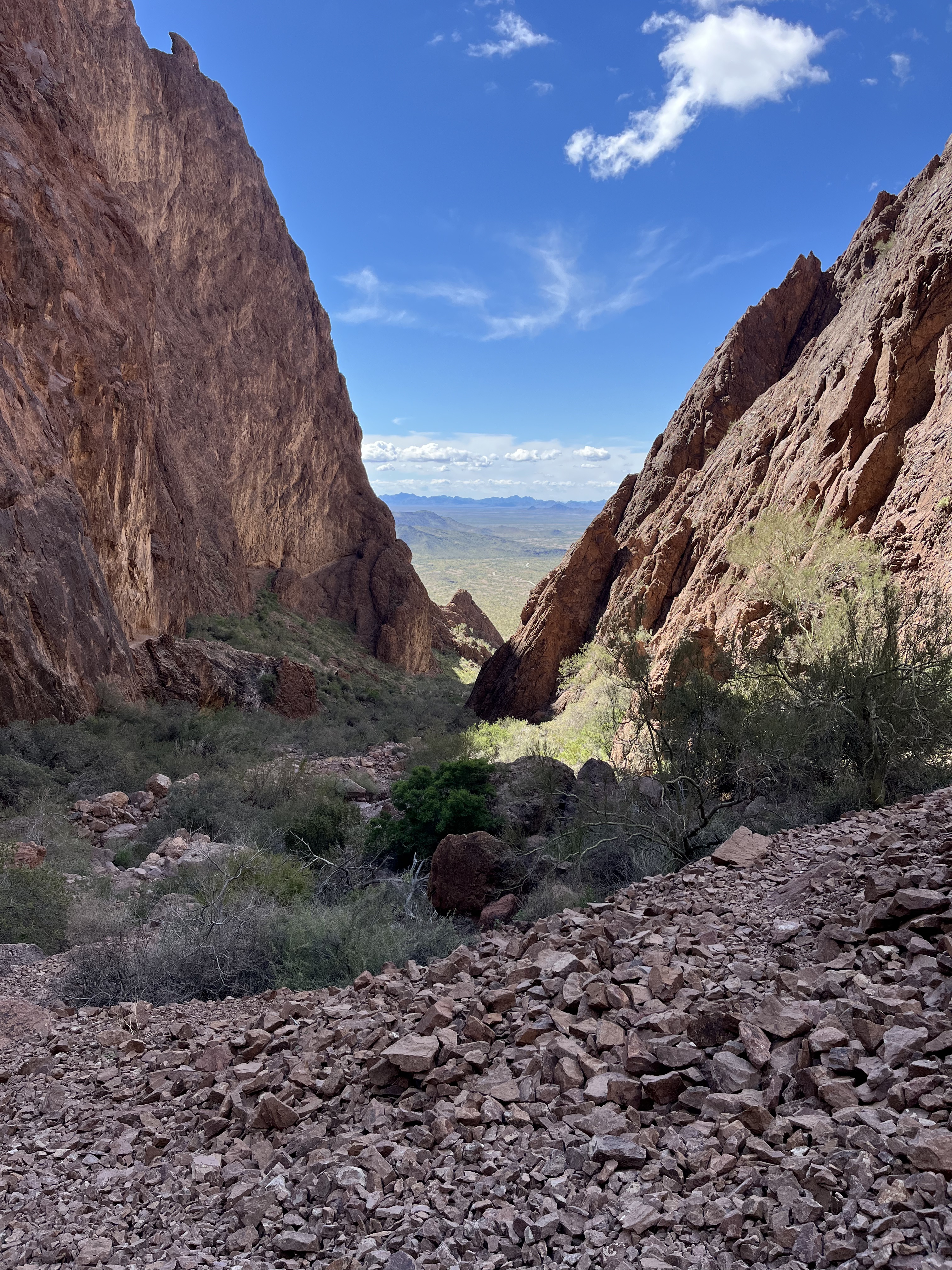
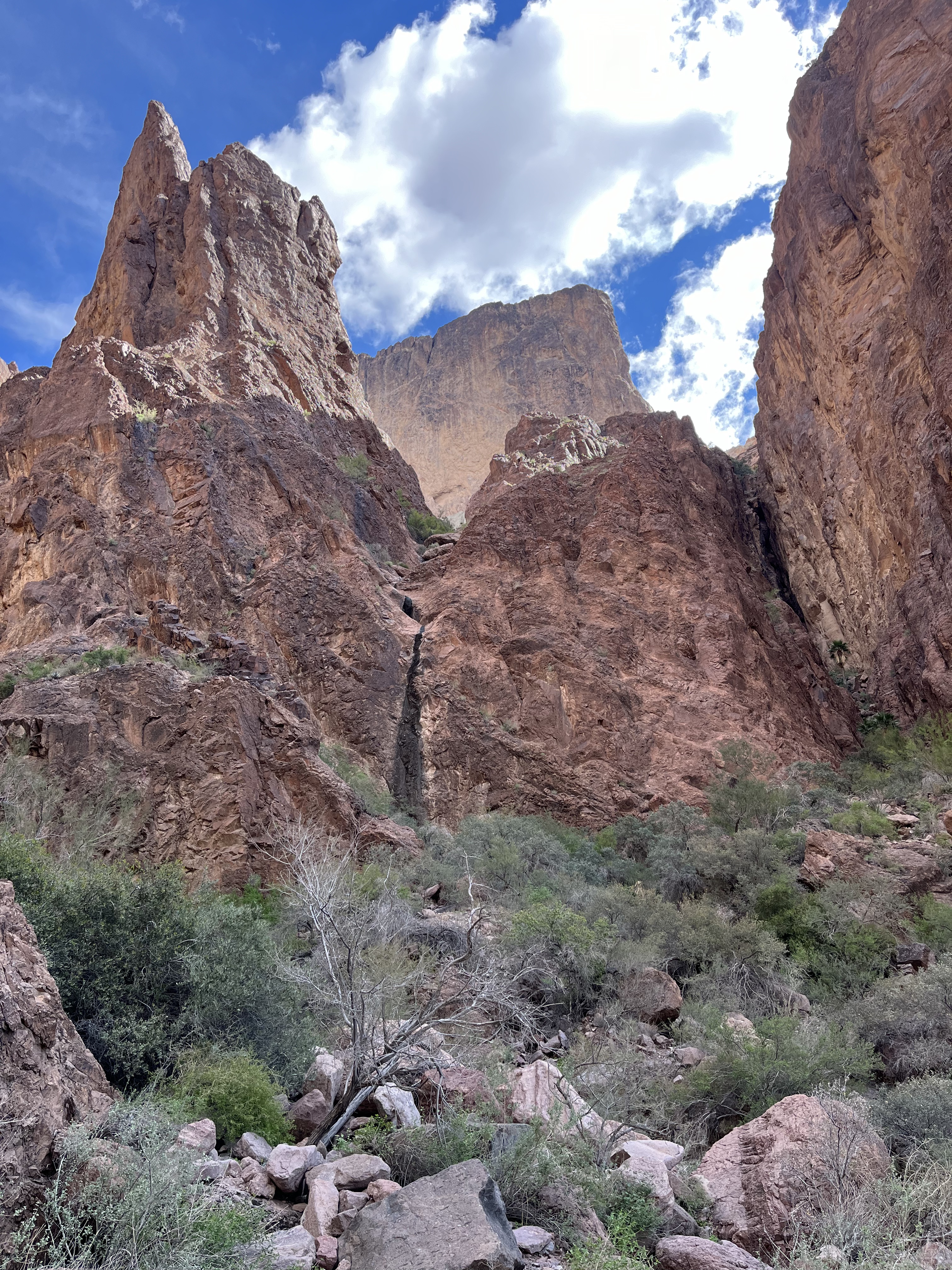
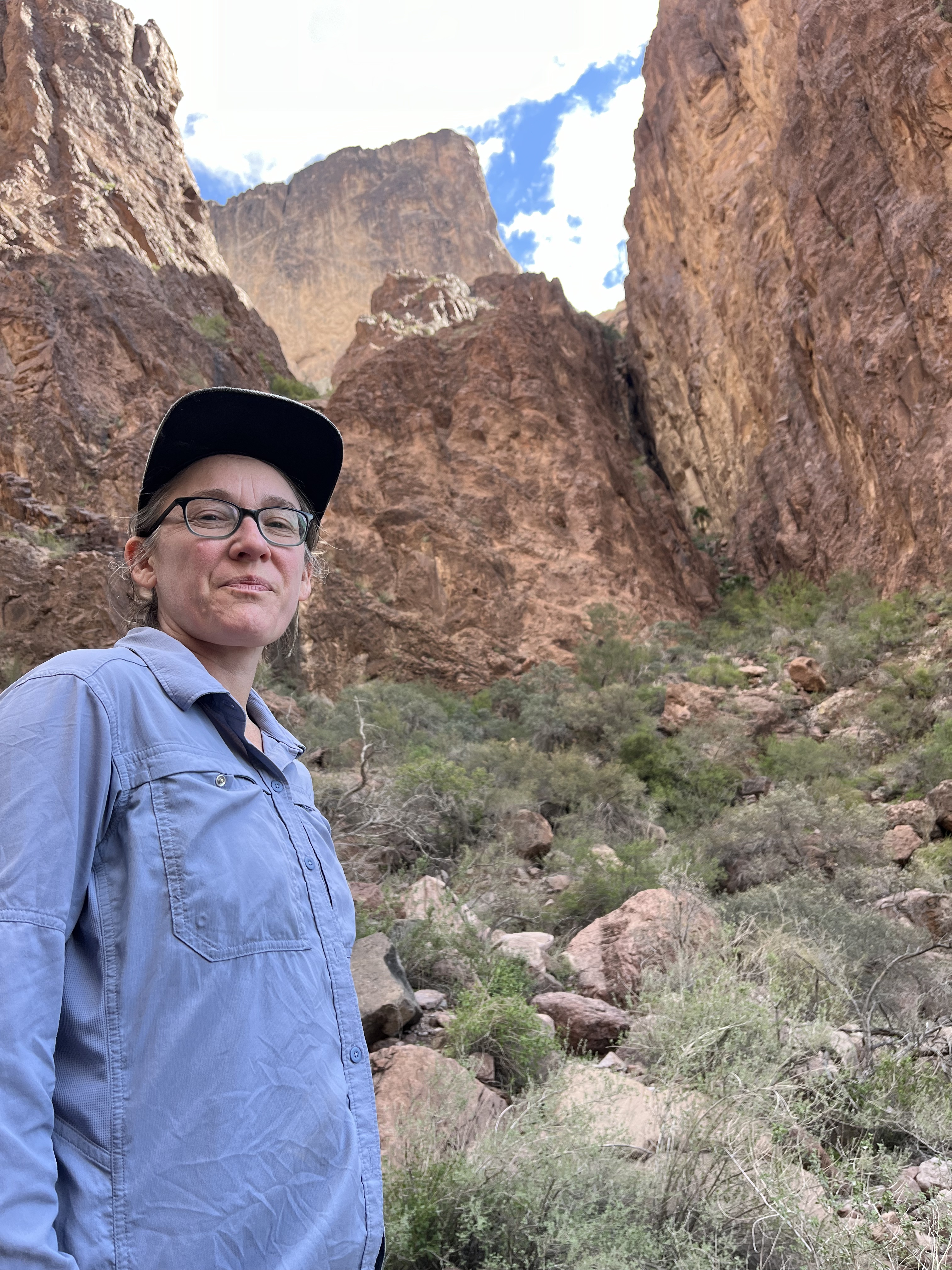
Palm canyon is so named as it’s home to a grove of native California Palm trees. The area itself is stunning. As you drive up to it, the monolithic Signal Peak rises out of the desert, straight up. Kofa was established as a refuge for Bighorn Sheep and it’s obvious why when you see this steep landscape that they prefer. The trail goes for a couple miles up a narrow canyon with steep walls rising hundreds of feet above. As we were headed up the trail, some folks headed down told us, “the palms are to the left, you don’t have to go all the way up.” We interpreted this as staying to the left when the trail came to a fork further up. Sure enough, there was a sign a bit further up that said “Palms” with an arrow to the left. There seemed to be a trail to the left, so we followed it, but it quickly petered out in a wash with no sign of palms that we could see. So, a bit confused, we continued up the trail.
The trail, such as it was, continued to get steeper as we went, and we scrambled up rocks and took a few side canyons to the left thinking they might be the fork that would lead to the elusive palms. We did see plenty of Bighorn sign, a hummingbird, and what seemed to be semi-permanent puddles in deep shade in the canyon that teemed with little tadpoles. Finally, where the trail seemed to actually end and we couldn’t go much further, we saw one lonely palm tree high up in a side canyon. Satisfied, we headed back down the way we came. When we arrived back at that original sign, there were some people there and we struck up a conversation. We told them we’d gone all the way up the trail and only seen one lonely palm. They said, “you didn’t see the palms up there?”, pointing up on the canyon wall. Sure enough, high up the wall, in a little depression, was a grove of palm trees. All we needed to do was look up! Only slightly embarrassed, we thanked them for pointing out the trees and headed on. Reflecting on it though, we were happy we missed them the first time as we may not have continued up the canyon and missed the other sights and experiences.
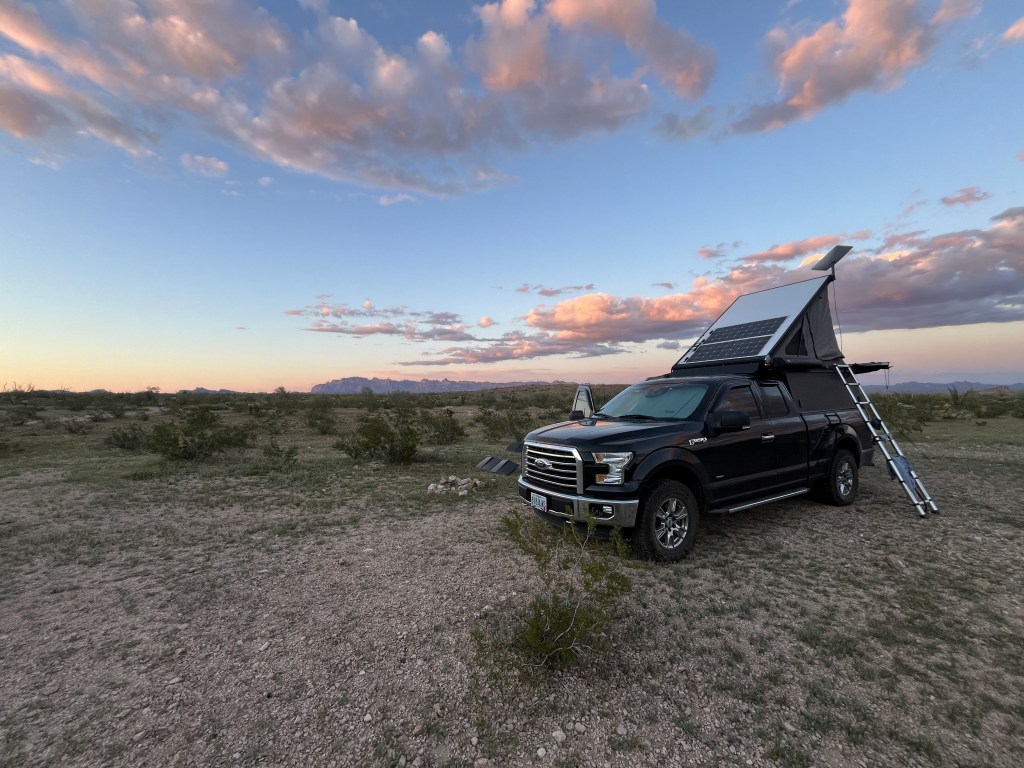
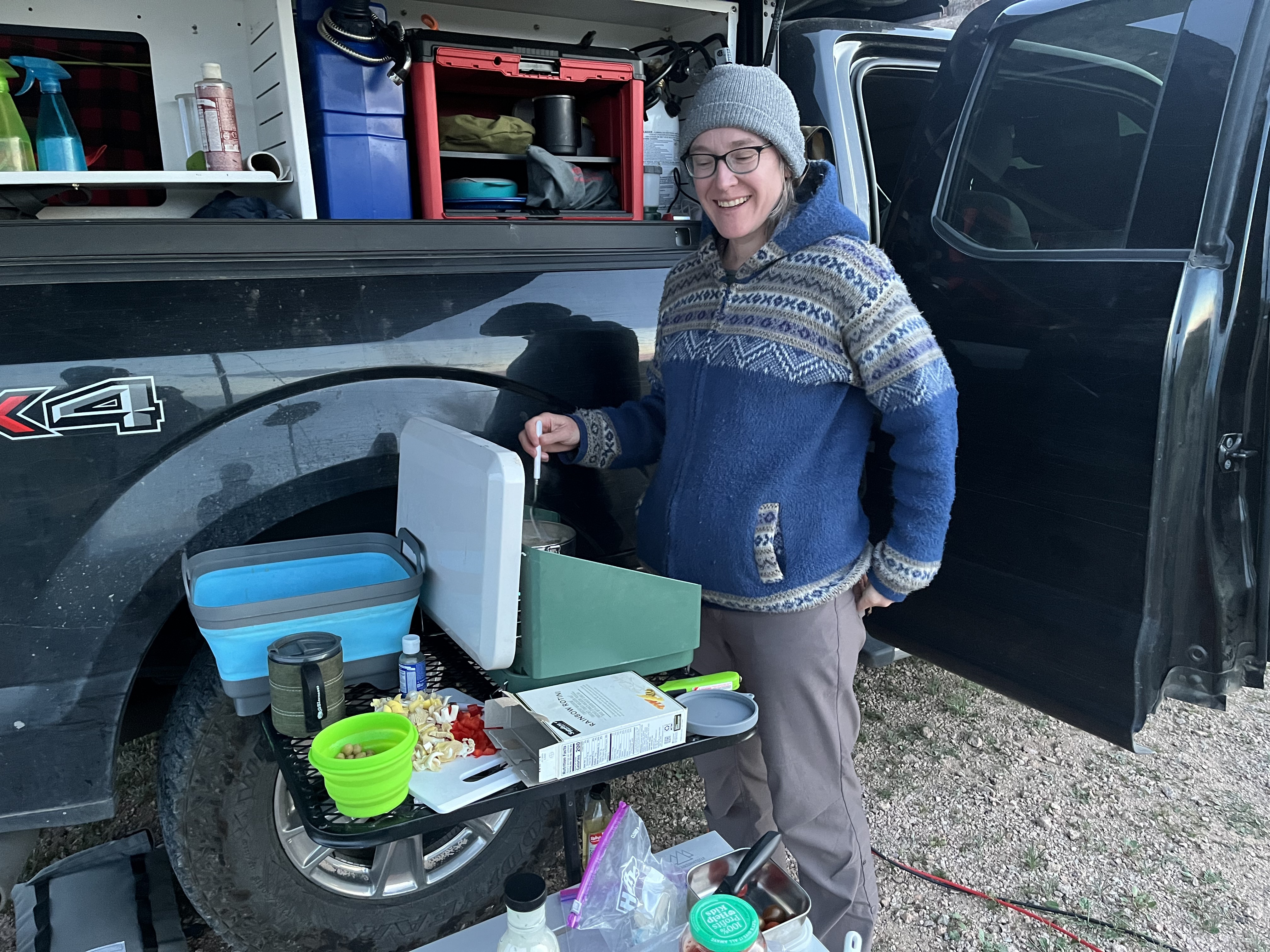
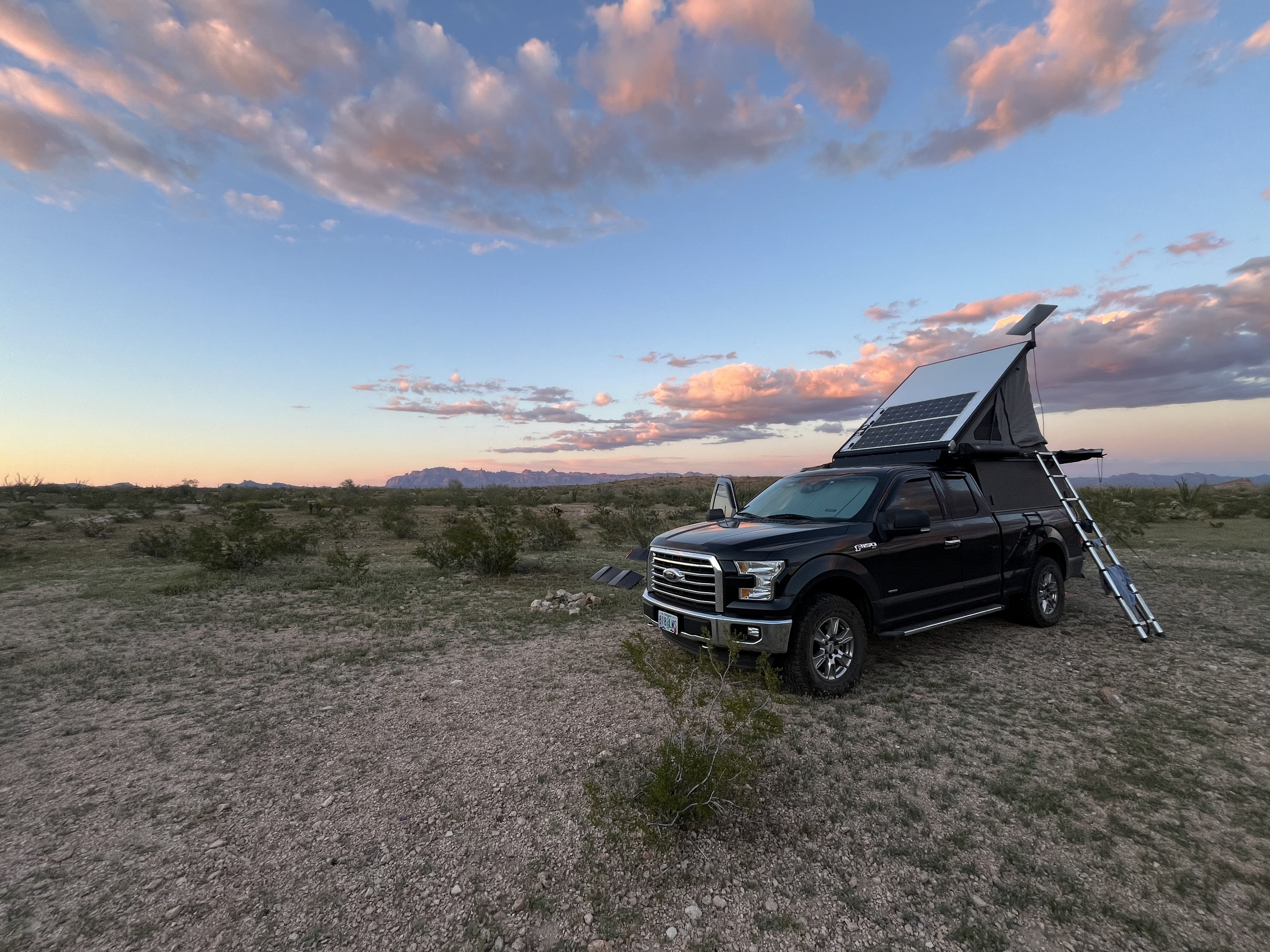
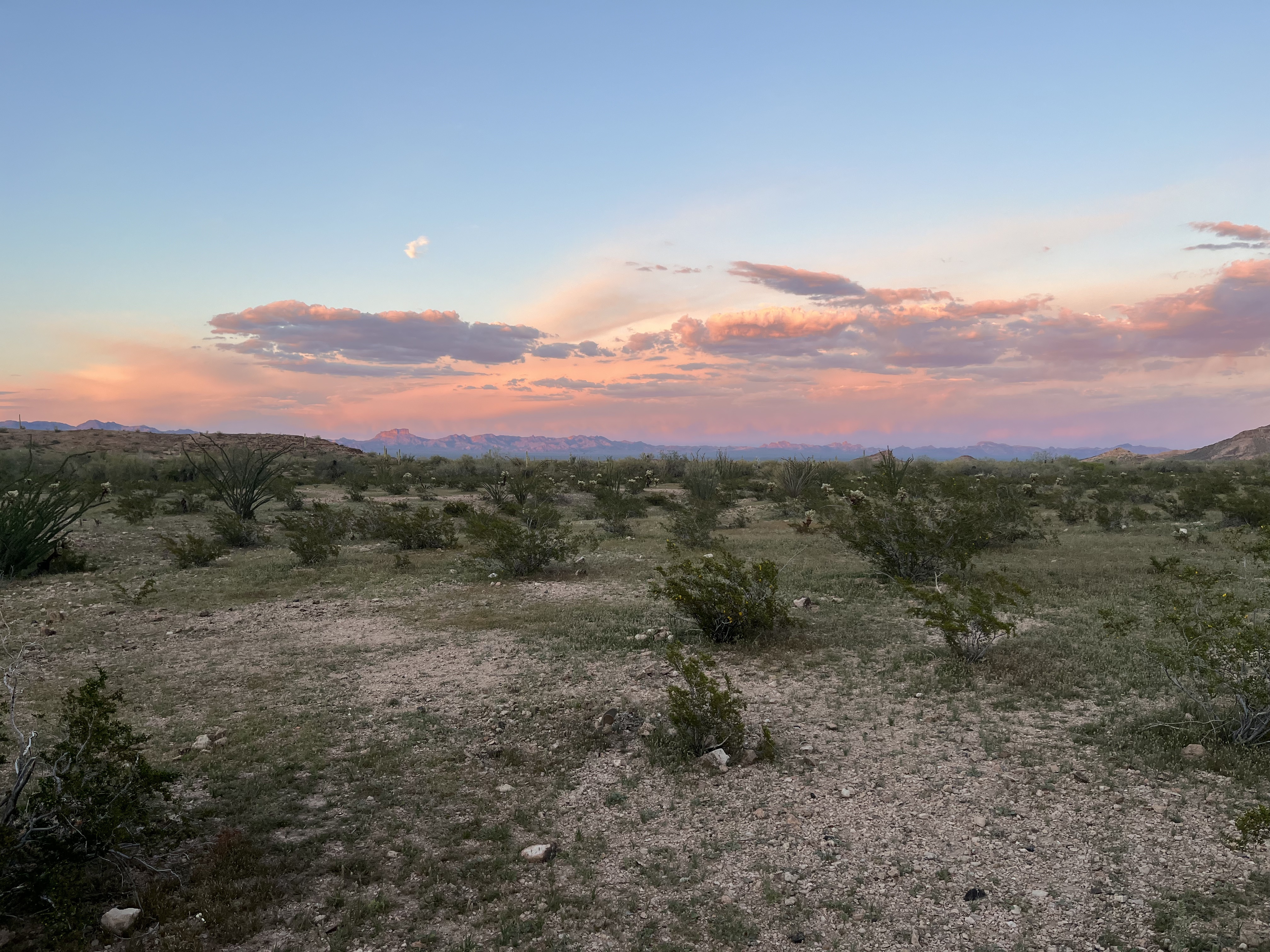
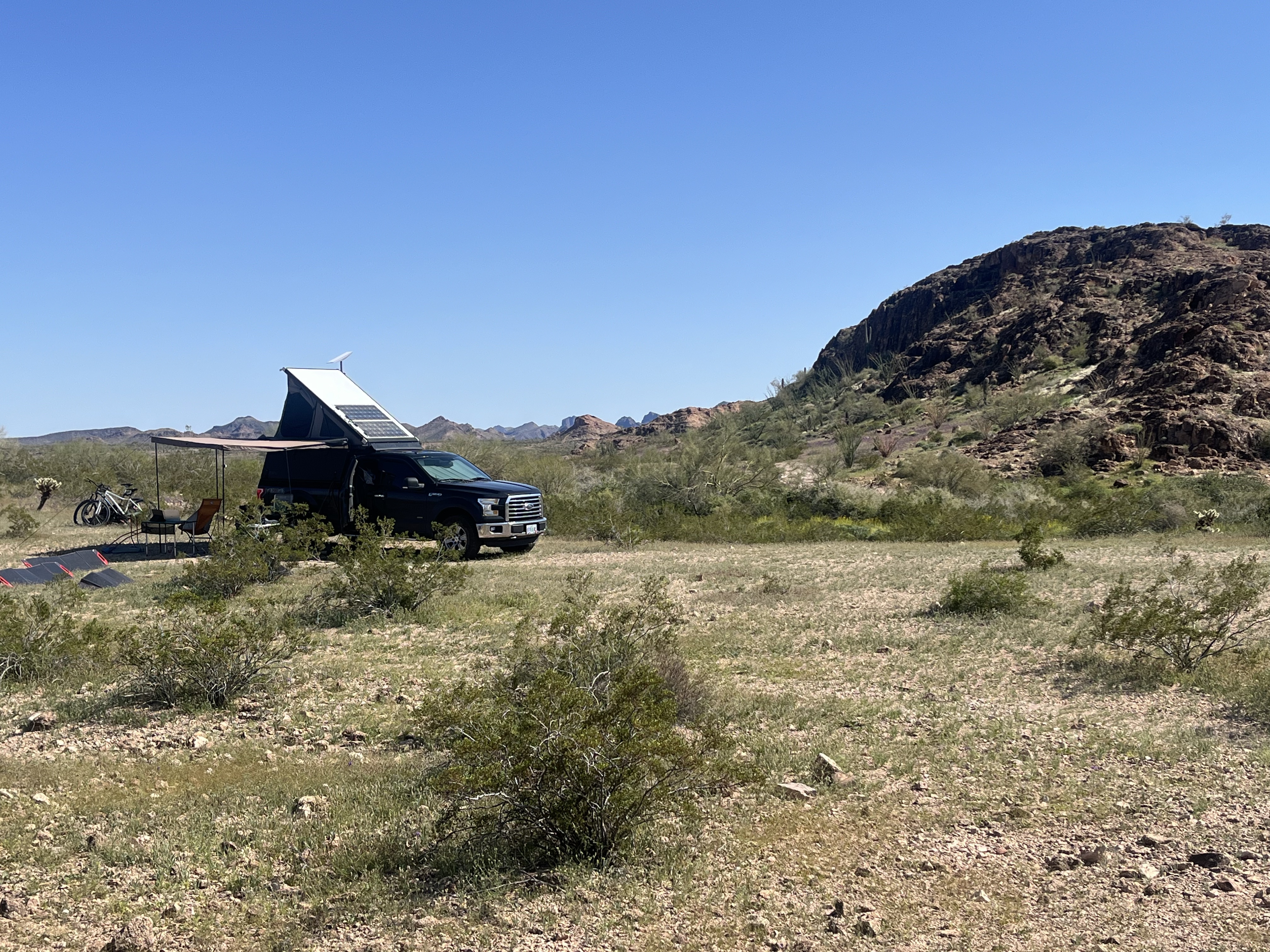
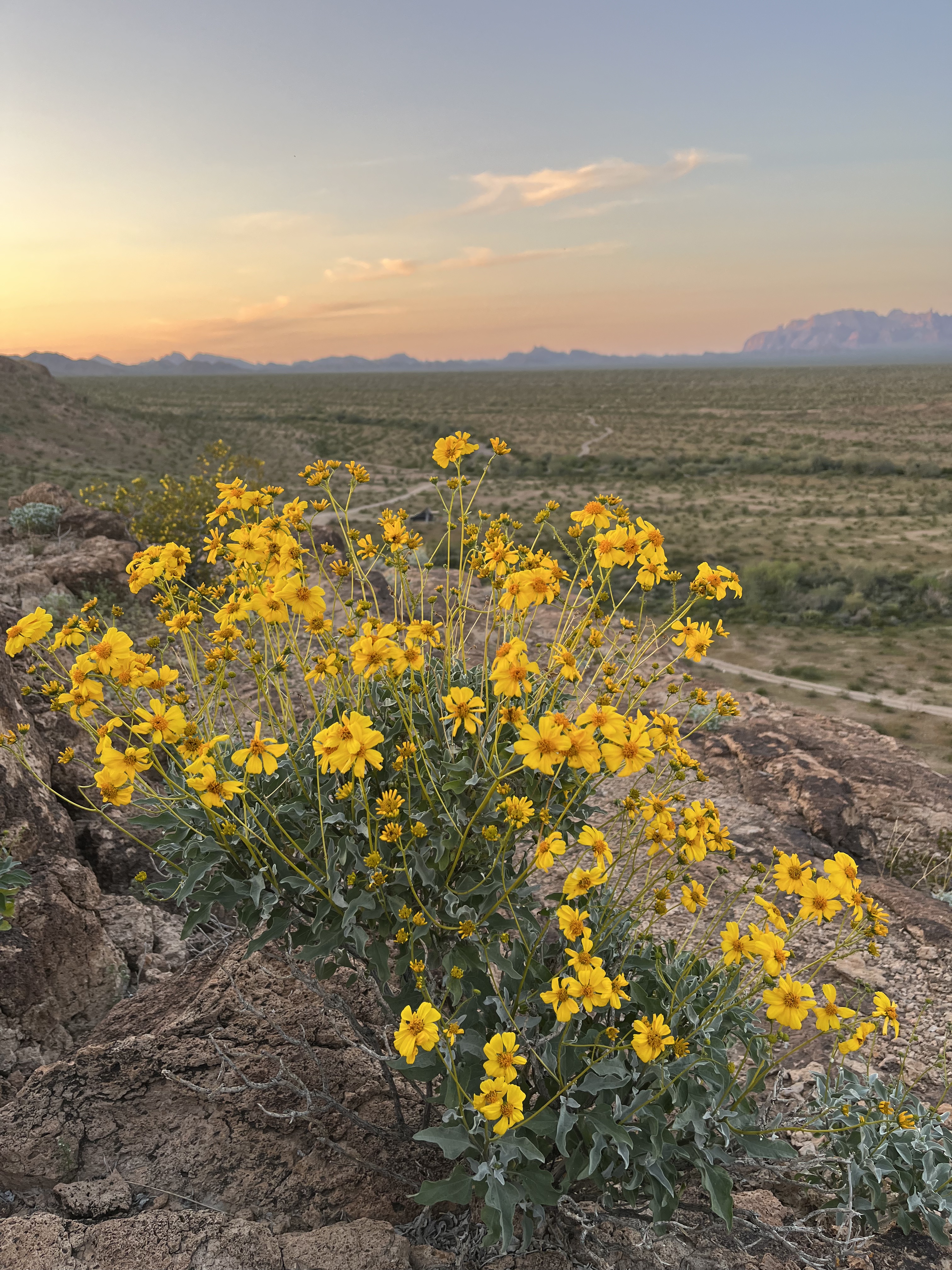
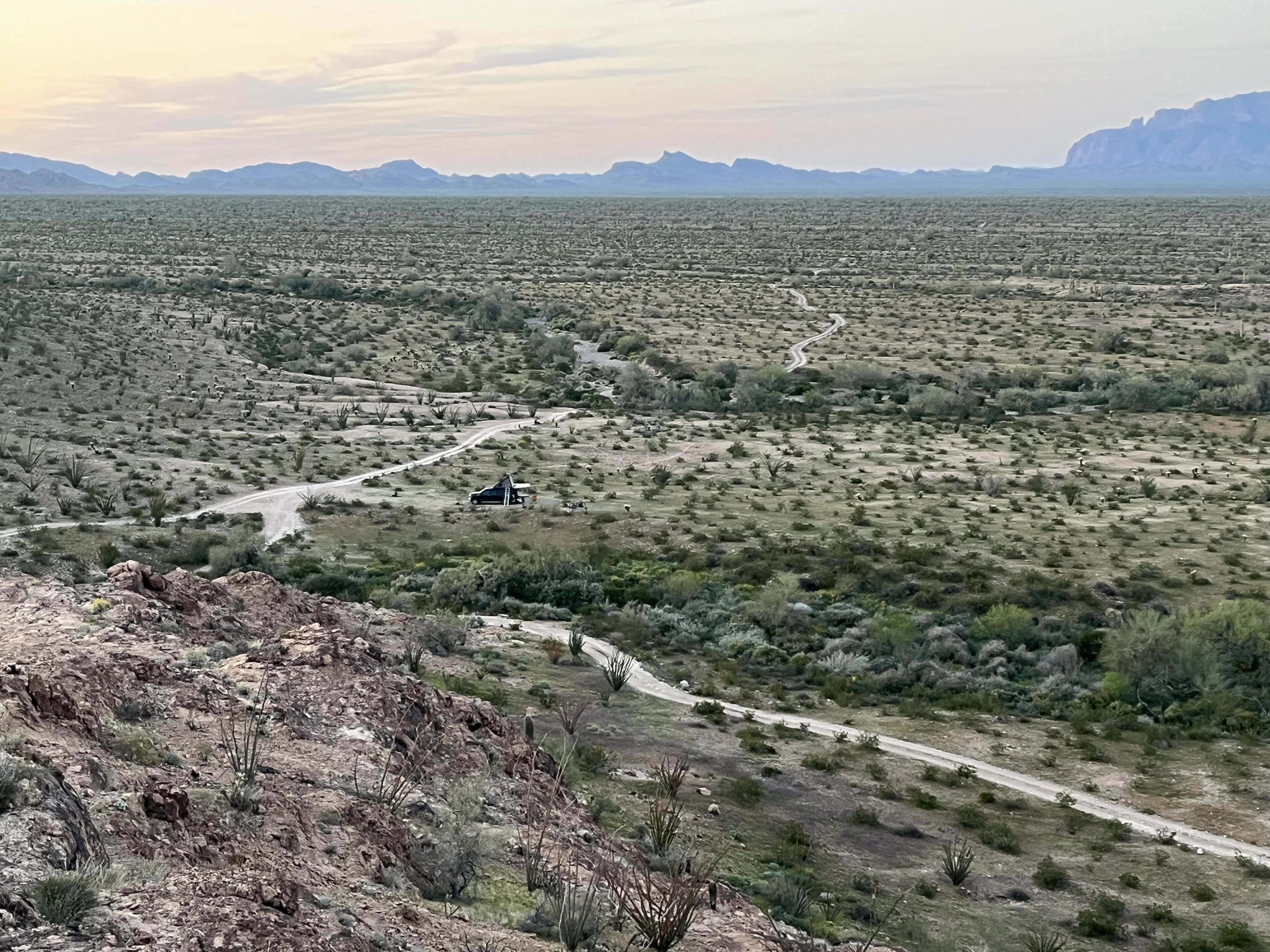
Once back to the truck, we headed back to the highway and a short bit South to King Road where we turned off and headed deeper into the Kofa Wilderness looking for our home for week. After an hour or so on sometimes sandy, sometimes rocky two track and a few wash crossings, we found a beautiful spot tucked up against some hills to the West and with beautiful views across the desert plain to Signal Peak to the North. To the South, a lush dry creek bed that probably wasn’t dry too long ago judging by the volume of vegetation. Yellow Brittlebush, Pink Ferry Duster, and Desert Lavender, fragrant and alive with honeybees and hummingbirds. We set up camp and settled into our temporary home. We had the place mostly to ourselves all week aside from a few groups of side-by-sides and Jeeps that passed through on the road. As seems to be the norm here in the desert Southwest, the sunrises and sunsets were spectacular every day. Sunrises punctuated by a chorus of birdsong. The weather was mostly perfect with warm temperatures during the day and cool nights. The one exception were some substantial wind gusts that kicked up on our last two nights.
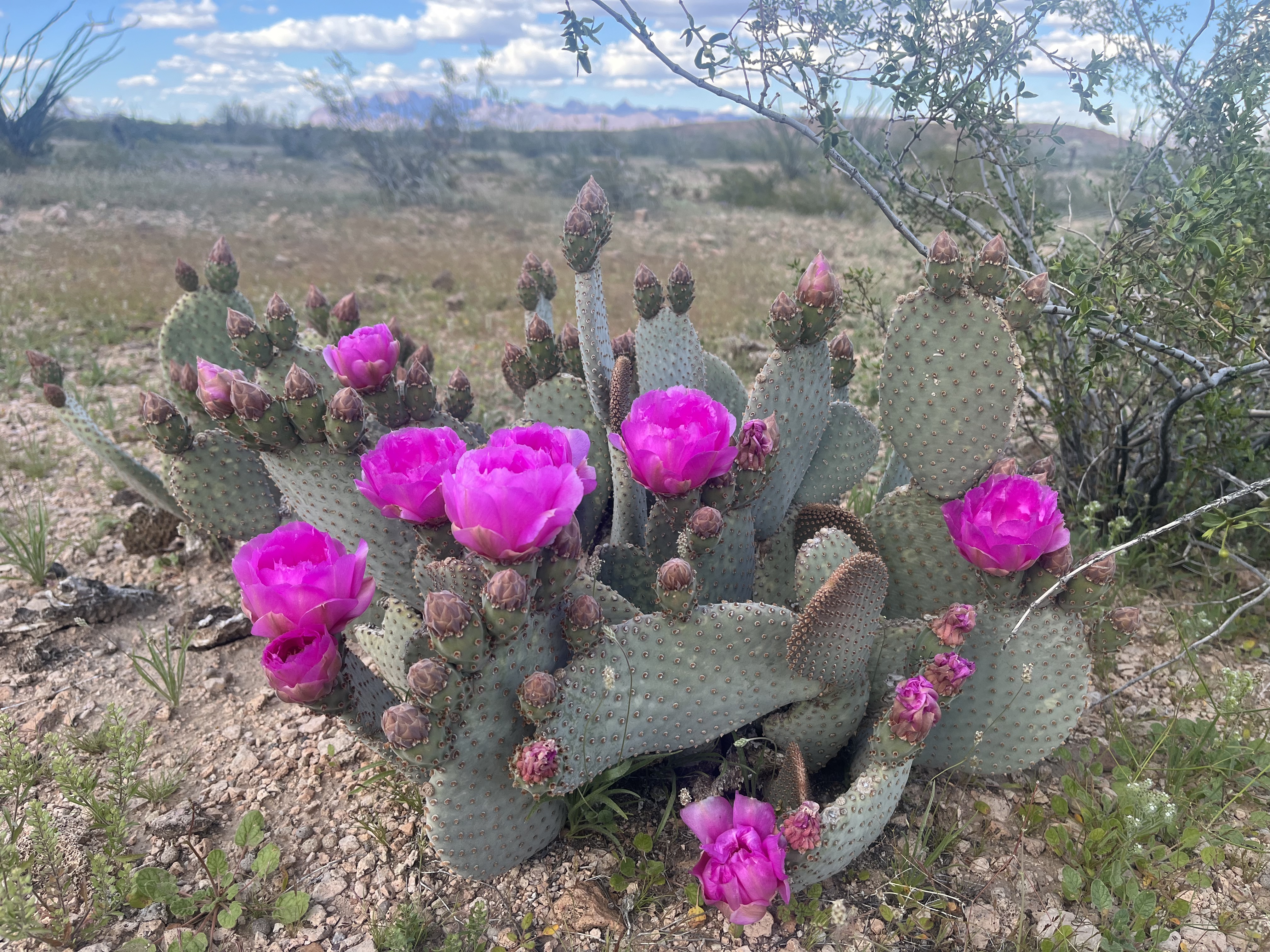
On our second day I climbed up the little rocky hill to our South after work. The red rock I scrambled up was run through with crystalline veins. The view from the top was of a desert plain extending to Signal Peak with Saguaros reaching up at regular intervals with leggy Ocotillo, squat Creosote bushes, and thorny Palo Verde trees in between. On top there were Prickly Pear cactus in bloom with their huge, showy, hot pink flowers. Such a contrast to the rest of the landscape. Another evening, we rode our bikes further up the road to “Figueroa Tank”. This consisted of a catch pool built in a wash with a shad structure over the top to prevent evaporation. These “tanks” are built strategically within the Refuge by the Department of Fish and Wildlife to provide water for the Bighorn Sheep and other wildlife. On our last night we build a little campfire out of some old 2x4s someone had left using the substantial existing fire ring. We drank some hot chocolate and talked under the mixture of fire and moonlight.
Kofa is a beautiful place and despite it’s proximity to the Quartzite and all the activity there, it’s not too hard to get off the beaten path and find solitude if you’re willing and able to brave some rougher roads. I think I’ll definitely be heading back here some day.

 The Crooked Trail
Leave a comment